
About Laura Knight
Lived 1877 – 1970 (aged 92). Laura Knight was a British painter, printmaker, autobiographer, visual artist, draftsperson and artist.
Dame Laura Knight ( Johnson; 4 August 1877 – 7 July 1970
In 1929, she was created a Dame, and in 1936 became the first woman ever elected to full membership of the Royal Academy. Her large retrospective exhibition at the Royal Academy in 1965 was the first for a woman. Knight was known for painting amidst the world of the theatre and ballet in London, and for being a war artist during the Second World War. She was also greatly interested in, and inspired by, marginalised communities and individuals, including Romani people and circus performers.
Biography Early life Laura Johnson was born in Long Eaton, Derbyshire, the youngest of the three daughters of Charles and Charlotte Johnson. Her father abandoned the family not long after her birth, and Knight grew up amid financial problems. Her grandfather owned a lace-making factory but the advent of new technology led to the business going bankrupt. The family had relations in northern France who were also in the lace-making business and in 1889 Knight was sent to them with the intention that she would eventually study art at a Parisian atelier. After a miserable time in French schools, the bankruptcy of her French relations forced Knight to return to England.
Charlotte Johnson taught part-time at the Nottingham School of Art, and managed to have Knight enrolled as an "artisan student" there, paying no fees, aged just 13. At the age of 15, and still a student herself, Knight took over her mother's teaching duties when Charlotte was diagnosed with cancer and became seriously ill. There, alongside Lamorna Birch and Alfred Munnings, they became central figures in the artists colony known as the Newlyn School. By March 1908 both had work exhibited at the Newlyn Art Gallery and Harold Knight was an established professional portrait painter, while Laura Knight was still developing her art. Around Newlyn the Knights found themselves among a group of sociable and energetic artists, which appears to have allowed the more vivid and dynamic aspects of Laura's personality to come to the fore.
Laura Knight spent the summer of 1908 working on the beaches at Newlyn making studies for her large painting of children in bright sunlight. The Beach was shown at the Royal Academy in 1909, and was considered a great success, showing Laura painting in a more Impressionist style than she had displayed previously. Knight would sometimes use models from London who were prepared to pose nude. Although there was some resentment locally about this, the landowner, Colonel Paynter of Boskenna, was fully supportive and allowed Knight and the other artists a free rein. It is now only known from photographs but was considered to be a challenge to the then prevailing attitudes towards female nudity and aroused considerable controversy when included in a touring exhibition. The painting was badly damaged during World War I and was eventually destroyed by mould. In recent years, examples of Knight's plein-air compositions from Cornwall have attracted high prices at auction.
Another work from this time is The Green Feather, which Knight painted outdoors in a single day, and reworked due to a change in the weather, which shows the model Dolly Snell in an emerald evening dress with a hat and a large feather. Knight started the vast painting Lamorna Birch and his Daughters in 1913, painting in a wood in the Lamorna Valley but then kept the painting unfinished in her studio until finally completing it in 1934, the same year Birch was elected a full member of the Royal Academy. The painting is a complex, formal composition in a studio setting. Using mirrors, Knight painted herself and Naper as seen by someone entering the studio behind them both. As an art student Knight had not been permitted to directly paint nude models but, like all female art students in England at the time, was restricted to working from casts and copying existing drawings. Knight deeply resented this, and Self Portrait with Nude is a clear challenge, and reaction, to those rules. During the war, in 1916, Harold Knight had registered as a conscientious objector and was eventually required to work as a farm labourer.
Ballet Between 1911 until 1929, Knight drew and painted backstage, some of the most famous ballet dancers of the day from Sergei Diaghilev's Ballets Russes. Her subjects included Lydia Lopokova, Anna Pavlova and the dance teacher Enrico Cecchetti.
Etching In the early 1920s, Knight bought Sir George Clausen's printing press and began etching. She produced 90 prints between 1923 and 1925, including a poster advertising tram travel to Twickenham for London Transport. Knight continued to produce posters for London Transport throughout her career, including one on circus clowns in 1932 and Winter Walks in 1957.
In 1922, Knight made her first trip to the United States, where she served on the jury at the Pittsburgh International Exhibition of Pictures. Knight also hired a mother and child model to pose for the composition originally known as the Madonna of the Cotton Fields.
Circus folk In the early 1920s, Knight visited the Bertram Mills Circus at Olympia in West London. Mills' circus was a highly polished show with internationally renowned performers. In 1934 Knight developed a series of circus designs for the Modern Art for the Table tableware range produced by Clarice Cliff.
Recognition At the 1928 Summer Olympics in Amsterdam, Knight won the Silver Medal in Painting with the painting Boxer (1917), one of the series she had painted at Witley in 1916. In 1929 Knight was made a Dame Commander of the Order of the British Empire, and in June 1931 she received an honorary degree from St. Andrews University. The same year Knight published her first autobiography, Oil Paint and Grease Paint, which became a best-seller, with four hardback editions followed in 1941 by a Penguin paperback printing.
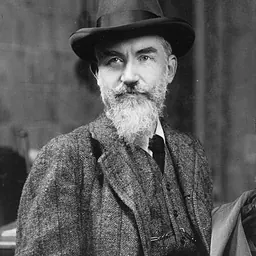
From 1933, the Knights became regular visitors to Malvern, Worcestershire, making an annual visit to the Malvern Festival, which had been established by their friend Barry Jackson. During one such visit Knight met George Bernard Shaw and painted his portrait. Gypsy Splendour was shown at the Royal Academy in 1939, the year Lilo Smith died. Among the works Knight produced for these commissions were: Corporal J. D. M. Pearson, GC, WAAF (1940) – shows Corporal Daphne Pearson of the Women's Auxiliary Air Force, WAAF, a recipient of the Empire Gallantry Medal, later exchanged for the George Cross. Pearson, at Knight's insistence, sat for the portrait holding a rifle; as WAAF personnel were not allowed to carry arms on duty, Knight had to paint over the rifle, which was replaced by a gas mask in the finished painting, with the hands positioned as if still holding a rifle. Corporal J. M. Robins (1940) – Robins was awarded the Military Medal for the courage she showed in assisting the wounded when a shelter was directly hit by a bomb during an attack on RAF Andover. WAAC had requested that Knight paint Robins as part of a group of medal-winning women, but Knight refused. Corporal Elspeth Henderson and Sergeant Helen Turner (1941) – Henderson and Turner were both awarded the Military Medal for staying at their post when the building they were in received a direct hit from a bomb during an air raid on RAF Biggin Hill. Although painted in Knight's studio in Malvern, the painting shows the two women on duty at their airfield. The painting was first shown on 30 April 1943 at the Royal Academy and the next day was reproduced in eight British newspapers. The painting, along with Knight and Loftus, also featured in a British Paramount News short film shown in cinemas, These preparatory drawings led to the large oil painting, The Nuremberg Trial. This painting departs from the realism of her wartime paintings, in that, whilst apparently realistically depicting the Nazi war criminals sitting in the dock, the rear and side walls of the courtroom are missing, to reveal a ruined city, partially in flames.
Knight explained this choice of composition in a letter to the War Artists' Advisory Committee:
The painting was coolly received at the subsequent Royal Academy Summer Exhibition, but was greatly praised by those who had witnessed the trials. contained over 250 works, and was followed in 1968 and 1969 by further retrospective exhibitions at the Upper Grosvenor Galleries. 1936: Oil Paint and Grease Paint
Membership Knight was a member of or affiliated with the following organisations: 1909: Elected associate of the Royal Watercolour Society, 1913: Elected member of Royal West of England Academy, 1925: Elected member of Royal Society of Painter-Etchers and Engravers, 1927: Elected associate of the Royal Academy, 1928: Elected full member of the Royal Watercolour Society,
1932: Elected full member of Royal Society of Painter-Etchers and Engravers, 1932: President of Society of Women Artists, 1932: Elected Fellow of Royal Society of Painter-Etchers and Engravers, 1936: Elected full member of the Royal Academy, 1960: Elected Member of the Royal Society of Portrait Painters.
Exhibitions Exhibitions of her work held during Knight's life included: 2013: Laura Knight Portraits, National Portrait Gallery, London, then Laing Art Gallery, Newcastle and Plymouth City Museum and Art Gallery in 2014 2021: Laura Knight: A Panoramic View, Milton Keynes Gallery, 160 works displayed, 9 October 2021 – 20 February 2022 2024: Dame Laura Knight: I Paint Today, Worcester City Art Gallery and Museum, 13 January 2024 - 30 June 2024
Don’t just read it —
keep it.
Full-length biographies made to live with: read them, listen on the way to work, watch them tonight.
- E-book
- Audio
- Video
Instant download · yours to keep · every purchase keeps this site free
Important facts
more
Laura Knight (Dame), Laura Knight-Johnson, Dame Laura nee Johnson, LauraFamily & relationships
People in Laura Knight's life
Named in this biography and alive at the same time




Related people
Same field, nearest in time

Contemporaries
People whose lives overlapped Laura Knight's

Frequently asked questions
Who was Laura Knight?
English artist (1877-1970)
When was Laura Knight born?
Laura Knight was born on 4 August 1877 in Long Eaton.
When did Laura Knight die?
Laura Knight died on 7 July 1970 in London.
What was Laura Knight's occupation?
Laura Knight was a painter, printmaker, autobiographer, visual artist, draftsperson and artist.
What nationality was Laura Knight?
Laura Knight was British.
Sources & further reading
Cite this page
APA: Biography.guide. (2026). Laura Knight. https://biography.guide/laura-knight/
MLA: "Laura Knight." Biography.guide, https://biography.guide/laura-knight/.
Chicago: "Laura Knight." Biography.guide. https://biography.guide/laura-knight/.
Data last updated: 2026-09-20 · Spot an error? Report a correction.
Page generated 2026-09-27 05:27 UTC