
László Kovács
Hungarian-American cinematographer
About László Kovács
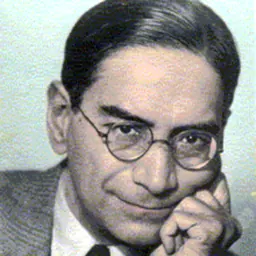
Lived 1933 – 2007 (aged 74). László Kovács was a Hungarian and American photographer, film director and cinematographer.
László Kovács ASC (; 14 May 1933 – 22 July 2007) was a Hungarian-American cinematographer, known for his influential work in the development of the American New Wave of films in the 1970s, he collaborated with many known directors, especially Peter Bogdanovich and Richard Rush.
Kovács was the recipient of numerous awards, including three Lifetime Achievement Awards. He was also an active member of the American Society of Cinematographers and a member of the organization's board of directors.
Early life Born in Cece, Hungary, to Julianna and Imre Kovács, Kovács studied cinema at the Academy of Drama and Film in Budapest between 1952 and 1956. In November that year, they smuggled the of film into Austria to have it developed, and they arrived in the United States in March 1957 to sell the footage. At the time Kovács would be credited as Leslie Kovacs and Zsigmond as William Zsigmond.
Film career Kovács' breakthrough came with the 1969 film Easy Rider, starring and directed by Dennis Hopper. Kovács was reluctant to work on this film at first, having already worked on a number of B movie biker films, such as Hells Angels on Wheels. Hopper ultimately convinced Kovács that this film would be different and Kovács signed on as the film's director of photography. He earned second place for the Best Cinematographer Golden Laurel at the 1970 Laurel Awards. In 1970, he again worked with Hopper on the film The Last Movie. That same year, Kovács filmed Five Easy Pieces, for which he received the third place Golden Laurel for Best Cinematographer.
Kovács filmed more than 70 motion pictures. Among these were six films for director Peter Bogdanovich: Targets, What's Up, Doc?, Paper Moon, At Long Last Love, Nickelodeon, and Mask. Bogdanovich worked with Kovács more times than any other cinematographer.
Other notable films Kovács photographed include For Pete's Sake, Shampoo, New York, New York, Ghostbusters, Ruby Cairo, Say Anything..., Radio Flyer, My Best Friend's Wedding, and Miss Congeniality. He also did additional photography on Close Encounters of the Third Kind, The Last Waltz and The Rose.
When working on The Last Waltz, camera operators were instructed to turn their cameras off at different intervals, in order to save battery life. One of these instances was during Muddy Waters' set, but Waters' outstanding performance led director Martin Scorsese to spontaneously change his mind, and ordered all cameras to be turned on. Because the cameras took several minutes to fully warm up, most caught only the last few bars of Waters' performance. Kovács, however, either did not hear or disregarded orders to shut down his camera, and was the only cameraman on set who managed to film Waters' entire performance.
Kovács' final work appears in Torn from the Flag, a 2006 feature documentary about the 1956 Hungarian Revolution which incorporates original footage he and Zsigmond shot as film students before fleeing to the United States.
Personal life On July 22, 2007, Kovács died at his home in Beverly Hills, California at the age of 74. At the time of his death, Kovács had been married for 23 years to his wife, Audrey. He had two daughters, Julianna and Nadia, and a granddaughter, Mia.
Kovács was honored with Lifetime Achievement Awards from Camerimage (1998), WorldFest (1999), and the American Society of Cinematographers (2002). The Lifetime Achievement Award from the ASC is the organization's highest honor. In addition, Kovács received an Excellence in Cinematography Award from the 1999 Hawaii International Film Festival and a Hollywood Film Award at the 2001 Hollywood Film Festival.
The American Society of Cinematographers dedicated the 2008 Heritage Award for top student filmmakers in memory of Kovács.
The 2008 documentary film No Subtitles Necessary: Laszlo & Vilmos explores the 50-year friendship between Kovács and Zsigmond and their influence on filmmaking. Film critic Leonard Maltin said that, without Kovács and fellow cinematographer Zsigmond, "the American New Wave of the late 1960s and early '70s wouldn’t have flowered as it did."
Filmography Film I Credited as "Lester Kovacs" II Credited as "Art Radford" III Credited as "Leslie Kovacs" IV Credited as "Leslie Kovacks" V Credited as "Leslie Kouvacs"
Short film Year Title Director 1969 A Day with the Boys Clu Gulager 1978 Mummenschanz James Talbot
Television Year Title Director Notes 1976 Family Mark Rydell Episode "Pilot: The Best Years"
Documentary works Film Year Title Director Notes 1957 Ungarn in Flammen Stefan Erdélyi With Vilmos Zsigmond and Franz Vass (credited as "Ferencz Vass") 1967 Mondo Mod Peter Perry With Vilmos Zsigmond (credited as "William Zsigmond") 1971 Directed by John Ford Peter Bogdanovich With Brick Marquard, David Sammons, Gregory Sandor,Eric Sherman and Patrick Alexander Stewart 2000 Ljuset håller mig sällskap Carl-Gustav Nykvist 2007 Torn from the Flag Endre HulesKlaudia Kovacs With Zoltan Honti, Justin Schein and Vilmos Zsigmond V Credited as "Leslie Kouvacs"
TV series National Geographic Specials (1965) The March of Time (1965)
TV movies Year Title Director Notes 1968 Making of the President 1968 Mel StuartRobert AbelFritz Roland With Dick Blofson and Vilis Lapenieks 1969 Los Angeles: Where It's At Jerome JacobsGary Schlosser With Robert Cirace and J. Barry Herron 1980 Making Xanadu: The Musical Fantasy Movie Alan Metter With Vilmos Zsigmond III Credited as "Leslie Kovacs"
Don’t just read it —
keep it.
Full-length biographies made to live with: read them, listen on the way to work, watch them tonight.
- E-book
- Audio
- Video
Instant download · yours to keep · every purchase keeps this site free
Important facts
People in László Kovács's life
Named in this biography and alive at the same time
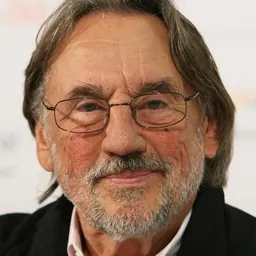


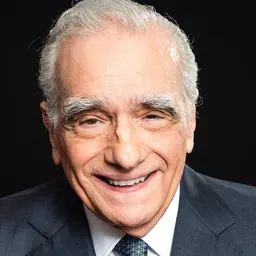
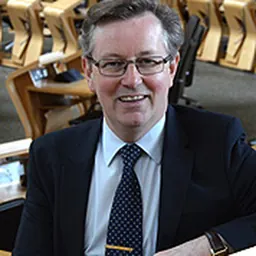

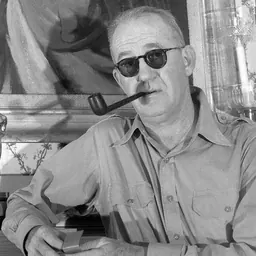
Related people
Same field, nearest in time


Contemporaries
People whose lives overlapped László Kovács's


Frequently asked questions
Who was László Kovács?
Hungarian-American cinematographer
When was László Kovács born?
László Kovács was born on 14 May 1933 in Cece.
When did László Kovács die?
László Kovács died on 22 July 2007 in Beverly Hills.
What was László Kovács's occupation?
László Kovács was a photographer, film director and cinematographer.
What nationality was László Kovács?
László Kovács was Hungarian and American.
Sources & further reading
· DBpedia: László Kovács (cinematographer)
Cite this page
APA: Biography.guide. (2026). László Kovács. https://biography.guide/laszlo-kovacs-photographer/
MLA: "László Kovács." Biography.guide, https://biography.guide/laszlo-kovacs-photographer/.
Chicago: "László Kovács." Biography.guide. https://biography.guide/laszlo-kovacs-photographer/.
Data last updated: 2026-09-22 · Spot an error? Report a correction.
Page generated 2026-09-27 05:04 UTC