
About Lasar Segall
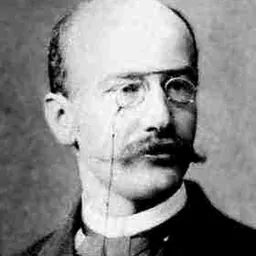
Lived 1891 – 1957 (aged 66). Lasar Segall was a Brazilian and Lithuanian painter, sculptor, printmaker, graphic artist, draftsperson and lithographer.
Lasar Segall (July 21, 1891 – August 2, 1957) was a Lithuanian and Brazilian painter, engraver and sculptor. Segall's work is derived from impressionism, expressionism and modernism. His most significant themes were depictions of human suffering, war, persecution and prostitution.
Early life and education Segall was born in Vilnius, Russian Empire, the son of a Torah scribe.
Segall moved to Berlin at the age of 15 and studied first at Berlin Königliche Akademie der Künste from 1906 to 1910. At the end of 1910 he moved to Dresden to continue his studies at the Kunstakademie Dresden as a "Meisterschüler".
Segall moved to Brazil in 1923 and, already separated from his first wife, married in 1925 Jenny Klabin (daughter of Maurício Freeman Klabin, founder of Klabin, one of the world’s largest paper and pulp companies), with whom he had two sons: Maurício Klabin Segall (who, in the 1950s, would marry actress Beatriz Segall, one of the greatest ladies of Brazilian theater and television drama, remembered for her iconic role as Odete Roitman) and Oscar Klabin Segall.
Career Expressionist Forum Segall published a book of five etchings in Dresden, Sovenirs of Vilna in 1919, and two books illustrated with lithographs titled Bubu and die Sanfte. He then began to express himself more freely and developed his own style, which incorporated aspects of Cubism, while exploring his own Jewish background. His earlier paintings throughout 1910 to the early 1920s depicted troubled figures surrounded in claustrophobic surroundings with exaggerated and bold features, influenced by African tribal figures.
In 1912 his first painted series of works were conducted in an elderly insane asylum. Segall's work largely portrayed the masses of persecuted humanity in his Expressionist form. Later that year, he moved to São Paulo, Brazil, where three of his siblings were already living.
He returned to Dresden in 1914 and was still quite active in the Expressionist style. In 1919 Segall founded the 'Dresdner Sezession Gruppe 1919' with Otto Dix, Conrad Felixmüller, Otto Lange and other artists. Segall's exhibition at the Galery Gurlitt received multiple awards. However successful Segall was in Europe, he had already been greatly influenced by his time spent in Brazil, which had already transformed both his style and his subject matter. The visit to Brazil gave Segall the opportunity to obtain a strong idea of South American art and, in turn, made Segall return to Brazil yet again.
Beginnings in Brazil: Modernist trends Though Segall was still a Russian citizen, he moved back to Brazil in 1923. Upon Segall's return to São Paulo he obtained Brazilian citizenship along with his first wife, Margarete.
While in Brazil, his paintings were influenced heavily by the Red Light District in Rio de Janeiro. Many Brazilian artists influenced Segall's subject matter and strengthened his Cubist form. He became acclimated within his newfound country and painted themes contributing to Brazil's countryside, mulattoes, favelas, prostitutes and plantations. Due to the harsh and extreme nature of Segall's portrayal of prostitutes and his depiction of human suffering, his artwork became controversial. This particular controversy in his artwork caused he and other well known artists to organize a pro Modernist event known as the Semana de Arte Moderna. The week-long event included Segall's work, as well as Anita Malfatti's largely controversial artwork. Not only were paintings included, but performances and other art forms were conducted at the event. Segall's avant garde innovations ranked him highly among other Brazilian outstanding modern artists during that time, like Candido Portinari and Emiliano Di Cavalcanti.
Though Segall had intended to reside exclusively in Brazil, he continued to return and forth to Europe for his own personal exhibitions. In 1925, Segall became extremely close to his pupil Jenny Klabin and eventually married her.
The organization of SPAM fought for justice yet, disagreements arose between Integralists, known as Brazilian Fascists, that discriminated against foreigners in Brazil, especially Jews. With this large amount of controversy and intolerable strain on SPAM's membership, the group soon fell apart. The image depicts a heavily condensed and large number of people on the dock of a ship. Although this does not coincide with much of Segall's previous work of human suffering, this provides the audience with a deep depiction of (at the time) the contemporary and controversial waves of emigrants and human affliction and persecution.
Later in the mid-1940s, Segall published his series of Mangue drawings that revealed poverty, specifically in the Rio de Janeiro slums. Becoming wholeheartedly closer to his Brazilian nationality, Segall portrays these images in a stark manner, yet the underprivileged and oppressed images provides a significant cultural identity for the Rio de Janeiro inhabitants.
Segall's initial paintings in Brazil reflect a strong national connection and passion for his newfound homeland. He portrayed the landscapes in São Paulo and Rio de Janeiro and portrayed the different races without tension or malintention. However, Segall remained faithful towards his Cubist nature throughout the majority of his artworks. Specifically, one of his famous artworks, entitled Banana Plantation, shows a Brazilian banana plantation, thick in density. Segall achieved balance in this painting by centering the worker's neck and head protruding from the bottom of the painting. This causes the audience to be fully focused towards the center space. This significant symmetrical balance emphasizes the human element involved in the Brazilian agricultural system. The diminished amount of slavery in Brazil during this time period, the 1920s, abolished Brazilian-Negro slaves and replaced them with an overwhelming number of European workers coming to Brazil. This particular image portrays the engulfment of the plantations by the Europeans.
Other prominent theme in Segall's work is human suffering and emigration. In another famous artwork of Segall's, entitled Ship of Emigrants, a ship dock is overcrowded and engulfed with emigrant passengers. Not only does the image portray a dark and saddening emotion, but it significantly portrays the troubled figures aboard the ship. The solemn faces and lack of expression on the passengers blatantly shows the harsh reality of emigrants and their depressing lifestyles of forced moves.
Museu Lasar Segall
Lasar Segall's home in São Paulo is now a museum, featuring his furniture, books, plants, as well his most famous works. It is also a non-profit organization respected highly among the community of São Paulo.
Museu Lasar Segall is also a center for the art community in São Paulo to participate in monitored cultural activities regularly. Art classes such as photography, engraving and the study of film are held in Segall's home. Also incorporated in the Museum is a large, highly acclaimed art library that holds specific books directed towards photography and the arts of spectacle.
The Museu Lasar Segall is preserved to explore the stimulating experiences within multiple forms of art while still keeping a Brazilian cultural identity. The form of art conducted in Brazil is of one entirely different than other art forms. The Museum is intact today because of Brazil's concern to maintain their strong nationality and to preserve Lasar Segall's culturally influenced art dedicated for Brazil.
Exhibitions March 1913 solo exhibition in São Paulo; June 1913 solo exhibition in Campinas 1920 large solo exhibition at the Museum Folkwang in Hagen; solo exhibition at the Schames Gallery in Frankfurt 1922 takes part in International Art Exhibition in Düsseldorf 1924 solo exhibition in São Paulo 1926 exhibition at the Galerie Nierendorf, Berlin and another exhibition at Neue Kunst Fides Gallery, Dresden 1927 solo exhibition in São Paulo 1928 solo exhibition at the Rio Palace Hotel, Rio de Janeiro 1935 takes part in the International Painting Exhibition at Carnegie Institute, Pittsburgh 1937 ten of his works are shown at the Nazi- Sponsored Degenerate Art Exhibition, Munich 1938 solo exhibition at Renou et Colle Gallery, Paris 1945 takes part in the exhibition Art Condemned by the Third Reich, Askanazy Gallery, Rio de Janeiro 1948 solo exhibition at Associated American Artists Galleries, New York
List of artworks tres jovens 1939, bronze sculpture, pinacoteca, Sao Paulo, Brazil Os eternos caminhantes (The Eternal Wanderers), 1919, oil on canvas, Museu Lasar Segall, São Paulo Nude Female Bust, 1920, pencil sketch, Museu Lasar Segall, São Paulo Banana Plantation, 1927, oil on canvas, State Picture Gallery, São Paulo Brazilian Landscape, 1927, watercolor, Museu Lasar Segall, São Paulo The Third Class, 1928, drypoint on paper, Museu Lasar Segall, São Paulo Rua do Mangue (Street of Mangue), 1928, drypoint and etching on paper, Museu Lasar Segall, São Paulo Primeira classe (First Class), 1929, drypoint and etching on paper, Museu Lasar Segall, São Paulo Emigrantes (Emigrants), 1929, drypoint on paper, Museu Lasar Segall, São Paulo Favela (Shantytown), 1930, drypoint on paper, Museu Lasar Segall, São Paulo Figura feminina reclinada (Reclining Woman), 1930, oil on canvas, Private Collection, São Paulo Navio de emigrantes (Ship of Emigrants), 1939–1940, oil with sand on canvas, Museu Lasar Segall, São Paulo Woman from the 'Mangue' with Persiennes, 1942, woodcut on Japanese paper, Museu Lasar Segall, São Paulo
Don’t just read it —
keep it.
Full-length biographies made to live with: read them, listen on the way to work, watch them tonight.
- E-book
- Audio
- Video
Instant download · yours to keep · every purchase keeps this site free
Important facts
People in Lasar Segall's life
Named in this biography and alive at the same time



Related people
Same field, nearest in time


Contemporaries
People whose lives overlapped Lasar Segall's

Frequently asked questions
Who was Lasar Segall?
Lithuanian-Brazilian artist (1891-1957)
When was Lasar Segall born?
Lasar Segall was born on 21 July 1891 in Vilnius.
When did Lasar Segall die?
Lasar Segall died on 2 August 1957 in São Paulo.
What was Lasar Segall's occupation?
Lasar Segall was a painter, sculptor, printmaker, graphic artist, draftsperson and lithographer.
What nationality was Lasar Segall?
Lasar Segall was Brazilian and Lithuanian.
Sources & further reading
Cite this page
APA: Biography.guide. (2026). Lasar Segall. https://biography.guide/lasar-segall/
MLA: "Lasar Segall." Biography.guide, https://biography.guide/lasar-segall/.
Chicago: "Lasar Segall." Biography.guide. https://biography.guide/lasar-segall/.
Data last updated: 2026-09-20 · Spot an error? Report a correction.
Page generated 2026-09-27 05:28 UTC