
About Larry Bell
Born 1952. Larry Bell is an American composer and pianist.
Larry Thomas Bell (born January 17, 1952) is an American composer, pianist and music professor.
Early life and education Bell was born in Wilson, North Carolina on January 17, 1952. On January 2, 1982, he married musicologist Andrea Olmstead.
Career Teaching appointments Bell began teaching while in college, at the Juilliard Pre-College division (1979–1983). Since then he has been a faculty member of The Boston Conservatory (1980–2005), the New England Conservatory (1992–2018), and the Berklee College of Music (since 2007). His composition students include Cynthia Wong, Forrest Eimold, George Li, Laura Schwindinger, Russ Grazier, Daniel Kharatian, Aaron Robinson and Martin Matalon.
Piano performance As a pianist, Bell performs his music regularly and has championed works by American composers. He has given recitals throughout the United States, as well as in Italy, Austria, and Japan. He is frequently heard on Boston's WGBH (FM) radio, where he played on their first live broadcast on the World Wide Web of his trio Mahler in Blue Light.
Awards and residencies Besides the Rome Prize and fellowships from the Guggenheim and Rockefeller Foundations, he was awarded the Charles Ives Prize from the American Academy of Arts and Letters and grants from the American Music Center, the American Symphony Orchestra League, and Meet the Composer.
Vocal music Besides his opera Holy Ghosts, Bell has written many other works for vocal ensemble, solo voice, and vocal chamber music. An early piece for vocal ensemble is his SSATB quintet Domination of Black from 1971, a student work on a text by Wallace Stevens. His first solo vocal work, an extended piece for soprano and piano, is Reality is an Activity of the Most August Imagination (1976), another setting of a text by Wallace Stevens. A usual pairing of voice and instrument solos is found in his double concerto, The Idea of Order at Key West, op. 13 (1979–81) a work for soprano and violin soloists, large string orchestra, and percussion battery, also based on a poem by Wallace Stevens. More recently, he has composed sets of songs on texts by Emily Dickinson, William Shakespeare, and Thomas Campion. His most ambitious work for voices is The Seasons op. 101, a cantata consisting of four cycles of songs with texts by Elizabeth Kirschner. The work begins with Fall: Autumnal Raptures, for tenor and harp; followed by Winter: Exaltations of Snowy Stars, for mezzo-soprano and piano; then Spring: In the Pendulum of My Body, for baritone and harpsichord; and finally Summer: The Vanishing Dew, for soprano and guitar. The entire work is summed up in the Finale: Echolocations of Cellos, a single-movement work for all eight performers.
Instrumental music Bell has composed works for many different instruments and instrumental combinations. Among his early works are Novelette for string quartet (1970), Mirage for flute and piano (1971), Eclogue for saxophone quartet (1973), his first String Quartet (1973), and Caprice for solo 'cello (1979). His noteworthy mature works include three string quartets, Harmonium, op. 48 (1997) for brass quintet, Quintessence, op. 39 (1993) for woodwind quintet, Tarab, op. 66 (2003) for double cello quartet, a series of Caprices for solo instruments, and Serenades for various instrumental ensembles. Several recent instrumental pieces have featured standard Baroque instrumental combinations, especially for the alto recorder and 'cello, with or without accompaniment.
Orchestra and band music Among Bell's early works is Continuum, a student work for chamber orchestra (1971). A Piano Concerto was completed in 1989, followed by a Short Symphony for Band a decade later. Later orchestral works have added a children's chorus (Songs of Innocence and Experience) or a narrator (Hansel and Gretel).
Keyboard music Bell has composed many works for piano, harpsichord or organ. One of his earliest piano works is a set of Variations from 1974, first performed at Juilliard. His more recent projects for keyboard have been larger sets of inventions, preludes or partitas, in the manner of Baroque works for harpsichord. He has also written a set of Etudes for student pianists to work on technical issues.
Recordings Recordings are available for a significant proportion of Bell's compositions. Several discs have been released that are devoted entirely to his works, while various individual pieces can be found on other recording devoted to American modern music.
Publications . .
Don’t just read it —
keep it.
Full-length biographies made to live with: read them, listen on the way to work, watch them tonight.
- E-book
- Audio
- Video
Instant download · yours to keep · every purchase keeps this site free
Important facts
People in Larry Bell's life
Named in this biography and alive at the same time
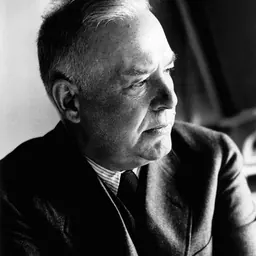




Related people
Same field, nearest in time

Contemporaries
People whose lives overlapped Larry Bell's


Frequently asked questions
Who is Larry Bell?
American composer and pianist (1952-)
When was Larry Bell born?
Larry Bell was born on 17 January 1952 in Wilson.
What is Larry Bell's occupation?
Larry Bell is a composer and pianist.
What nationality is Larry Bell?
Larry Bell is American.
Sources & further reading
Cite this page
APA: Biography.guide. (2026). Larry Bell. https://biography.guide/larry-bell/
MLA: "Larry Bell." Biography.guide, https://biography.guide/larry-bell/.
Chicago: "Larry Bell." Biography.guide. https://biography.guide/larry-bell/.
Data last updated: 2026-09-20 · Spot an error? Report a correction.
Page generated 2026-09-27 05:21 UTC