
Lalla Kmar
Ottoman odalisque then Tunisian princess
About Lalla Kmar
Lived 1862 – 1942 (aged 79–80). Lalla Kmar was a princess.
Lella Kmar (1862 – 31 December 1942) was the queen consort of Tunisia during three reigns, after having successively married three beys of Tunisia: Muhammad III Sadiq, Ali III and Muhammad V Nasir, and despite this, she did not have children.
Early life (1862–1875) The Ottoman custom was to allocate a wing of the palace to female servants, concubines or captives who were bought from slave markets or captured during wars and invasions, or who were presented as gifts. This is what happened with Lella Kmar, who was of Circassian origin and born in the Ottoman Imperial Harem in 1862. She was given by the Ottoman Sultan Abdul Hamid II to Muhammad III Sadiq, Bey of Tunis, around 1875.
Coming to Tunisia and first reign (1875–1882) After she arrived in Tunisia and was placed on the list of odalisques, she married Muhammad III Sadiq nearly two years later, in 1877. They lived together for five years in a somewhat parental relationship, as he was around 50 years older than her, until his death in 1882, after he signed the Bardo Treaty establishing the French protectorate in Tunisia.
Second reign (1883–1902) Following the death of Muhammad III, his brother Ali III, the new bey, ordered her to be transferred from Ksar Said Palace to his palace in La Marsa. In 1883, she married Ali III, the crown prince of her former husband. She was twenty years old at the time. This marriage lasted twenty years. During this period, she became increasingly involved in state affairs, advising her husband on political matters. Tunisia fell to French rule during this period, and it is said that the Bey admired her intelligence, acumen and intuition. This enabled her to influence many appointments within the state until her marriage ended with Ali III's death on 11 June 1902.
Isolation and straying from power (1902–1906) Following her widowhood, Lella Kmar was mistreated by the new Bey, her stepson Muhammad IV al-Hadi, the son of her second husband Ali III. He removed her from La Marsa Palace and forbade her from visiting, so she went to live in a small apartment. This situation lasted for four years, until the Bey's death in 1906.
Third reign (1906–1922) She was rehabilitated after Muhammad V Nasir's ascension to the throne in 1906, until he married her in 1908. During his reign, she became the undisputed ruler of the palace as the Bey was interested in her. He issued an official decree affirming her protection, forbidding any harm to come to her, and safeguarding her rights. He also granted her a salary and compiled a list of all her expenses.
This power enabled her to establish relationships with people outside the royal palace in Tunisia. During this time, she met Princess Nazli Fazil, a descendant of the Muhammad Ali dynasty of Egypt and wife of Khelil Bouhageb, who would become Prime Minister of the Kingdom of Tunisia. Eager to know more about her, Lella Kmar asked Nasir Bey about the first time he saw her, during the reception she and her husband held to celebrate the arrival of Muhammad Abduh in Tunisia in 1903.
However, the most significant gesture Muhammad V made in honour of Lalla Kmar was the dedication of the Essaada Palace in La Marsa, which he had built specifically for her between 1914 and 1915 — in the midst of the First World War.
Just as Lella Kmar was pivotal in Ali III's decision-making, the same was repeated with Muhammad V. This continued until his death on 8 July 1922, when she was around 60 years old.
Later life (1922–1942) Essaada Palace built by Muhammad V for the sake of Lella Kmar and lived in it until her death. After her third husband died, his cousins Muhammad VI and Ahmad II assumed the throne. She then retreated slightly from ruling, but had secured all her rights under Muhammad V's decree. She lived in the palace he had built for her, which was not listed as one of the Bey's properties.
As she had no children of her own, she raised Chedly Haidar, the son of another concubine. Haidar was the last mayor of Tunis under the Husainid dynasty and occupied the Essaada Palace until he gave it to the Tunisian state in 1953.
Don’t just read it —
keep it.
Full-length biographies made to live with: read them, listen on the way to work, watch them tonight.
- E-book
- Audio
- Video
Instant download · yours to keep · every purchase keeps this site free
Important facts
Family & relationships
People in Lalla Kmar's life
Named in this biography and alive at the same time

Related people
Same field, nearest in time




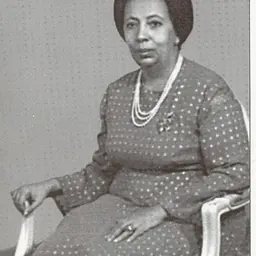
Contemporaries
People whose lives overlapped Lalla Kmar's




Frequently asked questions
Who was Lalla Kmar?
Ottoman odalisque then Tunisian princess
When was Lalla Kmar born?
Lalla Kmar was born in 1862.
When did Lalla Kmar die?
Lalla Kmar died on 30 December 1942 in La Marsa.
What was Lalla Kmar's occupation?
Lalla Kmar was a princess.
What nationality was Lalla Kmar?
Lalla Kmar's recorded nationality: Beylik of Tunis, French protectorate of Tunisia.
Sources & further reading
Cite this page
APA: Biography.guide. (2026). Lalla Kmar. https://biography.guide/lalla-kmar/
MLA: "Lalla Kmar." Biography.guide, https://biography.guide/lalla-kmar/.
Chicago: "Lalla Kmar." Biography.guide. https://biography.guide/lalla-kmar/.
Data last updated: 2026-09-20 · Spot an error? Report a correction.
Page generated 2026-09-27 05:30 UTC