
About Lajos Tihanyi
Lived 1885 – 1938 (aged 52). Lajos Tihanyi was a Hungarian and French painter.
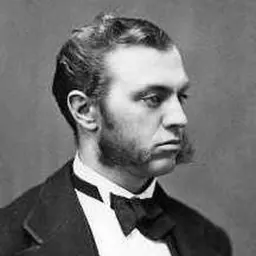
Lajos Tihanyi (29 October 1885 – 11 June 1938) was a Hungarian painter and lithographer who achieved international renown working outside his country, primarily in Paris, France. After emigrating in 1919, he never returned to Hungary, even on a visit.
Born in Budapest, as a young man, Tihanyi was part of the "Neoimpressionists" or "Neos", and later the influential avant-garde group of painters called The Eight (A Nyolcak), founded in 1909 in Hungary. They were experimenting with styles of Post-Impressionism and rejected the naturalism of the Nagybánya artists' colony. Their work is considered highly influential in establishing modernism in Hungary to 1918, when the First World War and revolution overtook the country.
After the fall of the Hungarian Republic in 1919, Tihanyi left and lived briefly in Vienna. He moved on to Berlin for a few years, where he connected with many Hungarian émigré writers and artists, such as Gyorgy Bölöni and the future Brassaï. By 1924 Tihanyi and numerous other artists moved to Paris, where he stayed for the remainder of his life.
In Paris, Tihanyi gradually shifted to more abstract styles in his work. His paintings and lithographs are held by the Hungarian National Gallery, Musée d'Art Moderne de la Ville de Paris, and the Brooklyn Museum of Art in New York City, among other institutions, and by private collectors. With the centenary of The Eight's first exhibition, Tihanyi has been featured in five exhibitions since 2004, including ones held in 2010 and 2012 in Hungary and Austria, and another in 2012 devoted to a solo retrospective of his work.
Early life and education Lajos Tihanyi was born in Budapest in 1885 to a Hungarian-Jewish family in 1885. He had a younger sister Berta. Due to meningitis, Tihanyi became deaf and mute at the age of eleven,
Tihanyi and others of the "Neos" developed into the Hungarian avant-garde. Károly Kernstok was considered a leader, and others were Béla Czóbel, Vilmos Perlrott-Csaba and Béla Iványi Grünwald, and Sándor Ziffer. Some had already been to Paris, where they were influenced by the work of French painters such as Paul Cézanne and Henri Matisse. While they had three exhibits as a group, they were also influential for participating in related events in literature and music, and were important through 1918.
The Eight were part of the radical intellectual movements in the early 20th century Budapest, which attracted new artists in literature and music as well. Among the new writers and composers were Endre Ady and Béla Bartók. The Eight's style was quite complex. They worked with the rationalism of cubists, the decorative use of color as seen in the Fauves, and the emotional depth of German Expressionism. Their many-sided artistic activities are represented by Kernstok's "monumental painting," Riders at the Waterside (1910) and Bertalan Pór's The Family (1909).
The writer and journalist Lajos Kassák founded A Tett (Action) in 1915, and later Ma (Today); these published articles on literature and art, and provided reproductions of some work. They featured Tihanyi, who had a solo exhibit in their offices in 1915. Before the war, he was recognized for his independent creativity.
By the end of World War I, the leading art style in Hungary shifted to the radical movement of Activism, in which Tihanyi also participated. The Activists pushed the cubist and expressionist innovations into a radical direction. In addition to Tihanyi, masters were József Nemes Lampérth and Béla Uitz. Béni Ferenczy's sculpture, Standing Boy, also showed the influence of Cubism. That year, after the fall of the Hungarian Democratic Republic and the failure of its revolution, Tihanyi and many artists and intellectuals left the country en masse. He had aided the communists, and there were reprisals afterward against allies of the revolution.
Tihanyi worked and lived for the rest of his life abroad, first briefly in Vienna, then a few years in Berlin, which was flooded with radical artists and intellectuals from Eastern and Central Europe. Kassak's journal Ma started publishing in Vienna, and László Moholy-Nagy became its Berlin editor in April 1921. In addition to the Hungarians, by that time Russians, including the Ukrainian artist Archipenko, were arriving in Berlin; he quickly achieved more notice for his constructions than he had in Paris, and the first monograph was published on him in 1921. There was a "short-lived synthesis" of the international avant-garde in Berlin, as the Eastern, Central, and Western European intellectual currents came together.
After that time, Tihanyi moved on to Paris, where he lived most of his life. Because of his reluctance to sell his paintings, in his early years abroad, he sometimes relied on some financial help from his father, who owned a coffee shop in Budapest.
Paris By 1924 Tihanyi settled in Paris, where many fellow artists and writers also migrated; part of the Hungarian circle, he got to know other foreigners in Paris, including Americans, such as the writer Henry Miller. His portraits, such as of Bölöni (1912) and the painter Jacques de la Fregonnière (1928), represent some of his artistic circle. He was also friends with the photographer André Kertész, whom he introduced to the Parisian community. At one point, Tihanyi, Brassaï and Gyula Zilzer all lived in the Hotel Terrasse.
With fellow painter Bertalan Pór, Tihanyi figures prominently as a fictionalized character in Cafe Europa: An Edna Ferber Mystery, by Ed Ifkovic, which deals with 1914 Budapest.
Exhibits 1920, solo exhibit in Vienna 2004, Modernisms: European Graphic Art 1900–1930, Hungarian National Gallery, June 18 – September 12, 2004
Legacy 2010, A Nyolcak (The Eight): A Centenary Exhibition, 10 December 2010 – 27 March 2011, Janus Pannonius Museum, Pécs 2012, Lajos Tihanyi – A bohème painter in Budapest, Berlin and Paris, 20 April – 20 August 2012, KOGART Haz, Budapest 2012, The Eight. Hungary's Highway in the Modern (Die Acht. Ungarns Highway in die Moderne), 12 September – 2 December 2012, Bank Austria Kunstforum, Wien, collaboration with Museum of Fine Arts and Magyar Nemzeti Galéria, Budapest.
Don’t just read it —
keep it.
Full-length biographies made to live with: read them, listen on the way to work, watch them tonight.
- E-book
- Audio
- Video
Instant download · yours to keep · every purchase keeps this site free
Important facts
People in Lajos Tihanyi's life
Named in this biography and alive at the same time



Related people
Same field, nearest in time

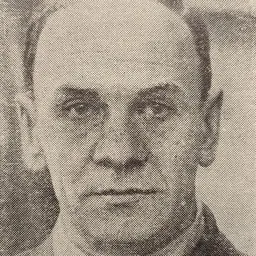
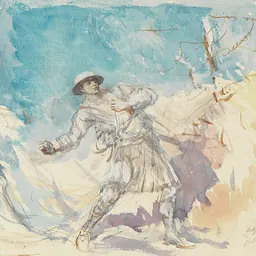

Contemporaries
People whose lives overlapped Lajos Tihanyi's

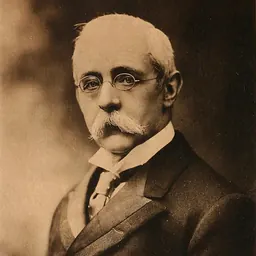
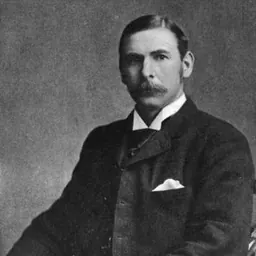


Frequently asked questions
Who was Lajos Tihanyi?
Hungarian painter (1885-1938)
When was Lajos Tihanyi born?
Lajos Tihanyi was born on 19 October 1885 in Budapest.
When did Lajos Tihanyi die?
Lajos Tihanyi died on 11 June 1938 in Paris.
What was Lajos Tihanyi's occupation?
Lajos Tihanyi was a painter.
What nationality was Lajos Tihanyi?
Lajos Tihanyi was Hungarian and French.
Sources & further reading
Cite this page
APA: Biography.guide. (2026). Lajos Tihanyi. https://biography.guide/lajos-tihanyi/
MLA: "Lajos Tihanyi." Biography.guide, https://biography.guide/lajos-tihanyi/.
Chicago: "Lajos Tihanyi." Biography.guide. https://biography.guide/lajos-tihanyi/.
Data last updated: 2026-09-20 · Spot an error? Report a correction.
Page generated 2026-09-27 05:19 UTC