
About Laishi Ye
Lived 1911 – 1994 (aged 82–83). Laishi Ye was a Chinese esperantist and linguist.
Ye Laishi (; 21 May 1911 – 2 February 1994), born Bao Shuyuan , was a Chinese linguist, publisher, Esperanto activist, and language reformer from Wu County, Jiangsu. He played an important role in China's language reform movement. He became involved in the Latinxua Sin Wenz movement at an early age and later became one of the principal organizers of language reform in the People's Republic of China, including the simplification of Chinese characters, the promotion of Standard Chinese, and the formulation and implementation of Pinyin. He served as deputy secretary of the Party Leadership Group and executive vice director of the Chinese Script Reform Committee. He was also an important advocate and leader of the Chinese Esperanto movement.
Names Ye Laishi's birth name was Bao Shuyuan. In the 1930s, he began using as his Esperanto pen name and Ye Laishi as his Chinese pen name, and became widely known by these names. Both names were derived from the Russian word , meaning "iron". He also used several other pen names, including Bao Suoyuan, Luo Dianhua, Pan Gugan, and Yu Xuewen.
Biography
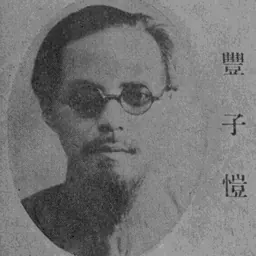
Early life Ye Laishi was born as Bao Shuyuan in 1911 in Suzhou, Jiangsu, then part of Wu County. During his secondary school years, he studied at several schools in Suzhou and Shanghai. Influenced by writings by Hu Yuzhi and others, he developed an interest in Esperanto and learned the language through correspondence courses in 1927. While attending in Shanghai, he was influenced by teachers such as and Feng Zikai, which led him to decide to study in Japan. In 1929, he was admitted to the Tokyo Higher Normal School. During his time in Japan, he attended advanced Esperanto courses organized by Japanese left-wing groups and joined the Tokyo branch of the League of Left-Wing Writers. Following the Mukden Incident in 1931, he discontinued his studies and returned to China.
Esperanto and Latinization activities In December 1931, the Chinese Left-Wing Esperanto League was founded in Shanghai. Like the League of Left-Wing Writers, it was affiliated with the China League of Left-Wing Cultural Organizations. Bao Shuyuan was one of its initiators, and in February 1932 he moved to Shanghai to work for the league full-time. Because of its left-wing political orientation, the league could not operate publicly. In 1933, the Shanghai Esperanto Association was founded as a public Esperanto organization. Bao became one of its principal leaders and edited its journal La Mondo, which was one of the most influential Esperanto movement in China during the 1930s. He also edited China Roars', a publication of the Chinese branch of the Proletarian Esperanto Correspondence (PEK). It was during this period that he began using the pen name Ye Laishi'''.
In 1931, a scheme for Latinxua Sin Wenz, drafted with the participation of Qu Qiubai, Wu Yuzhang, and others, was approved in the Soviet Union to improve literacy among overseas Chinese laborers living there. Due to the absence of formal diplomatic relations between China and the Soviet Union at the time, developments related to the movement remained largely unknown in China. In October 1933, after learning of the Latinxua Sin Wenz movement, Ye Laishi placed a notice in Language Science, a supplement of La Mondo, seeking materials from Soviet Esperantists. He subsequently received scheme documents, principles, textbooks, dictionaries, reading materials, and newspapers sent by supporters. In 1934, Ye published Dazhongyu, Tuyu, Latinization in Dongxiang, a supplement of the Zhonghua Daily, formally introducing Latinxua Sin Wenz to readers in China. He also founded the Chinese Latinization Research Society, the first organization in China dedicated to the movement. He compiled and published Chinese Writing in Latinization: Theory, Principles and Scheme (Chinese: 中国话写法拉丁化——理论·原则·方案) in 1935. The first systematic Chinese-language work introducing Latinxua Sin Wenz and one of the movement's most influential publications during its early period. He later revised and expanded it into Introduction to Latinization. He also compiled the Workers Latinization Textbook and the Latinization Textbook, among the earliest Latinxua Sin Wenz textbooks in China. Ye also edited Sin Wenz Monthly and Language, which were among the earliest semi-public and public periodicals in China devoted to the discussion of Chinese character reform.
Wartime activities After the outbreak of the Second Sino-Japanese War in 1937, Ye left Shanghai and traveled through Hong Kong and Guangzhou to Wuhan, where he joined the Political Department of the National Military Council under the leadership of Zhou Enlai and Guo Moruo. There, he was responsible for international propaganda in Esperanto. In September 1938, he joined the Chinese Communist Party, introduced by and Hu Sheng. After the fall of Wuhan, he relocated through Changsha, Xiangtan, Hengxshan, and Guilin before arriving in Chongqing. In 1939, he founded the Esperanto periodical China Herald, which circulated in 850 cities across 63 countries. During his time in Chongqing, he continued teaching and promoting Esperanto. Following the reorganization of the Shandong Field Army and the Central China Field Army into the East China Field Army, the Shandong Xinhua Bookstore was restructured as the East China Xinhua Bookstore. After the Communist capture of Shanghai, Ye entered Shanghai with the East China Xinhua Bookstore and participated in the takeover of . The East China Xinhua Bookstore was later reorganized as the East China General Branch of Xinhua Bookstore. In January 1951, under a restructuring plan implemented by the General Administration of Press and Publication, the editorial, publishing, printing, and distribution functions of Xinhua Bookstore were separated nationwide. The editorial and publishing departments of the East China General Branch were spun off to establish the Shanghai People's Publishing House, with Ye serving as its founding president. In addition to his administrative responsibilities, Ye served on several specialist bodies of the committee, including the Hanyu Pinyin Scheme Committee and the seven-member group responsible for revising simplified Chinese characters.
Ye was an early advocate of horizontal writing in Chinese. While editing the journal Yuwen, he adopted horizontal typesetting, and after becoming first vice president of the People's Publishing House in 1952, he actively promoted the use of horizontal layout in Chinese books and periodicals.
After the approval of the Pinyin scheme, Vice Premier Xi Zhongxun requested instruction in the system, and Ye personally taught him its use. reading syllables such as zhi, chi, and shi directly rather than spelling them out, and teaching the abbreviated forms iu, ui, and un instead of the underlying forms iou, uei, and uen. These methods were rapidly adopted in primary-school Pinyin instruction throughout China and remain in use today.
Personal life Ye's wife, Yin Guoxiu, was a native of Wuxi, Jiangsu. As a student at the Suzhou Women's Normal School, she participated in student movements. In April 1939, she joined the staff of the Life Bookstore in Chongqing and became a member of the Chinese Communist Party the following month through the introduction of her classmate Wu Quanheng. After the New Fourth Army Incident in 1941, she moved to the Hong Kong branch of the Life Bookstore and lived with Wu, whose husband Hu Sheng was a friend of Ye from the Chinese Esperanto movement. Following the Japanese occupation of Hong Kong, Yin was rescued by the East River Column and taken to Yangtaishan in Guangdong, where she met Ye. The couple moved to Guilin in 1942 and married there.
Yin later worked alongside Ye in publishing and editorial work in Shandong and Shanghai before spending the remainder of her career at the People's Publishing House, where she worked until retirement.
Ye and Yin had three children: a daughter, Ye Xi, and two sons, Ye Xiao and Ye Dan.
Selected works
Latinization of Written Chinese: Theory, Principles, and Proposals , 1935 Latinized Textbook for Workers , 1935 Latinization Textbook , 1935 Introduction to Latinization , 1935 Questions and Answers on the Hanyu Pinyin Scheme , 1958 Introduction to Hanyu Pinyin , 1964 Chronological Biography of Ni Haishu , published in Ni Haishu Yuwen Lunji , 1991 An Evening Discussion on Simplified Chinese Characters'' , 1995
Don’t just read it —
keep it.
Full-length biographies made to live with: read them, listen on the way to work, watch them tonight.
- E-book
- Audio
- Video
Instant download · yours to keep · every purchase keeps this site free
Important facts
People in Laishi Ye's life
Named in this biography and alive at the same time




Related people
Same field, nearest in time




Contemporaries
People whose lives overlapped Laishi Ye's






Frequently asked questions
Who was Laishi Ye?
Chinese esperantist
When was Laishi Ye born?
Laishi Ye was born in 1911 in Wu County.
When did Laishi Ye die?
Laishi Ye died on 2 February 1994 in Beijing.
What was Laishi Ye's occupation?
Laishi Ye was an esperantist and linguist.
What nationality was Laishi Ye?
Laishi Ye was Chinese.
Sources & further reading
Cite this page
APA: Biography.guide. (2026). Laishi Ye. https://biography.guide/laishi-ye/
MLA: "Laishi Ye." Biography.guide, https://biography.guide/laishi-ye/.
Chicago: "Laishi Ye." Biography.guide. https://biography.guide/laishi-ye/.
Data last updated: 2026-09-20 · Spot an error? Report a correction.
Page generated 2026-09-27 05:04 UTC