
About Lady Sophia Dunbar
Lived 1814 – 1909 (aged 94–95). Lady Sophia Dunbar was an artist.
Sophia Orred (1814 – 2 June 1909), known after her marriage as Lady Dunbar of Northfield, was an artist and antiquarian based in the historic county of Moray, Scotland. She exhibited watercolour landscapes at the Royal Scottish Academy, the Royal Glasgow Institute of the Fine Arts and the Royal Academy in London and produced archaeological illustrations of nineteenth-century discoveries in northern Scotland. In 1874, she was elected a Lady Associate of the Society of Antiquaries of Scotland.
Early life and family Sophia Orred was born in 1814, the youngest daughter of George Orred of Tranmere Hall, near Birkenhead, and Elizabeth Woodville. In 1840 she married Sir Archibald Dunbar, 7th Baronet of Northfield, at St Oswald’s Church, Chester, becoming stepmother to his four children. A portrait by the Glasgow artist John Graham-Gilbert depicts her in her wedding dress, said to have been modelled on Queen Victoria’s. The couple went on to have three sons: Randolph John Edward Dunbar (1841–1862), Charles Gordon-Cumming-Dunbar (1844–1916; 9th Baronet) and William James Colquhoun Dunbar (1850–1885). The family home was Duffus House, near Elgin.
Artistic training and career From childhood Dunbar sketched from nature and was largely self-taught, learning by observation and copying. She received some instruction from the Jersey artist John Le Capelain, whose atmospheric style influenced her early work.
Her watercolours, noted for their colour and conscientious detail, include A View of an Arab Cemetery, Bujareah near Algiers; Catalan Bay, Gibraltar; and Brown-Sailed Oyster Boats in Normandy. British and Riviera subjects include The Solent from Bournemouth; Cannes from the Road to Grasse; and The Castle of Napoul, near Cannes. Two cists were reconstructed at Duffus House in the nineteenth century (since dismantled), and her drawings of a jet spacer-plate necklace and Food Vessel fragments are among the few detailed records of those discoveries.
Dunbar also reported carved symbols in the coastal caves at Sculptor’s Cave, Covesea, prompting further documentation by John Stuart for his Sculptured Stones of Scotland (1867). That observation and work helped to establish Sculptor’s Cave as a key Pictish site, and the location was later excavated by Sylvia Benton in 1928–30. Dunbar’s careful visual recording was a valuable early contribution to archaeological illustration in Scotland.
Later life and legacy Dunbar exhibited a work at the RSA for the final time in 1888. She died at Duffus House in 1909, aged 95, and is buried in St Peter’s Kirkyard, Duffus.
The exhibition From Elgin to the Alhambra (Aberdeen Art Gallery, 1987–88) examined Dunbar's landscape practice. Recent scholarship has re-evaluated her role in early Scottish archaeology, particularly her documentation of Sculptor’s Cave.
Don’t just read it —
keep it.
Full-length biographies made to live with: read them, listen on the way to work, watch them tonight.
- E-book
- Audio
- Video
Instant download · yours to keep · every purchase keeps this site free
Important facts
People in Lady Sophia Dunbar's life
Named in this biography and alive at the same time



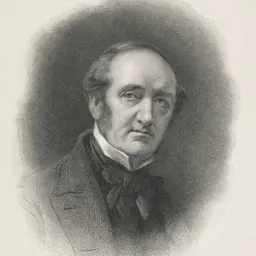


Related people
Same field, nearest in time
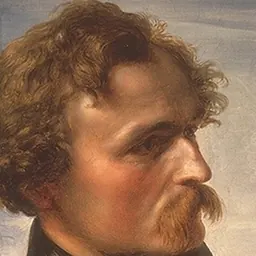

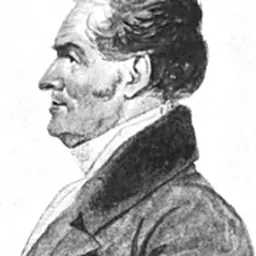

Contemporaries
People whose lives overlapped Lady Sophia Dunbar's





Frequently asked questions
Who was Lady Sophia Dunbar?
Scottish watercolourist and antiquarian, 1814–1909
When was Lady Sophia Dunbar born?
Lady Sophia Dunbar was born in 1814.
When did Lady Sophia Dunbar die?
Lady Sophia Dunbar died in 1909.
What was Lady Sophia Dunbar's occupation?
Lady Sophia Dunbar was an artist.
Sources & further reading
· Wikipedia: Lady Sophia Dunbar
Cite this page
APA: Biography.guide. (2026). Lady Sophia Dunbar. https://biography.guide/lady-sophia-dunbar/
MLA: "Lady Sophia Dunbar." Biography.guide, https://biography.guide/lady-sophia-dunbar/.
Chicago: "Lady Sophia Dunbar." Biography.guide. https://biography.guide/lady-sophia-dunbar/.
Data last updated: 2026-09-20 · Spot an error? Report a correction.
Page generated 2026-09-27 05:31 UTC