
About Kushal Konwar
Lived 1905 – 1943 (aged 38). Kushal Konwar was an Indian peace activist and freedom fighter.
Kushal Konwar (1905 - 1943) was an Indian freedom fighter from Assam. He was hanged in 1942 during the Quit India Movement.
Early life, education and work Kushal Konwar was born on 21 March 1905 at Chaodang Chariali of Ghiladhari Mouza, Golaghat district (then part of Shivsagar district) of Assam. The Konwar surname was used by the royal family of the Ahom Kingdom. The word "konwar" means prince.
Born to middle-class parents at the village called Chowdang Chariali of Ghiladhari Mouza of Golaghat District (formerly falling under Sivasagar District) in 1905, Kushal Konwar was just like other youths of his times, leading a quiet family life. But from 1925 onwards, he came under the influence of Mahatma Gandhi and this changed the course of his life. Since then, Kushal Konwar pledged to remain a vegetarian and accepted the Shrimad Bhagawad Gita as his only companion. Starting from the salt satyagraha led by Gandhiji in 1931, Konwar even stopped taking salt. He observed these pledges till the last moment of his life.
Kushal Konwar was quiet and truth loving as a child - the traits that he inherited from his parents, Sonaram Konwar, and Kanakeswari Konwar. The fifth child of his parents, Kushal Konwar completed his primary school education in 1918 and took admission at the Bezbarua Middle English School at Golaghat
Quit India Movement On 8 August 1942 the Congress Working Committee in its meeting in Bombay passed the "Quit India" resolution. This resolution demanded complete withdrawal of the British from the India’s soil. Mahatma Gandhi gave the call of "do or die" to the people of India. The British reacted by arresting Mahatma and all the Congress leaders and putting them in jails. Across India, this sparked a widespread mass movement against the British. Cutting across caste, creed, and religion people came out to the streets shouting the slogan of "Vande Mataram". In spite of Gandhiji’s appeal for peaceful non-cooperation and dharna, in many regions the movement erupted in violence with people burning offices and damaging government properties, disrupting road and telecommunication networks.
Some people of Assam also spontaneously joined this historic movement of 1942. Two of the leaders of the Assam Pradesh Congress, Gopinath Bordoloi and Siddhinath Sarma were arrested by the British in Dhubri while returning from Bombay attending the Congress Working Committee meeting. Other Congress leaders such as Bishnuram Medhi, Bimala Prasad Chaliha, Md. Tayebulla, Omeo Kumar Das, Debeswar Sarma, etc., were arrested from different parts of Assam and thrown into jails. Assam too burned like the rest of India and many people leaving the path of nonviolence engaged in violence.
On 10 October 1942, hidden in the thick fog of early morning, Indian independence activists removed sleepers from a railway line near Sarupathar in Golaghat district. A military train passing by derailed and over a thousand Allied soldiers were killed. The police immediately cordoned the area and started an operation to catch the culprits. The district magistrate of Jorhat, C.A. Humphrey, issued arrest warrants to all Indian National Congress members in the immediate area.
Accusing Kushal Konwar as the chief conspirator of the train sabotage, the police arrested him. An ardent follower of Gandhiji and his principle of nonviolence, Kushal was ignorant about the sabotage plan and action. He was innocent but the police charged him as the mastermind of the train sabotage. He was brought from Golaghat and was lodged in the Jorhat jail on 5 November 1942.
In the Court of CM Humphrey, Kushal Konwar was declared guilty, though there was not a single proof against him. Kushal was sentenced to death by hanging. He accepted the verdict with dignity. When his wife, Prabhavati visited him in the Jorhat jail, he told her that he is proud that God has selected him to be the only one among the thousands of prisoners to give the supreme sacrifice for the country. Kushal spent his remaining days in the death row cell of Jorhat jail in prayers and reading the Gita.
Martyrdom At dawn on 15 June 1943 at 4:30 am, Kushal Konwar was hanged in Jorhat Jail. He sacrificed his life knowing as Mahatma said: "He alone can be a true [satyagrahi] who knows the art of living and dying."
Family Kushal Konwar married Prabhawati while young and had two sons, Khagen and Nagen. Both sons have died. His late elder son Khagen Konwar had a wife, five sons and five daughters who are still alive. The late Nagen Konwar's family wife and two sons are also still alive and live in Guwahati.
Don’t just read it —
keep it.
Full-length biographies made to live with: read them, listen on the way to work, watch them tonight.
- E-book
- Audio
- Video
Instant download · yours to keep · every purchase keeps this site free
Important facts
People in Kushal Konwar's life
Named in this biography and alive at the same time
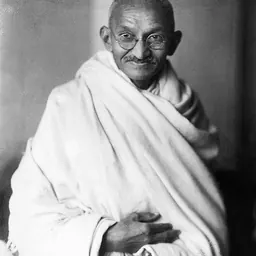
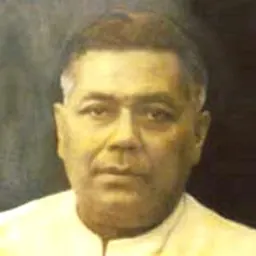
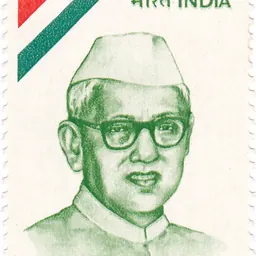

Related people
Same field, nearest in time
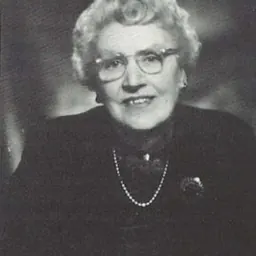


Contemporaries
People whose lives overlapped Kushal Konwar's




Frequently asked questions
Who was Kushal Konwar?
Indian revolutionary
When was Kushal Konwar born?
Kushal Konwar was born on 21 March 1905 in Golaghat district.
When did Kushal Konwar die?
Kushal Konwar died on 15 June 1943 in Assam, India, Jorhat.
What was Kushal Konwar's occupation?
Kushal Konwar was a peace activist and freedom fighter.
What nationality was Kushal Konwar?
Kushal Konwar was Indian.
Sources & further reading
Cite this page
APA: Biography.guide. (2026). Kushal Konwar. https://biography.guide/kushal-konwar/
MLA: "Kushal Konwar." Biography.guide, https://biography.guide/kushal-konwar/.
Chicago: "Kushal Konwar." Biography.guide. https://biography.guide/kushal-konwar/.
Data last updated: 2026-09-20 · Spot an error? Report a correction.
Page generated 2026-09-27 05:27 UTC