
About Kurt Werth
Lived 1896 – 1983 (aged 86–87). Kurt Werth was a German writer, children's writer, illustrator, painter and graphic artist.
Kurt Werth (September 21, 1896 – August 25, 1983) was a German-born illustrator best known for American children's books.
Werth was born September 21, 1896, in Leipzig, Germany. He studied at the Hochschule für Grafik und Buchkunst Leipzig in Leipzig beginning in 1913. He studied there for two years before being drafted into the German army. After his two years of service he returned to the Academy. His professor was influenced by Cézanne, although the public wasn't yet aware of the new trend of cubism in art. At the Academy, Werth studied the new graphic techniques and tried them out as illustrations of literary works. After graduating, Werth began to illustrate books, the first being Shakespeare's Troilus and Cressida which was well received.
Werth moved to Munich, Germany after graduating, to draw satirical cartoons for various Munich magazines. In 1928, he and his wife Margaret, a Jewish German, moved to Berlin, Germany so that she could become part of the City Theater. In Berlin, Werth continued to draw satirical cartoons for Berlin magazines.
With Hitler's increasing power, the magazines folded, and Margaret Werth, who was Jewish, was not allowed to work. In the 1939 the Werths emigrated to the United States where Werth found employment illustrating a Sunday column in the New York Times magazine.
Werth began drawing political cartoons for a wide number of U.S. magazines with a political bent once the U.S. became involved in World War II. After the war Werth began to illustrate children's books. One of his first attempts was Rosalys Hall's The Merry Miller. This attempt led to many other offers for illustrating work.
Werth became a United States citizen in 1947.
Werth states, "As a German I was certainly influenced by the tradition of exact and thorough training in drawing. This goes back to Dürer and even farther." He attempts to illustrate children's books in a "modern style". "Books have to be illustrated in our times. They should show the style of our times. Not all of them do it."
Kurt Werth died in New York City on August 25, 1983.
Awards Lewis Carroll Shelf Award in 1969 for McBroom Tells the Truth by Sid Fleischman Golden Kite Award in 1973 for McBroom the Rainmaker by Sid Fleischman, New Jersey Institute of Technology Award in 1971 for That Jefferson Boy.
Illustrated books
Higgledy-Piggledy Room; by Elizabeth Ryan. 1948 No Ducks For Dinner; story by Rosalys Hall. 1953 Once the Mullah; Persian folk tales retold by Alice Geer Kelsey. 1954 One Mitten Lewis; by Helen Kay, pseud. 1955 The story of San Francisco; by Charlotte E Cobden Jackson. 1955 An Elephant in the Family by James Playsted Wood; 1957 Danger in the Everglades by Frederick W. Keith. 1957 The year without a Santa Claus. by Phyllis McGinley. 1957 The thing at the foot of the bed and other scary tales. by Maria Leach. 1959 Stop It, Moppit! by Geraldine Ross, 1959 Noodles, nitwits, and numskulls by Maria Leach. 1961 Tony's birds. by Millicent Selsam. 1961 A tiger called Thomas. by Charlotte Zolotow. 1963 Hear ye of Boston. by Polly Curren. 1964 The luck book. by Maria Leach. 1964 The valiant tailor, by Kurt Werth. 1965 Sailor Tom, by Edna Boutwell. 1966 The legends of Paul Bunyan. by Roberta Strauss Feuerlicht. 1966 McBroom tells the truth, by Sid Fleischman. 1966 McBroom and the big wind, by Sid Fleischman. 1967 The monkey, the lion, and the snake, by Kurt Werth. 1967 King Thrushbeard. by Kurt Werth. 1968 That Lincoln boy. by Earl Schenck Miers. 1968 One dark night. by Edna Mitchell Preston. 1969 McBroom's Ear, by Sid Fleischman; Kurt Werth. 1969 Lazy Jack. by Kurt Werth. 1970 Samuel Clemens. by Charles Michael Daugherty. 1970 How a piglet crashed the Christmas party, by Boris Vladimirovich Zakhoder. 1971 McBroom's zoo, by Sid Fleischman. 1972 Herbert's stilts, by Hazel Hutchins Wilson. 1972 McBroom the rainmaker, by Sid Fleischman. 1973 Molly and the giant, by Kurt Werth; Mabel Watts. 1973 Dick Whittington and His Cat. by Eva Moore. 1974 The three beggar kings. by Rosalys Haskell Hall. 1974 The newcomers; ten tales of American immigrants by Joseph Raskin; Edith Raskin. 1974
Don’t just read it —
keep it.
Full-length biographies made to live with: read them, listen on the way to work, watch them tonight.
- E-book
- Audio
- Video
Instant download · yours to keep · every purchase keeps this site free
Important facts
People in Kurt Werth's life
Named in this biography and alive at the same time




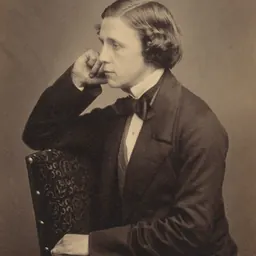

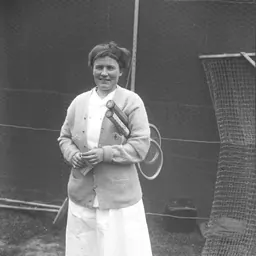

Related people
Same field, nearest in time
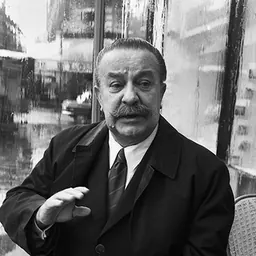
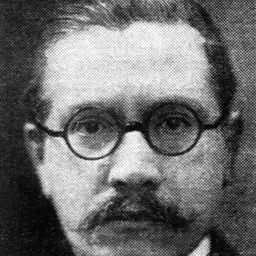


Contemporaries
People whose lives overlapped Kurt Werth's




Frequently asked questions
Who was Kurt Werth?
German-American illustrator
When was Kurt Werth born?
Kurt Werth was born on 21 September 1896 in Berlin.
When did Kurt Werth die?
Kurt Werth died in 1983 in New York City.
What was Kurt Werth's occupation?
Kurt Werth was a writer, children's writer, illustrator, painter and graphic artist.
What nationality was Kurt Werth?
Kurt Werth was German.
Sources & further reading
Cite this page
APA: Biography.guide. (2026). Kurt Werth. https://biography.guide/kurt-werth/
MLA: "Kurt Werth." Biography.guide, https://biography.guide/kurt-werth/.
Chicago: "Kurt Werth." Biography.guide. https://biography.guide/kurt-werth/.
Data last updated: 2026-09-20 · Spot an error? Report a correction.
Page generated 2026-09-27 05:00 UTC