
About Kuroda Kiyotaka
Lived 1840 – 1900 (aged 59). Kuroda Kiyotaka was a Japanese politician, samurai and staatsrat.
Count was a Japanese politician and general who served as prime minister of Japan from 1888 to 1889. He was one of the genrō, or senior statesman of the Meiji era. Born in the Satsuma Domain to a samurai family, Kuroda was involved in the colonization of Hokkaido, the Japan–Korea Treaty of 1876, and the suppression of the Satsuma Rebellion in 1877. After his tenure as prime minister, which ended due to his inability to revise the unequal treaties imposed on Japan, Kuroda also served as Minister of Communications and President of the Privy Council.
Biography
Satsuma samurai Kuroda was born to a samurai family serving the Shimazu daimyō of the Satsuma Domain, in Kyūshū.
In 1862, Kuroda was involved in the Namamugi incident, in which Satsuma retainers killed a British national who refused to bow down to the daimyo's procession. This led to the Anglo-Satsuma War in 1863, in which Kuroda played an active role. Immediately after the war, he went to Edo where he studied gunnery under Egawa Hidetatsu.
Returning to Satsuma, Kuroda became an active member of the Satsuma-Chōshū joint effort to overthrow the Tokugawa shogunate. Later, as a military leader in the Boshin War, he became famous for sparing the life of Enomoto Takeaki, who had stood against Kuroda's army at the Battle of Hakodate.
Political and diplomatic career
Under the new Meiji government, Kuroda in 1870 became a pioneer-diplomat to Sakhalin, then known in Japanese as Karafuto and claimed by both Japan and the Russian Empire. Fearing Russia's push eastward, Kuroda returned to Tokyo and advocated quick development and settlement of Japan's northern frontier.
In 1871, he traveled to Europe and the United States for five months, and upon returning to Japan, he was put in charge of colonization efforts in Hokkaidō.
In 1874, Kuroda was named director of the Hokkaidō Development Commission, and organized a colonist-militia scheme to settle the island with unemployed ex-samurai and retired soldiers who would serve as both farmers and as a local militia. He was also promoted to lieutenant general in the Imperial Japanese Army. Kuroda invited agricultural experts from the United States to visit Hokkaidō, and to provide advice on what crops and production methods might be successful.
Kuroda was dispatched as an envoy to Korea in 1875, and negotiated the Japan–Korea Treaty of 1876. In 1877, he was sent as part of the force to suppress the Satsuma Rebellion. In 1878, he became de facto leader of Satsuma Domain following the assassination of Ōkubo Toshimichi.
Shortly before he left office in Hokkaidō, Kuroda became the central figure in the Hokkaidō Colonization Office Scandal of 1881. As part of the government's privatization program, Kuroda attempted to sell the assets of the Hokkaidō Colonization Office to a trading consortium created by some of his former Satsuma colleagues for a nominal price. When the terms of the sale were leaked to the press, the resultant public outrage caused the sale to fall through. Also in 1881, Kuroda's wife died of a lung disease, but on rumors that Kuroda had killed her in a drunken rage, the body was exhumed and examined. Kuroda was cleared of charges, but rumors of his problems with alcohol abuse persisted. The embassy of Kuroda Kiyotaka, in Pusan, on its way to Ganghwa Island (江華島), Korea, 16 January 1876. There were 2 warships (, and 3 troop transports of the Imperial Japanese Navy, and one liner for the embassy led by Kuroda.
In 1887, Kuroda was appointed to the cabinet post of Minister of Agriculture and Commerce.
Prime Minister (1888–1889) Kuroda Kiyotaka became the 2nd Prime Minister of Japan, after Itō Hirobumi in 1888. During his term, he oversaw the promulgation of the Meiji Constitution. However, the vexing issue of Japan's inability to secure revision of the unequal treaties created considerable controversy. After drafts of proposed revisions drawn up by his foreign minister Ōkuma Shigenobu became public in 1889, the plan to appoint foreigners as judicial officers to abolish consular jurisdiction met with great opposition, and on 18 October a bombing occurred. In response to this, nearly all cabinet members abandoned amending the treaty, and Kuroda had no choice but to agree. On 25 October, Kuroda was forced to resign. He was succeeded by Sanjō Sanetomi as acting prime minister. Then, on 24 December 1889, Yamagata Aritomo, an army Field Marshal (Gensui) became the next prime minister of Japan.
Later life Kuroda served as Minister of Communications in 1892 under the 2nd Itō Cabinet. He was appointed a genrō in November 1889, and became President of the Privy Council in 1895.
Kuroda died of a brain hemorrhage in 1900 and Enomoto Takeaki presided over his funeral ceremonies. His grave is at the Aoyama Cemetery in Tokyo.
Honours From the corresponding Japanese Wikipedia article
Peerages and other titles Count (7 July 1884) Genrō (1 November 1889)
Decorations Grand Cordon of the Order of the Rising Sun (2 November 1877) Grand Cordon of the Order of the Rising Sun with Paulownia Flowers (20 August 1895) Grand Cordon of the Order of the Chrysanthemum (25 August 1900; posthumous)
Don’t just read it —
keep it.
Full-length biographies made to live with: read them, listen on the way to work, watch them tonight.
- E-book
- Audio
- Video
Instant download · yours to keep · every purchase keeps this site free
Important facts
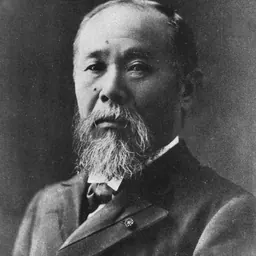
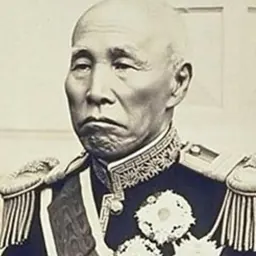
People in Kuroda Kiyotaka's life
Named in this biography and alive at the same time




Related people
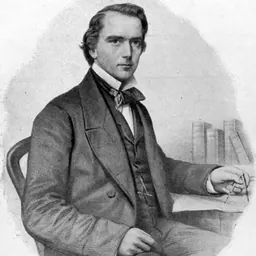
Same field, nearest in time





Contemporaries
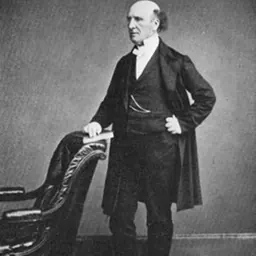
People whose lives overlapped Kuroda Kiyotaka's


Frequently asked questions
Who was Kuroda Kiyotaka?
Japanese general (1840-1900)
When was Kuroda Kiyotaka born?
Kuroda Kiyotaka was born on 9 November 1840 in Shinyashiki-chō.
When did Kuroda Kiyotaka die?
Kuroda Kiyotaka died on 23 August 1900 in Mita.
What was Kuroda Kiyotaka's occupation?
Kuroda Kiyotaka was a politician, samurai and staatsrat.
What nationality was Kuroda Kiyotaka?
Kuroda Kiyotaka was Japanese.
Sources & further reading
Cite this page
APA: Biography.guide. (2026). Kuroda Kiyotaka. https://biography.guide/kuroda-kiyotaka/
MLA: "Kuroda Kiyotaka." Biography.guide, https://biography.guide/kuroda-kiyotaka/.
Chicago: "Kuroda Kiyotaka." Biography.guide. https://biography.guide/kuroda-kiyotaka/.
Data last updated: 2026-09-20 · Spot an error? Report a correction.
Page generated 2026-09-27 05:18 UTC