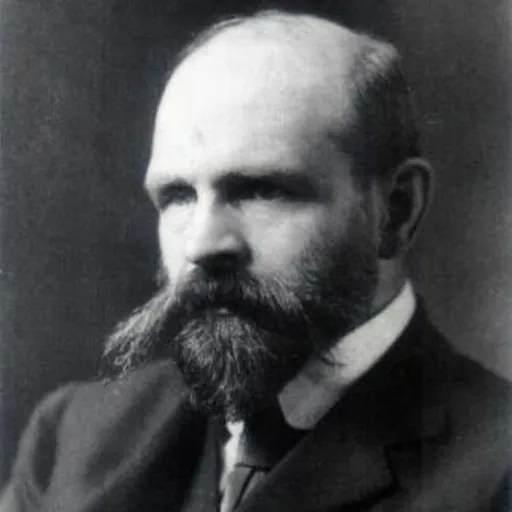
About Kuno Meyer
Lived 1858 – 1919 (aged 60). Kuno Meyer was a linguist, university teacher, translator, philologist, celticist and academia.
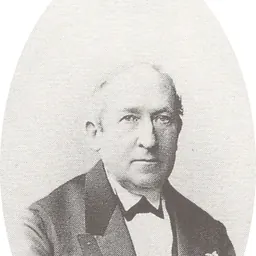
Kuno Meyer (20 December 1858 – 11 October 1919) was a German scholar, distinguished in the field of Celtic philology and literature. His pro-German stance at the start of World War I in the United States was a source of controversy. His brother was the distinguished classical scholar, Eduard Meyer.
Meyer was considered first and foremost a lexicographer among Celtic scholars but is known by the general public in Ireland rather as the man who introduced them to Selections from Ancient Irish Poetry (1911). He spent two years in Edinburgh, Scotland, as a teenager (1874–1876) learning English. While at Liverpool, he was appointed to the post of MacCallum Lecturer at the University of Glasgow. He held this post for three years, delivering his first lectures in 1904. He was among those who called for the establishment of a permanent lectureship in Celtic Studies at Glasgow. On 26 October 1904, Kuno Meyer delivered a lecture titled An Appeal for a Gaelic Academy to the Liverpool branch of the Gaelic League. Throughout the lecture, Meyer draws parallels between the Irish and Hungarian language revival movements, ultimately calling upon Irish intellectuals to use the Hungarian Academy as a model from which to build an Irish academic institution.
Meyer nevertheless accepted candidacy for the post of exchange professor at Harvard, at the recommendation of German professors there. However, when the April 1915 issue of The Harvard Advocate awarded first prize to an anti-German satirical poem "Gott mit Uns" written by an undergraduate, Meyer sent the university (and the press) a letter of protest, rebuking the faculty members who served as judges for failure to exercise neutrality. Meyer also declined his candidacy for the exchange professorship in the letter. In a reply, President Abbott Lawrence Lowell said, in explaining Harvard's policy, that freedom of speech includes pro-German and pro-Allied voices alike. Florence went to Germany in 1916, Meyer in 1917. In 1919 Florence and her daughter went to Switzerland. He died in Leipzig.
Legacy Posthumously, in 1920, Meyer's name was restored, both by Dublin and Cork, in their Rolls of Honorary Freemen. The restoration happened on 19 April 1920 in Dublin, where Sinn Féin had won control of the City Council three months before, rescinding the decision taken in 1915 by the Irish Parliamentary Party.
In 1965, the Gaelic League and the Irish Press petitioned the restoration as they were unaware that it had already occurred.
Also in 1920, Meyer was described by his acquaintance Douglas Hyde, Celtic philologist and later president of the Republic of Ireland, as "one of the most lovable men who ever existed, and himself undoubtedly in love with Ireland". Hyde credited him with advancing the goals of the Gaelic League when the question arose whether to allow the teaching of the Irish language in the Intermediate Education of Ireland.
W. T. Cosgrave, later president of the Irish Free State, as a Dublin councilman, had strenuously opposed the removal of Meyer's name from Dublin's Freemen roll in the first place. Cosgrave wrote in a letter that Meyer was recognized as "the greatest Celtic authority since the death of Whitley Stokes" and that he has "done more for Irish scholarship and Irish national glory than any other living man".
In 2004, on the centenary of the publication of Ériu, Proinsias Mac Cana described Kuno Meyer as a "great" scholar, in "brilliant" partnership with John Strachan as the first editors of Ériu, his predecessors in that position. Meyer is among those credited with playing a crucial role in fostering native Irish Celtists in the initial phases of Ériu and the School of Irish Learning, and when the editorship over Ériu later passed to the succeeding generation of Irish scholars, tantamount to the fulfilment of the "primary intention of Meyer and his associates".
Selected bibliography 1885: The Irish Odyssey 1892: The Vision of MacConglinne, with A. Nutt 1894: The Voyage of Bran 1896: Early Relations of the Brython and Gael 1901: King and Hermit 1904: An Appeal for a Gaelic Academy 1905: Cáin Adamnáin: An Old Irish Treatise on the Law of Adamnan 1911: Selections from Ancient Irish Poetry 1912: Sanas Cormaic, an Old Irish Glossary 1913: Learning in Ireland in the Fifth Century 1914: Über die älteste irische Dichtung
Festschrift Miscellany presented to Kuno Meyer by some of his friends and pupils on the occasion of his appointment to the chair of Celtic philology in the University of Berlin; ed. by Osborn Bergin and Carl Marstrander. Halle: M. Niemeyer, 1912.
Don’t just read it —
keep it.
Full-length biographies made to live with: read them, listen on the way to work, watch them tonight.
- E-book
- Audio
- Video
Instant download · yours to keep · every purchase keeps this site free
Important facts
People in Kuno Meyer's life
Named in this biography and alive at the same time
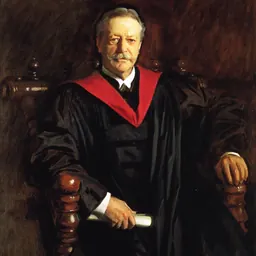







Related people
Same field, nearest in time

Contemporaries
People whose lives overlapped Kuno Meyer's

Frequently asked questions
Who was Kuno Meyer?
German Celtic scholar (1858-1919)
When was Kuno Meyer born?
Kuno Meyer was born on 20 December 1858 in Hamburg.
When did Kuno Meyer die?
Kuno Meyer died on 11 October 1919 in Leipzig.
What was Kuno Meyer's occupation?
Kuno Meyer was a linguist, university teacher, translator, philologist, celticist and academia.
What nationality was Kuno Meyer?
Kuno Meyer's recorded nationality: Hamburg, German Confederation, North German Confederation.
Sources & further reading
Cite this page
APA: Biography.guide. (2026). Kuno Meyer. https://biography.guide/kuno-meyer/
MLA: "Kuno Meyer." Biography.guide, https://biography.guide/kuno-meyer/.
Chicago: "Kuno Meyer." Biography.guide. https://biography.guide/kuno-meyer/.
Data last updated: 2026-09-20 · Spot an error? Report a correction.
Portrait: Wikimedia Commons · author & licence
Page generated 2026-09-27 04:57 UTC