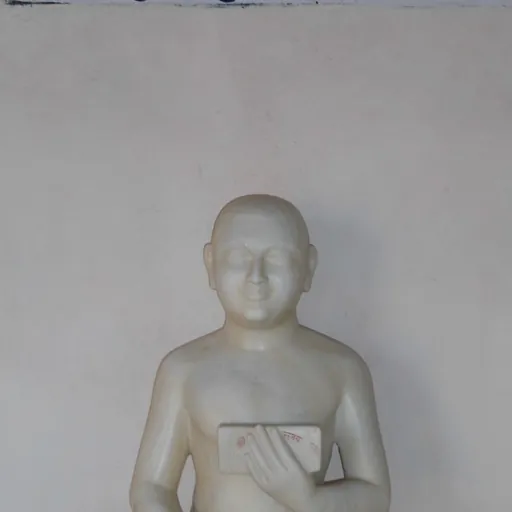
About Kundakunda
Lived 100 – 150. Kundakunda was an Indian writer.
Kundakunda is the name given to the author or authors of sixteen influential Digambara texts, including Niyamasāra ("The Essence of the Restraint"), Pañcāstikāyasāra ("The Essence of the Five Existents"), Samayasāra ("The Essence of the Self"), and Pravacanasāra ("The Essence of the Teaching"). These attributions are questioned, and "only parts of some works are likely to have been written by him," showing "clear signs of interpolations" and multiple authorship.
While dates for "Kundakunda" range from scholarly datings in the 8th c. CE to traditional datings in the 2nd–3rd c. CE, texts attributed to him may reflect multiple authorship, containing layers dating from 350–400 (Pañcâstikāya-sangraha) and 550–600 CE (Samaya-sāra) up to 950–1150 CE. The Kundakunda-core texts were anonymous compilations for several centuries, and it is not until Jayasena's (ca. 1150–1200) commentary on the Pañcâstikāya that an author is explicitly mentioned and a Kundakunda-narrative is created.
The Kundakunda-attributed works show influences from Samkhya, Mahayana Buddhism, and especially Advaita Vedanta, reflected in the distinction between niścayanaya or ‘ultimate perspective’ and vyavahāranaya or ‘mundane perspective’, or the pure atman and the material world.
With the Kundakunda-texts the Digambara developed a mystical tradition focusing on the direct realization of the ultimate perspective of the pure soul, and Kundakunda's emphasis on liberating knowledge has become a mainstream view in Digambara Jainism. Kundakunda was an important inspiration for Shrimad Rajchandra (1867–1901), who in turn inspired Kanji Swami (1890–1980), Rakesh Jhaveri and the Shrimad Rajchandra Mission, and Dada Bhagwan (1908–1988).
Authorship, names, and dating While Jain-tradition regards Kundakunda as an author from the 2nd or 3rd century who wrote numerous works, academic scholarship has questioned these datings and attributions, proposing later dates and also proposing multiple authorship.
Balcerowicz discerns seven strata for the Pañcâstikāya-sangraha, starting in 350–400 CE and ending in 950–1150. The Samaya-sāra contains four layers, from 550–600 CE to 950–1150 CE. According to Balcerowicz
Likewise, Johnson states that
Johannes Bronkhorst disagrees with Johnson, stating "I do have the impression of being confronted with the work of someone who wished to incorporate into Jainism a notion that had become very useful and fruitful in other currents, primarily Samkhya, but also elsewhere."
According to Dundas, following Dhaky (1991), Kundakunda can be dated to the 8th century CE, as his hagiography, and quotations from his influential and important work begin to appear around 8th-century CE, and his ideas can also be traced to this time-period. Jain scholars date him much earlier, with Natubhai Shah and A.N. Upadhye placing him in the second-century CE, and Jayandra Soni placing him in either the 2nd– or 3rd–century CE.
Balcerowicz notes that the Kundakunda-core texts were anonymous compilations for several centuries. It is not until Jayasena's (ca. 1150–1200) commentary on the Pañcâstikāya that an author is explicitly mentioned. According to Balcerowicz, Jayasena had an important role in the creation of the Kundakunda-narrative, narrating a story about Kundakunda "the true essence of the Pure Soul (śuddhâtmatattva)"by means of an encounter in "the distant continent of Eastern Videha" with "the omniscient Tīrthakara Sīmandara-svāmin," whereafeter he returns and recites the Pañcâstikāya-prābhrta to the Mahārāja Śivakumāra. The story seems to be modelled on Hindu motifs, and was popularized in modern times by Kanji Swami (1890–1980) who claimed to have been present at this occasion in a previous life, after his follower Campāben (1918–1993), who said she had been there too in a previous life.
Don’t just read it —
keep it.
Full-length biographies made to live with: read them, listen on the way to work, watch them tonight.
- E-book
- Audio
- Video
Instant download · yours to keep · every purchase keeps this site free
Important facts
Related people
Same field, nearest in time


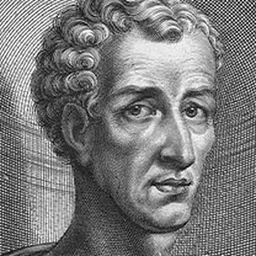
Contemporaries
People whose lives overlapped Kundakunda's
Frequently asked questions
Who was Kundakunda?
Indian Jain monk
When was Kundakunda born?
Kundakunda was born in 100.
When did Kundakunda die?
Kundakunda died in 150.
What was Kundakunda's occupation?
Kundakunda was a writer.
What nationality was Kundakunda?
Kundakunda was Indian.
Sources & further reading
Cite this page
APA: Biography.guide. (2026). Kundakunda. https://biography.guide/kundakunda/
MLA: "Kundakunda." Biography.guide, https://biography.guide/kundakunda/.
Chicago: "Kundakunda." Biography.guide. https://biography.guide/kundakunda/.
Data last updated: 2026-09-23 · Spot an error? Report a correction.
Portrait: Wikimedia Commons · author & licence
Page generated 2026-09-27 05:07 UTC