
About Krzysztof Opaliński
Lived 1611 – 1655 (aged 44). Krzysztof Opaliński was a Polish poet, diplomat, politician, voivode, writer and satirist.
Krzysztof Opaliński (21 January 1611 – 6 December 1655) was a Polish szlachta (nobleman), politician, writer, satirist, and Voivode (Governor) of Poznań. A notable figure during the Swedish Deluge, Opaliński was a skilled diplomat who opposed King John II Casimir and published many of his works concerning the daily political or social matters in the Polish–Lithuanian Commonwealth.
Biography He was the son of Piotr Opaliński and married Teresa Czarnkowska on 28 May 1634, with whom he had two sons, Piotr Adam Opaliński II and Jan Karol Opaliński, and four daughters.
Together with his brother Łukasz Opaliński he studied in the Lubrański Academy in Poznań (1620–1625), and later abroad at Louvain (1626–1629), Orléans (1629) and Padua (1630). After returning to the Polish–Lithuanian Commonwealth with the position of a starost he became active on the political scene. In February 1632, he was elected a deputy at the election sejm which elected Władysław IV Vasa. In 1637, after his father's death, he became the Voivode of Poznań. Opaliński opposed most of Władysław's military proposals (from increasing the army to the war against the Ottoman Empire), although he supported his idea of sea tariffs. In 1645 he led a diplomatic mission to Paris, where he was a proxy of king Władysław IV during his marriage to Marie Louise Gonzaga, whom he escorted back to Poland afterwards.
In 1647 Opaliński purchased the town of Sieraków from his brother Łukasz and, in 1650, opened the first modern school in Poland, using the didactic materials prepared by Jan Amos Komenski (Komenský, Comenius). A Catholic himself, Opaliński was critical of the zealous Society of Jesus and supported religious tolerance. He was a patron of writers, scientists and a bibliophiles.
Opaliński was a lifelong political rival of starost Bogusław Leszczyński in Greater Poland.
When in 1648 Poland elected John II Casimir as king, Opaliński joined the opposition. The king had few friends among the Polish nobility, as he openly sympathised with Austria and showed disregard and contempt for Sarmatism, which has become part of Polish culture. Due to this, thinking that John Casimir was too weak or for any other reasons, he encouraged King Charles X Gustav of Sweden to claim the Polish Crown. During the Swedish invasion (The Deluge) Krzysztof Opaliński and Bogusław Leszczyński were tasked with defence of the Greater Poland province. Dissatisfied with policies of John Casimir, they decided to surrender together with their pospolite ruszenie to Charles Gustav at Ujście on 25 July 1655. Many other voivodes of other voivodeships followed their suit, especially Prince Janusz Radziwiłł in the Grand Duchy of Lithuania (although Krzysztof's brother, Łukasz Opaliński, remained loyal to the Polish king). Almost the entire country was overrun by the Swedes, before the Jasna Góra resistance and the Tyszowce Confederation which turned the tide against the Swedes.
Opaliński died in 1655 at Włoszakowice at the age of 44. He was buried next to his father in the catacombs of a local church in Sieraków.
Works He was the author of numerous works, including Satyry, albo Przestrogi do naprawy rządu i obyczajów w Polszcze należące (Satires, or Warnings Related to the Reform of Government and Customs in Poland) published in 1650, in the aftermath of the Khmelnytsky Uprising that spelled the end of the Golden Age of the Commonwealth. The satires, modelled on the Satires of Juvenal, written in an unrhymed syllabic verse, are his most famous work. In his works, Opaliński denounced the oppression of peasants (increasing serfdom) and corruption of Golden Freedoms, visible in the increasing anarchy which was to be found in political life. He also wrote on witchcraft in one the satires, one of the few contemporary voices to correctly identify some of the motives behind the witchcraft persecution and to denounce them. He wrote comedies and tragedies, however they were lost with time.
Krzysztof Opaliński after his death. Painting at the Sieraków church.
Quotes
Translated:
Translated:
Don’t just read it —
keep it.
Full-length biographies made to live with: read them, listen on the way to work, watch them tonight.
- E-book
- Audio
- Video
Instant download · yours to keep · every purchase keeps this site free
Important facts
Family & relationships
People in Krzysztof Opaliński's life
Named in this biography and alive at the same time


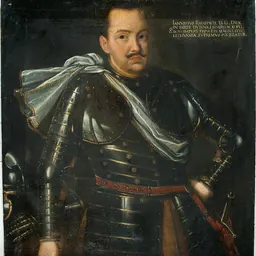
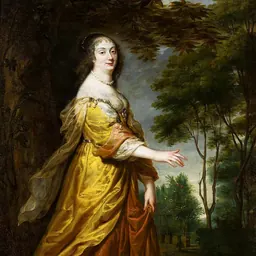
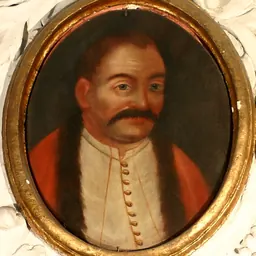
Related people
Same field, nearest in time


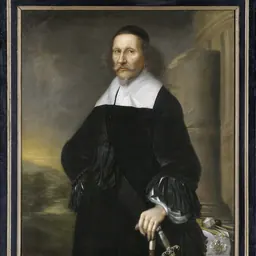

Contemporaries
People whose lives overlapped Krzysztof Opaliński's






Frequently asked questions
Who was Krzysztof Opaliński?
Polish noble (1611-1655)
When was Krzysztof Opaliński born?
Krzysztof Opaliński was born on 21 January 1611 in Sieraków, Poznań.
When did Krzysztof Opaliński die?
Krzysztof Opaliński died on 6 December 1655 in Gmina Włoszakowice.
What was Krzysztof Opaliński's occupation?
Krzysztof Opaliński was a poet, diplomat, politician, voivode, writer and satirist.
What nationality was Krzysztof Opaliński?
Krzysztof Opaliński was Polish.
Sources & further reading
· Wikipedia: Krzysztof Opaliński
· DBpedia: Krzysztof Opaliński
Cite this page
APA: Biography.guide. (2026). Krzysztof Opaliński. https://biography.guide/krzysztof-opalinski/
MLA: "Krzysztof Opaliński." Biography.guide, https://biography.guide/krzysztof-opalinski/.
Chicago: "Krzysztof Opaliński." Biography.guide. https://biography.guide/krzysztof-opalinski/.
Data last updated: 2026-09-20 · Spot an error? Report a correction.
Page generated 2026-09-27 05:26 UTC