
Krotoa
South African tribal leader
About Krotoa
Lived 1643 – 1674 (aged 30–31). Krotoa was a South African interpreter and interpreting.
The "!Oroǀõas" ("Ward-girl"), spelled in Dutch as Krotoa or Kroket, otherwise known by her Christian name Eva (c. 1643 – 29 July 1674), was a !Uriǁ'aeǀona translator who worked for the Vereenigde Oostindische Compagnie (VOC) during the founding of the Cape Colony. She was the first woman mentioned by her Khoi name in early European records of the settlement at ǁHuiǃgaeb (Cape Town).
Name The name "Krotoa" or "Kroket" was most likely not a name, but a Dutch spelling of the designation !Oroǀõas (Khoekhoegowab spelling: !Goroǀgôas), referring to the fact that she was put under guardianship, either of her uncle Autshumato (also known as Kx'aothumathub) or of Jan van Riebeeck and Maria van Riebeeck. Her actual birth name is unknown.
Biography
Early life Krotoa was born in 1643 as a member of the !Uriǁ’aeǀona (Strandlopers) people. Unlike her uncle, however, Krotoa was able to obtain a higher position within the Dutch hierarchy, as she additionally served as a trading agent and ambassador for a high-ranking chief and peace negotiator in times of war. Her story exemplifies the initial dependency of the Dutch newcomers on the natives, who were able to provide reasonably reliable information about the local inhabitants.
The initial arrival of the Dutch in April 1652 was not viewed as negative. Many Khoi people saw their arrival as an opportunity for personal gain as middlemen in the livestock trade; others saw them as potential allies against preexisting enemies. At the peak of her career as an interpreter, Krotoa held the belief that Dutch presence could bring benefits for both sides.
There are multiple accounts of how Krotoa came to work in the household of Jan van Riebeeck. One account says the Dutch forcefully kidnapped the child as a !Oroǀõas, although no hard evidence confirms this account. on 27 February 1668 on an expedition.
After the death of her husband came the appointment of a new governor, Zacharias Wagenaer. Wagenaer held deeply racist views of the Khoisan people, and as Dutch settlement grew more secure in the region, Krotoa's skills as a translator were no longer needed.
Later years in exile Krotoa returned to the mainland on 30 September 1668 with her three children. Suffering from alcoholism, she left the Castle in the settlement to be with her family in their kraals. In February 1669, she was imprisoned unjustly for immoral behavior at the Castle and then banished to Robben Island. This was likely the result of the strict anti-alcohol laws the VOC had passed to govern the local population after they introduced higher proof European liquors. One of van Riebeeck's nieces, Elizabeth van Opdorp, adopted Krotoa's children after she was banished. She returned to the mainland on many occasions, only to find herself once more banished to Robben Island. In May 1673, she was allowed to baptise a child on the mainland. Three of her children survived. She died on 29 July 1674 in the Cape and was buried on 30 September 1674 in the Castle in the Fort. However, roughly a hundred years later, her bones were removed to an unmarked grave.
After her death, Krotoa's story would not be deeply explored for nearly two and a half centuries. Instead, attention was mostly put on white European women who came to South Africa on missionary expeditions. It was not until after the 1920s that her story become a part of South African history.
In 2016, on the anniversary of the 350th commemoration of the Castle, descendants of Krotoa conducted a ceremony to return her spirit to the Castle in the Fort.
On 20 May 2023, Stellenbosch University renamed the RW Wilcocks building to Krotoa as part of the institution’s commitment to inclusivity.
Cultural references The 2002 novel Eilande by Dan Sleigh, translated from Afrikaans by André Brink (in Dutch: 'Stemmen uit zee'/in English: 'Islands'), describes the lives of Krotoa and her daughter Pieternella from the viewpoints of seven men who knew them.
As late as 1983, under the name of Eva, she was still known in South Africa as a caution against miscegenation.
In 1990, South African poet and author Karen Press wrote a poem entitled "Krotoa's Story" that attempted to reimagine Krotoa's life, emotions, and conflicting desires partly from her perspective. The poem was based on an earlier children's story by Press entitled Krotoa, which was created as part of an educational initiative by the South African Council for Higher Education designed to inform schoolchildren about colonization from the perspective of indigenous South Africans.
In 1995, South African performer Antoinette Pienaar created a one-woman play entitled Krotoa. The work was first performed at the Little Karoo National Arts Festival, where it was awarded the “Herrie” prize. The play is unique in its depiction and memorialization of Krotoa as a mother of the nation, a characterization which had been previously rejected by white South Africans.
In 2000 Dalene Matthee wrote a novel, "Pieternella van die Kaap", based on her thorough research of diaries and documents on Eva Krotoa and Pieternella van Meerhoff in archives and museums as well as consulting Drs. Dan Sleigh and Helena Scheffler.
In her 2005 essay "Malintzin, Pocahontas, and Krotoa: Indigenous Women and Myth Models of the Atlantic World", Professor Pamela Scully compared Krotoa to Malintzin and Pocahontas, two other women of the same time period that were born in different areas of the world (Malintzin in Mesoamerica, Pocahontas in colonial Virginia). Scully argues that all three of these women had very similar experiences in the colonialist system despite being born in different regions. She argues that Krotoa's life helps demonstrate the significance of indigenous women in the founding of the Atlantic World. Scully also argues that the lives of Krotoa, Pocahontas and Malintzin show the universality of the way that indigenous people were treated in emerging colonial systems, as well as the way their experiences have been flattened by colonial origin narratives.
In 2017 a dramatic feature film directed by Roberta Durrant about Krotoa's life, titled "Krotoa", was released in South Africa to mediocre success.
Don’t just read it —
keep it.
Full-length biographies made to live with: read them, listen on the way to work, watch them tonight.
- E-book
- Audio
- Video
Instant download · yours to keep · every purchase keeps this site free
Important facts
People in Krotoa's life
Named in this biography and alive at the same time
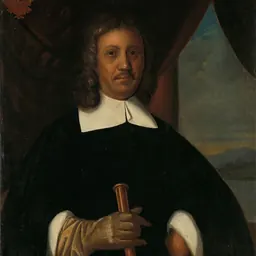
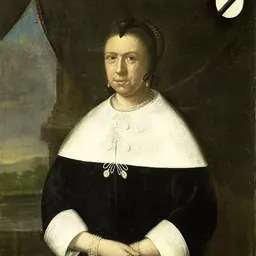

Related people
Same field, nearest in time



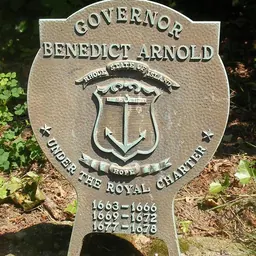
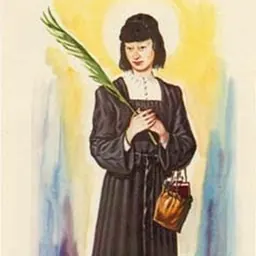
Contemporaries
People whose lives overlapped Krotoa's




Frequently asked questions
Who was Krotoa?
South African tribal leader
When was Krotoa born?
Krotoa was born in 1643 in Cape Town.
When did Krotoa die?
Krotoa died on 29 July 1674 in Robben Island.
What was Krotoa's occupation?
Krotoa was an interpreter and interpreting.
What nationality was Krotoa?
Krotoa was South African.
Sources & further reading
Cite this page
APA: Biography.guide. (2026). Krotoa. https://biography.guide/krotoa/
MLA: "Krotoa." Biography.guide, https://biography.guide/krotoa/.
Chicago: "Krotoa." Biography.guide. https://biography.guide/krotoa/.
Data last updated: 2026-09-26 · Spot an error? Report a correction.
Page generated 2026-09-27 05:16 UTC