
Kōtarō Yoshida
Japanese jujutsuka
About Kōtarō Yoshida
Lived 1883 – 1966 (aged 82–83). Kōtarō Yoshida was a Japanese jujutsuka.
was a Japanese martial artist. He was a practitioner and instructor of Daitō-ryū Aiki-jūjutsu, and Yanagi-ryū, the samurai arts of the Yoshida clan. Yoshida was well known for his skills in Japanese and Okinawan weaponry, particularly the Yari, Tessen (which he once killed a bear with), Shuriken, Katana, Tantō and Halberd.
Early life and training While by all accounts a prolific martial artist and teacher, there is little surviving documentation of Yoshida's life that has been translated into English. Because he was known to have lived an extremely ascetic lifestyle, and possibly as a result of his political activities and connections, most information on Yoshida today has been passed down through oral transmission by primary sources.
Coming from a samurai family, Yoshida started training in martial arts as a young child, learning from both his mother and father as well as others, often training in secret due to samurai restrictions imposed during the Meiji Restoration. His father was killed by a skilled swordsman, Sakagami Shuzen, when Yoshida was 13, prompting him to spend much of his adolescence in meditation and training. At 18, Yoshida killed two men with a knife after they attempted to rob him when they noticed he was training in the mountains in samurai garb. Unbeknownst to him, they were members of a gang that sought revenge, forcing Yoshida to successfully defend his home by killing the invaders with a sword and subterfuge. Martial artists such as Gōgen Yamaguchi, Toyama Kanken, Hiroshi Kinjo, Kenichi Sawai and Doshin So regularly trained with Yoshida and his students, often replicating the rigorous and multidisciplinary approach previously employed by samurai and Butoku Kai’s Budo Senmon Gakko. His teaching style was known to be very harsh, eccentric and diverse, encompassing health, nutrition, psychology, philosophy, meditation, the occult, Ki, breathing techniques, weight lifting, techniques of muscle manipulation and bone adjustments, extreme conditioning, and intense physical training including throws, Makiwara, knives and swords. The retelling of this story in Oyama’s This is Karate is thought to have influenced the famous fly scene in The Karate Kid.
In his later years, Yoshida became paralyzed on his left side after injuring himself by driving his bicycle in the path of a truck, stopping it from hitting a child. He spent his last years in Hitachi, Ibaraki, where he died in 1966.
Don’t just read it —
keep it.
Full-length biographies made to live with: read them, listen on the way to work, watch them tonight.
- E-book
- Audio
- Video
Instant download · yours to keep · every purchase keeps this site free
Important facts
People in Kōtarō Yoshida's life
Named in this biography and alive at the same time
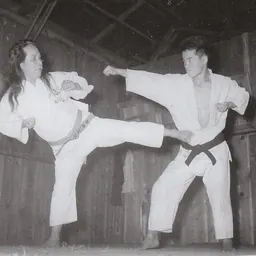
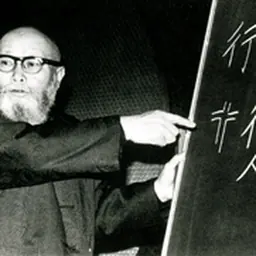
Related people
Same field, nearest in time





Contemporaries
People whose lives overlapped Kōtarō Yoshida's

Frequently asked questions
Who was Kōtarō Yoshida?
Japanese jujutsuka
When was Kōtarō Yoshida born?
Kōtarō Yoshida was born in 1883 in Miyama, Tamura district.
When did Kōtarō Yoshida die?
Kōtarō Yoshida died in 1966 in Hitachi.
What was Kōtarō Yoshida's occupation?
Kōtarō Yoshida was a jujutsuka.
What nationality was Kōtarō Yoshida?
Kōtarō Yoshida was Japanese.
Sources & further reading
· DBpedia: Kōtarō Yoshida (martial artist)
Cite this page
APA: Biography.guide. (2026). Kōtarō Yoshida. https://biography.guide/kotaro-yoshida/
MLA: "Kōtarō Yoshida." Biography.guide, https://biography.guide/kotaro-yoshida/.
Chicago: "Kōtarō Yoshida." Biography.guide. https://biography.guide/kotaro-yoshida/.
Data last updated: 2026-09-20 · Spot an error? Report a correction.
Page generated 2026-09-27 05:21 UTC