
About Kostas Ostrauskas
Lived 1926 – 2012 (aged 85). Kostas Ostrauskas was a Lithuanian journalist, literary historian, literary critic and dramaturge.
Kostas Ostrauskas (5 April 1926 – 9 January 2012) was a Lithuanian émigré avant-garde playwright and journalist.
Biography Early life Kostas Ostrauskas was born in April 1926 in Veiveriai. His father was an organist and choirmaster. He moved to Šančiai in 1930. Ostrauskas attended the and the After the sixth grade, in 1943 Ostrauskas passed an exam which let him enter and act at the . Ostrauskas moved to Germany in 1944, fleeing the Eastern Front of World War Two. Ostrauskas attended a Lithuanian gymnasium in Lübeck from 1944 to 1946. After graduating, Ostrauskas studied Lithuanistics at the Pinneberg Baltic University, a university for displaced persons for refugees of the occupied Baltic states. During his stay in the camp, Ostrauskas organized the performance of Vincas Krėvė-Mickevičius's Šarūnas and Balys Sruoga's Baisioji naktis. He also participated in a singing studio and performed in various camps.
Immigration to the United States Ostrauskas moved to the United States in 1949. He briefly joined the Metropolitan Opera before renouncing his decision. He began studying Lithuanistics and Slavistics at the University of Pennsylvania in 1950, graduating with a magister's degree in 1952. He would receive his doctor's degree in 1958. Until 1989, Ostrauskas worked at the university's library, as well as the music department from 1958 to 1978. From 1954, Ostrauskas frequently collaborated in the Lithuanian Encyclopedia. In the United States, Ostrauskas was an honorary member of the liberal . From 1961 he worked at the Institute of the Lithuanian Language, and was the head of its literature department from 1965 to 1974.
Literary works Ostrauskas's early plays, such as Pypkė (1951), are marked by absurdism. His later works have been described as postmodern. Ostrauskas also published smaller plays in various magazines. Artistically, Ostrauskas combined art, literature, and music into his works. Metai (1968), which was based on Antonio Vivaldi's The Four Seasons. Additionally, Gundymai (1983) was based on Hieronymus Bosch's paintings. Ars amoris (1991), which is considered the first Lithuanian postmodern drama, is based on the ambiguity of love. The characters are varied and brought together from works of various eras; Beatrice from Dante's Divine Comedy, Cervantes's Don Quixote, Shakespeare's Prince Hamlet, and Goethe's Faust make an appearance. Ostrauskas also wrote plays on the lives of Antanas Baranauskas and Balys Sruoga.
Ostrauskas is best known for his three-part play Gyveno kartą senelis ir senelė (1963–1969). The story's main grandparents (like the characters in Ataraxia, a play by Antanas Škėma) are both victims (the grandparents' only son died in a car accident) and executioners (in revenge for the loss of their son, they kill the students renting their room). The crimes are not revealed directly but in a tragicomic way. The grandparents are a metonymy of a world based on violence, but nonetheless are people who are immersed by culture and humanity.
Ostrauskas's absurdist play Who Is Godot? (1999) is a response to Samuel Beckett's Waiting for Godot. According to Ostrauskas, absurdist theater lets a person reflect on themselves, which he claims is a person's biggest value.
Don’t just read it —
keep it.
Full-length biographies made to live with: read them, listen on the way to work, watch them tonight.
- E-book
- Audio
- Video
Instant download · yours to keep · every purchase keeps this site free
Important facts
People in Kostas Ostrauskas's life
Named in this biography and alive at the same time
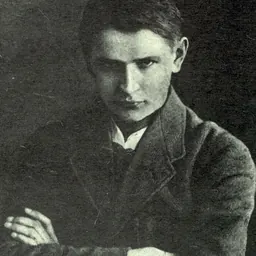






Related people
Same field, nearest in time




Contemporaries
People whose lives overlapped Kostas Ostrauskas's

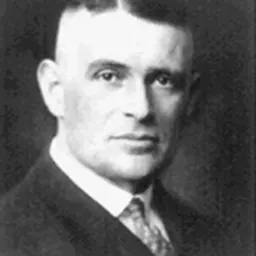
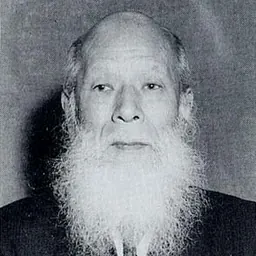
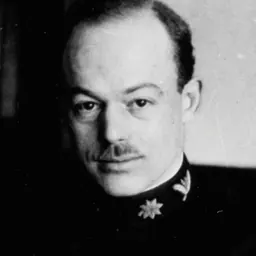
Frequently asked questions
Who was Kostas Ostrauskas?
Lithuanian journalist
When was Kostas Ostrauskas born?
Kostas Ostrauskas was born on 5 April 1926 in Veiveriai.
When did Kostas Ostrauskas die?
Kostas Ostrauskas died on 9 January 2012 in United States.
What was Kostas Ostrauskas's occupation?
Kostas Ostrauskas was a journalist, literary historian, literary critic and dramaturge.
What nationality was Kostas Ostrauskas?
Kostas Ostrauskas was Lithuanian.
Sources & further reading
· Wikipedia: Kostas Ostrauskas
Cite this page
APA: Biography.guide. (2026). Kostas Ostrauskas. https://biography.guide/kostas-ostrauskas/
MLA: "Kostas Ostrauskas." Biography.guide, https://biography.guide/kostas-ostrauskas/.
Chicago: "Kostas Ostrauskas." Biography.guide. https://biography.guide/kostas-ostrauskas/.
Data last updated: 2026-09-20 · Spot an error? Report a correction.
Page generated 2026-09-27 05:07 UTC