
About Konstantinos Apostolos Doxiadis
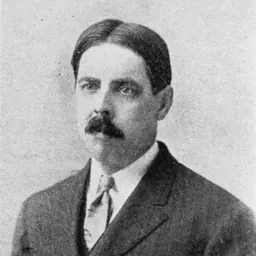
Lived 1913 – 1975 (aged 62). Konstantinos Apostolos Doxiadis was a Greek architect, politician and urban planner.
Constantinos A. Doxiadis (14 May 1913 – 28 June 1975), often cited as C. A. Doxiadis, was a Greek architect and urban planner, most widely known for being the lead architect and planner of Islamabad, the purpose-built capital of Pakistan in the 1960s. He is also known as the 'father of ekistics', which concerns the multi-aspectual science of human settlements.
Theories Doxiadis is the father of "ekistics", which concerns the science of human settlements, including regional, city, community planning and dwelling design. At the peak of his popularity, in the 1960s, he addressed the US Congress on the future of American cities, his portrait illustrated the front cover of Time magazine, his company Doxiadis Associates was implementing large projects in housing, urban and regional development in more than 40 countries, his Computer Centre (UNIVAC-DACC) was at the cutting edge of the computer technology of his time and at his annual "Delos Symposium" the World Society of Ekistics attracted the worlds foremost thinkers and experts.
In Greece, he faced persistent suspicion and opposition and his recommendations were largely ignored. Having won two large contracts (National Regional Plan for Greece and Master Plan for Athens) from the Greek Junta he was criticised by competitors, after its fall in 1974, portrayed as a friend of the colonels. His visions for Athens airport to be constructed on the adjacent island of Makronissos, where political prisoners were held, together with a bridge, a rail link and a port at Lavrion were never realised.
His influence had already diminished at his death in 1975, as he was unable to speak for the last two years of his life, a victim of amyotrophic lateral sclerosis (ALS). His company Doxiadis Associates changed owners several times after his death, the heir to his computer company remained but without any links to planning or ekistics. The Delos Symposium was discontinued, and the World Society of Ekistics is today an obscure organisation.
Works about Doxiadis have appeared in the Museum of Brisbane, Milani Gallery, Brisbane and feature in the To Speak of Cities exhibition at the University of Queensland Art Museum.
Works
One of his best-known town planning works is Islamabad. Designed as a new city it was fully realised, unlike many of his other proposals in already existing cities, where shifting political and economic forces did not allow full implementation of his plans. The plan for Islamabad separates cars and people, allows easy and affordable access to public transport and utilities, and permits low-cost gradual expansion and growth without losing the human scale of his "communities".
In Riyadh, Doxiadis reoriented the city on a southwest-northeast axis, rendering "the planned city... similar to an immense mosque facing Mecca." His work was also part of the architecture event in the art competition at the 1936 Summer Olympics. thumb
The Sacrifices of Greece in the Second World War (exhibit, San Francisco City Hall, 1945) Sadr City of Baghdad, Iraq (1959) Master Plan of Islamabad, The capital of Pakistan;1960 Master Plan for Skopje, city reconstruction plan following a major earthquake 1963. Teacher-Student Centre (TSC), University of Dhaka, Bangladesh; 1961 Plan Doxiadis, Rio de Janeiro, 1965. Quaid-e-Azam Campus, University of the Punjab, Lahore, Pakistan, 1973.
Awards His awards and decorations are as follows:
Greek War Cross, for his services during the war of 1940-41 (1941) Order of the British Empire, for his activities in the Greek Resistance and for his collaboration with the Allied Forces, Middle East (1945) Order of the Cedar of Lebanon, for his contribution to the development of Lebanon (1958) Order of the Phoenix for his contribution to the development of Greece (1960) Sir Patrick Abercrombie Prize of the International Union of Architects (1963) Cali de Oro (Mexican Gold Medal) Award of the Society of Mexican Architects (1963) Award of Excellence, Industrial Designers Society of America (1965) Aspen Award for the Humanities (1966) Order of the Yugoslav Flag with Golden Wreath (1966)
Publications Books
Journal articles
Don’t just read it —
keep it.
Full-length biographies made to live with: read them, listen on the way to work, watch them tonight.
- E-book
- Audio
- Video
Instant download · yours to keep · every purchase keeps this site free
Important facts
more
Konstantinos Doxiadis, Konstantinos Doxiades, Constantinos DoxiadisPeople in Konstantinos Apostolos Doxiadis's life
Named in this biography and alive at the same time
Related people
Same field, nearest in time



Contemporaries
People whose lives overlapped Konstantinos Apostolos Doxiadis's




Frequently asked questions
Who was Konstantinos Apostolos Doxiadis?
Greek architect (1913–1975)
When was Konstantinos Apostolos Doxiadis born?
Konstantinos Apostolos Doxiadis was born on 14 May 1913 in Asenovgrad.
When did Konstantinos Apostolos Doxiadis die?
Konstantinos Apostolos Doxiadis died on 28 June 1975 in Athens.
What was Konstantinos Apostolos Doxiadis's occupation?
Konstantinos Apostolos Doxiadis was an architect, politician and urban planner.
What nationality was Konstantinos Apostolos Doxiadis?
Konstantinos Apostolos Doxiadis was Greek.
Sources & further reading
· Wikipedia: Konstantinos Apostolos Doxiadis
· DBpedia: Constantinos Apostolou Doxiadis
Cite this page
APA: Biography.guide. (2026). Konstantinos Apostolos Doxiadis. https://biography.guide/konstantinos-apostolos-doxiadis/
MLA: "Konstantinos Apostolos Doxiadis." Biography.guide, https://biography.guide/konstantinos-apostolos-doxiadis/.
Chicago: "Konstantinos Apostolos Doxiadis." Biography.guide. https://biography.guide/konstantinos-apostolos-doxiadis/.
Data last updated: 2026-09-23 · Spot an error? Report a correction.
Portrait: Wikimedia Commons · author & licence
Page generated 2026-09-27 05:04 UTC