
About Konrad Mägi
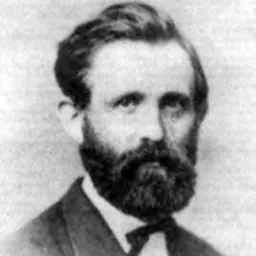
Lived 1878 – 1925 (aged 46). Konrad Mägi was an Estonian painter and caricaturist.
Konrad Vilhelm Mägi (1 November 1878 – 15 August 1925) was an Estonian painter, who was one of the first modernist painters in Estonia and the Nordic countries. He only worked for sixteen years, yet the total volume of his oeuvre is estimated to be around 400 paintings.
Numerous exhibitions of his works have been held in Estonia, and in recent years, his art has been discovered in Europe: in 2017, there was a solo exhibition of his paintings in the Galleria Nazionale d'Arte Moderna in Rome; in 2018, his works were displayed at the exhibition Wild Souls: Symbolism in the Art Of the Baltic States in the Orsay Museum; in 2021, more than a hundred of Mägi's works were exhibited in the EMMA Museum in Espoo, and in 2022, the same works were displayed in the Lillehammer Art Museum. From 24 March — 12 July 2026, the Dulwich Picture Gallery exhibited Konrad Mägi, the first time his works were displayed in the United Kingdom.
Mägi worked in different parts of Europe, according to which his oeuvre is divided into rather dissimilar chapters: Denmark, Norway, France, the island of Saaremaa, southern Estonia, Italy, etc.
The reception of Mägi's art varied over time. In the 1920s and 1930s, his oeuvre influenced a large part of Estonian art created at the time. During World War II, his art was condemned (the Soviet authorities ordered his works to be removed from exhibitions, his letters to be destroyed, etc.); it continued to be forbidden until the second half of the 1950s. Towards the end of the 1950s, as political austerity relaxed, Mägi's oeuvre was "reintroduced" and several retrospectives were held.
Although Mägi spent the majority of his life in towns, his oeuvre mainly revolves around landscapes. His oeuvre is rooted in existential tensions that made him yearn for other potential worlds. As a young man, he took part in the revolutionary movement, but later withdrew completely from politics and focussed entirely on art. "Happiness is not for us, sons of a poor land," Mägi once wrote. "For us, art is the only way out, because when the soul is filled with the eternal suffering of life, art will provide what life cannot give us. There, in art, in one's own oeuvre, can one find peace."
In addition to landscape paintings, Mägi painted portraits (including several portraits of members of the women's movement) and still lifes. He was the first director of Pallas, the first Estonian higher art school.
Mägi's health seriously troubled him throughout his creative career: various illnesses led to a rapid deterioration of his health in the 1920s, and he died at the age of 46. The whereabouts of more than half of his works are still unknown.
Biography
Childhood Konrad Mägi was born on 1 November 1878 in southern Estonia. He spent his childhood in the small village of Uderna near Elva, which was surrounded by large virgin forests and had a big railway line passing through it. His father, Andres Mägi, was a comparatively well-to-do estate manager, who took actively part in the Estonian national awakening movement in the second half of the 19th century. Practically nothing is known about Konrad's mother, Leena Mägi. Konrad was the youngest child in the family: he had four older brothers and an older sister; another older brother had died as a child. The first name Konrad was possibly chosen because German names were popular among the Estonian rural population at the time. In Uderna, he attended the local elementary school for barely a few months.
Andres Mägi began changing jobs increasingly often, which led to the dissolution of the family: at the age of 11, Konrad moved to Tartu with his mother and sister.
There is only one extant painting from the Åland period. It has very few of the characteristics that later became representative of Mägi's style. Mägi finally managed to work consistently, being inspired by nature, and this pattern of living in a town and painting in the countryside characterised his lifestyle from then on. He mainly earned his living by rewriting Estonian folk songs, and as soon as he had put aside a sufficient sum, he decided to travel to Paris at the end of August 1907. Mägi wrote two days after arriving in Paris.
In Paris, Mägi initially stayed with sculptor Jaan Koort, but later moved to the artists' colony La Ruche. He studied drawing at the independent institutions of Académie Colarossi and Académie de la Grande Chaumière.
Mägi frequented exhibitions, but was hardly fascinated by modernist art. "Of course it does not make matters better: you can often see such rubbish there that it is pointless to talk about it," he later wrote about Parisian art exhibitions.
Letters In addition to Mägi's works, his archives also contain letters and postcards sent to his friends and peers. The original letters are kept in the Cultural Historical Archive [EKLA] of the Estonian Literary Museum, the archives of the Estonian Art Museum [EKM arhiiv], the archives of the Tartu Art Museum [TKM arhiiv], and in a private collection in Helsinki. The annotation [RP] stands for letters published in the monograph by Rudolf Paris (1932), the originals of which have gone missing. In several cases, Paris included only parts of Mägi's letters. Only those excerpts of letters published by Paris have been included that were direct quotes; Paris's paraphrases of Mägi's letters have been left out. For reading feasibility, Mägi's greetings with which he ends his letters have also been left out, unless they contain important information.
Letters to August Vesanto in Russian have been translated into Estonian by Ilona Martson. The letters were retyped by Mareli Reinhold, Liisi Tee, Kadi Kass, Aili Kuldkepp and Aili Grichin.
Don’t just read it —
keep it.
Full-length biographies made to live with: read them, listen on the way to work, watch them tonight.
- E-book
- Audio
- Video
Instant download · yours to keep · every purchase keeps this site free
Important facts
People in Konrad Mägi's life
Named in this biography and alive at the same time

Related people
Same field, nearest in time

Contemporaries
People whose lives overlapped Konrad Mägi's



Frequently asked questions
Who was Konrad Mägi?
Estonian artist (1878-1925)
When was Konrad Mägi born?
Konrad Mägi was born on 1 November 1878 in Hellenurme.
When did Konrad Mägi die?
Konrad Mägi died on 15 August 1925 in Tartu.
What was Konrad Mägi's occupation?
Konrad Mägi was a painter and caricaturist.
What nationality was Konrad Mägi?
Konrad Mägi was Estonian.
Sources & further reading
Cite this page
APA: Biography.guide. (2026). Konrad Mägi. https://biography.guide/konrad-magi/
MLA: "Konrad Mägi." Biography.guide, https://biography.guide/konrad-magi/.
Chicago: "Konrad Mägi." Biography.guide. https://biography.guide/konrad-magi/.
Data last updated: 2026-09-20 · Spot an error? Report a correction.
Page generated 2026-09-27 05:28 UTC