
About Konrad Johannesson
Lived 1896 – 1968 (aged 72). Konrad Johannesson was a Canadian ice hockey player, known for Aviator.
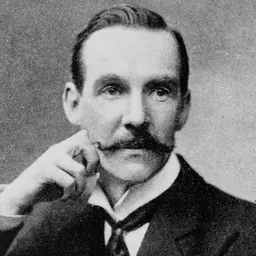
Konrad Jonasson "Konnie" Johannesson (August 10, 1896 – October 25, 1968) was an Icelandic-Canadian aviator and ice hockey player who competed in the 1920 Summer Olympics. As a pioneering aviator, he was instrumental in flight training as well as airport administration.
Early years Konnie Johannesson was born in Glenboro, Manitoba, son of Icelandic immigrants Jónas Jóhannesson and Rósa Einarsdóttir. In 1897, the family moved to Winnipeg, where he attended Somerset and Kelvin schools. Along with other players of Icelandic descent, Johannesson began playing hockey with the Winnipeg Falcons in 1913.
Hockey In 1920, Johannesson, playing right defence for the Winnipeg Falcons, was described as a gifted "stick handler", dangerous rusher, known for his "terrific" shot, and was considered one of the "giants of the team".
During the nine-day ocean voyage to Antwerp, aboard the R.M.S. Melita, Johannesson and teammate Frank Fredrickson joined with another passenger to form a musical trio, "The Falcon Trio" that held concerts aboard the ship. |group=Note After decisive victories over the United States, Czechoslovakia and Sweden, with Johannesson as one of the scorers, the Winnipeg Falcons won Canada’s first Olympic hockey gold medal.
From then until his 1929 retirement, Johannesson played with several different teams across multiple leagues, never achieving the same success he enjoyed during his earlier days. He played throughout Canada and parts of the United States, playing for the Winnipeg Maroons of the Central Hockey League, the Moose Jaw Warriors and Regina Capitals of the Pro Hockey League, and St. Paul and Winnipeg teams for the American Hockey Association. Although Johannesson had left as a player in 1924, he did spend one season (1933–1934) as the head coach of the Winnipeg Falcons.
From 1929 to 1932, Johannesson was a charter member, chief flying instructor and manager at the Winnipeg Flying Club. One of his pupils was John A. Kent, a future Battle of Britain fighter pilot and test pilot. Another of his students was frontiersman Tom Lamb, who had purchased a Stinson Reliant as well as flying lessons from Johannesson who was the Stinson Aircraft dealer for western Canada. Lamb was later to form Lamb Air, the first northern Manitoba-based air carrier. During his tenure, Johannesson earned the highest flight trainer rating in Canada, one of only six instructors with that rating.
From 1932, in operating the Johannesson Flying Service, he was based in Winnipeg at both the Brandon Avenue Aerodrome and Stevenson Aerodrome. His operation transported approximately 150 passengers each year into central Manitoba with his two-seater de Havilland Cirrus Moth biplane, as well as offering flight instruction.
The Johannesson ruling In 1952, after municipal and provincial judgments against Johannesson in the courts denying the approval for an airport at Rivercrest, he was successful in taking the case to the Supreme Court of Canada. At the conclusion of a three-year legal battle, the ruling from Johannesson v. the Municipality of West St. Paul established that federal jurisdiction applied to all matters pertaining to aviation. This ruling is still a landmark case in Canadian aviation.
Johannesson operated Rivercrest until his retirement in 1967.
Awards and honours In 2014, along with other members of the Winnipeg Falcons, Johannesson was honoured in a new Heritage Minute segment. The segment recounts how the Falcons overcame discrimination and stayed together through the First World War on their way to the top of the hockey world. The Falcons segment premiered at the MTS Centre in Winnipeg on November 6, 2014, during the intermission of a game between the Winnipeg Jets and Pittsburgh Penguins.
The Hockey Hall of Fame in Toronto, Manitoba Hockey Hall of Fame and Manitoba Sports Hall of Fame and Museum have permanent displays honouring the Falcons and their Olympic victory.
Hockey Canada, in recognition of the Falcons' achievement, had the national junior team wear replicas of the famous old gold and black Falcons uniforms for a World Junior Championship pre-tournament game in Winnipeg on December 20, 2004.
In recognition of his community service, Johannesson was given a Golden Boy Award in 1965. He died at Winnipeg on October 25, 1968, and was buried in Brookside Cemetery in the military section.
Don’t just read it —
keep it.
Full-length biographies made to live with: read them, listen on the way to work, watch them tonight.
- E-book
- Audio
- Video
Instant download · yours to keep · every purchase keeps this site free
Important facts
People in Konrad Johannesson's life
Named in this biography and alive at the same time

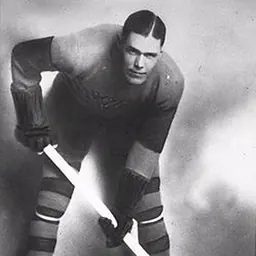

Related people
Same field, nearest in time



Contemporaries
People whose lives overlapped Konrad Johannesson's


Frequently asked questions
Who was Konrad Johannesson?
Canadian ice hockey defenceman (1896–1968)
When was Konrad Johannesson born?
Konrad Johannesson was born on 10 August 1896 in Manitoba.
When did Konrad Johannesson die?
Konrad Johannesson died on 28 October 1968 in Winnipeg.
What was Konrad Johannesson's occupation?
Konrad Johannesson was an ice hockey player.
What was Konrad Johannesson known for?
Konrad Johannesson was known for Aviator.
What nationality was Konrad Johannesson?
Konrad Johannesson was Canadian.
Sources & further reading
· Wikipedia: Konrad Johannesson
Cite this page
APA: Biography.guide. (2026). Konrad Johannesson. https://biography.guide/konrad-johannesson/
MLA: "Konrad Johannesson." Biography.guide, https://biography.guide/konrad-johannesson/.
Chicago: "Konrad Johannesson." Biography.guide. https://biography.guide/konrad-johannesson/.
Data last updated: 2026-09-22 · Spot an error? Report a correction.
Page generated 2026-09-27 05:29 UTC