
About Kōgyoku
Lived 594 – 661 (aged 66–67). Kōgyoku was a Japanese monarch, consort, poet and writer.
, also known as , was the 35th and 37th monarch of Japan, according to the traditional order of succession. Both her reigns were within the Asuka period.
Pre-ascension Kōgyoku was born on 7 August 594 as Princess Takara (宝). Her father, , was a minor prince of which little is recorded. Her mother, was similarly a minor princess of which little is written. Paternally Kōgyoku was a great-granddaughter of Emperor Bidatsu and his first wife Hirohime. Maternally she is a great-granddaughter of Emperor Kinmei (Bidatsu's father) and his concubine Soga-no-Kitashihime.
She would marry Prince Takamuku, a grandson of Emperor Yōmei. This marriage produced one child, a son, however the two separated. After separating she married Prince Tamura (later Emperor Jomei). What ensued was a civil war, ultimately ending with Tamura winning. Upon this, Princess Takara would become the empress consort.
In 641 Jomei would die. Jomei did not seek to name an heir, and Prince Yamashiro was still alive. In order to ensure a stable succession, and avoid conflict between Prince Yamashiro, and Jomei's own children, his wife, Princess Takara, succeeded to the throne.
Her first reign as Kōgyoku was mainly marked with the domination of the Soga clan, who had been growing in power. The beginning of her reign was also marked with a drought. Supposedly many clouds could be seen but no rain fell from them. The Nihon Shoki records however that eventually the drought came to an end after the empress prayed to the heavens This argument was also being used by many other people against the Soga clan. Prince Naka no Ōe (her son, and later Emperor Tenji), Nakatomi no Kamatari (later Fujiwara no Kamatari), and other prominent court nobles began arguing against the growing influence of the Soga clan. During her time in retirement, she was a respected figure at court. In order to ensure stable succession, so that the princes legitimacy wasn't called into question, Sumemioya would succeed to the throne again. This is a canal and it took 30,000 labourers, which led to criticism from the people.
Under her second reign, there was opposition to her carrying out large scale projects. went to the empress's nephew, to lay out three faults in her rule: However, modern historians in the 21st century believe the empress's actions were not reckless, but actually an attempt to build and develop Asuka into a proper capital city. Paekche was an ally of Japan and so requested Japan's help. She and her army left Yamato Province for Paekche, where many temporary residences were built. However, she would become ill and have to halt her expedition. Many of those with her also died (something which the Nihon Shoki says was due to an angry god) and the empress's illness rapidly accelerated and she died.
Death After becoming ill, the empress died in 661. Her body was returned to the capital for the funeral. Her son became Emperor Tenji. After her death he was supposedly overcome with emotion and said:
According to the Zenkoji Engi, she was damned to hell. However, on her way to hell, the son of along with the Amida Buddha saved her and she appointed Honda Yoshimitsu and his son as governors before finally dying. This is not mentioned in any other texts. Kugyō Kugyō (公卿) is a collective term for the very few most powerful men attached to the court of the Emperor of Japan in pre-Meiji eras.
In general, this elite group included only three to four men at a time. These were hereditary courtiers whose experience and background would have brought them to the pinnacle of a life's career. During Kōgyoku's reign, this apex of the Daijō-kan included: Sadaijin Udaijin
The kugyō during Saimei's reign included: Sadaijin, Kose no Tokoda(巨勢徳太) (593–658), 649–658 Udaijin (not appointed) Naidaijin (内臣), Nakatomi no Kamako(中臣鎌子) (Fujiwara no Kamatari, 藤原鎌足) (614–669), 645–669
Spouses and children
Empress Saimei, born Princess Takara, was the daughter of Prince Chinu, a grandson of Emperor Bidatsu, and his princess consort.
Firstly, she married Prince Takamuku and had a son. Secondly, the princess married Prince Tamura who also was Emperor Bidatsu's grandson. The marriage produced one daughter and two sons who both ascended the throne in the future. First Husband: Prince Takamuku (高向王), Prince Tame's son (also Emperor Yomei’s grandson) First Son: Prince Kara (漢皇子) Second Husband: Prince Tamura (田村皇子), later Emperor Jomei, Prince Oshisaka-no-hikohito-no-Ōe's son (also Emperor Bidatsu's grandson) Second Son: Prince Naka no Ōe (中大兄皇子) later Emperor Tenji) First Daughter: Princess Hashihito (間人皇女, d. 665), married Emperor Kōtoku Third Son: Prince Ōama (大海人皇子) later Emperor Tenmu
Popular culture Portrayed by Kim Min-kyung in the 2012–2013 KBS1 TV series Dream of the Emperor.
Don’t just read it —
keep it.
Full-length biographies made to live with: read them, listen on the way to work, watch them tonight.
- E-book
- Audio
- Video
Instant download · yours to keep · every purchase keeps this site free
Important facts
Family & relationships
People in Kōgyoku's life
Named in this biography and alive at the same time
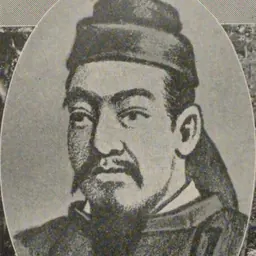
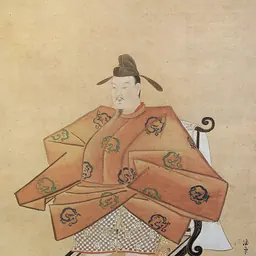

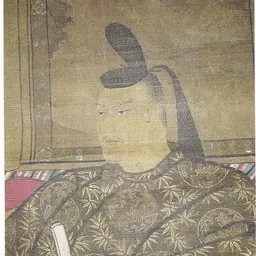
Related people
Same field, nearest in time

Contemporaries
People whose lives overlapped Kōgyoku's





Frequently asked questions
Who was Kōgyoku?
Empress of Japan
When was Kōgyoku born?
Kōgyoku was born in 594.
When did Kōgyoku die?
Kōgyoku died on 24 August 661 in Asakura no Tachibana no Hironiwa Palace.
What was Kōgyoku's occupation?
Kōgyoku was a monarch, consort, poet and writer.
What nationality was Kōgyoku?
Kōgyoku was Japanese.
Sources & further reading
Cite this page
APA: Biography.guide. (2026). Kōgyoku. https://biography.guide/kogyoku/
MLA: "Kōgyoku." Biography.guide, https://biography.guide/kogyoku/.
Chicago: "Kōgyoku." Biography.guide. https://biography.guide/kogyoku/.
Data last updated: 2026-09-20 · Spot an error? Report a correction.
Page generated 2026-09-27 05:26 UTC