
Klementyna Mańkowska
Member of the Polish resistance during WW II
About Klementyna Mańkowska
Lived 1910 – 2003 (aged 92). Klementyna Mańkowska was a Polish spy and polish resistance movement in World War II.
Life Provenance and early years Klementyna Maria Czarkowska-Golejewska was born into a local land owning family in Wysuczka, a small settlement between Lviv and Ternopil in Galicia. This is where she grew up on her father's family estate, which she later described as "a paradise". Since 1945 the region has been part of Western Ukraine, but at the time of her birth it was part of the Austro-Hungarian empire. During the interwar period it was part of Poland which had been restored to independence after the First World War. Klementyna was the second daughter of Cyryl Czarkowski-Golejewski (1885–1940) by his marriage to Izabela Jaxa-Małachowska (1885–1958). The family were well connected both in Poland and internationally. Andrzej Mańkowski had attended the international Benedictine school at Bruges in Belgium between 1922 and 1928, and the staff on the family estate included a German nanny called Teta who took care of the boys. The officers assured the Mańkowskis they would need only one of the three floors of the castle, modestly furnished.
One of the German officers, Harold von Hoepfner, proposed a joint trip to Italy in order to protect Klementyna. However, her husband had been badly injured when shot by a Polish soldier under his command, and was still critically ill, by now in a hospital somewhere near Kutno. She turned down von Hoepfner's invitation: "I do not think the Wehrmacht officer would want me to give up, for him, a man who stood up heroically in defence of the German soldier". Klementyna had resolved to stay with Andrzej, but there was no longer any place for them in their home, so they moved with their children to Warsaw where they stayed with the ballerina Olga Sławska, a family friend.
The "Muszkieterowie" recruited mainly from the Polish nobility. Witkowski very soon recognised Mańkowska's potential and put her in touch with resistance activists Aleksander Wielkopolski and Karol Anders. After this she was included in discussions on the importance of surveillance and of setting up an espionage network. One incident, in particular, convinced Wielkopolski of Mańkowska's talent for espionage. The high-ranking German officer Harold von Hoepfner, returning from Milan, turned up unexpectedly in Warsaw to see Klementyna Mańkowska. He arrived, en route to Berlin, with flowers, wine, and cheesecake. Listening from an adjacent broom cupboard, Witkowski and Wielkopolski were amazed to hear the brazen combination of grace and charm that Mańkowska applied to extracting information from her German friend about an end to the "Sitzkrieg" in the west, and the forthcoming German invasion of France. (They may or may not have been aware already that von Hoepfner and Mańkowska had almost certainly, briefly, been lovers during the early weeks of the war.) The German officer's information had been precise in respect of dates, though he seems to have kept to himself any knowledge he might have had about strategic detailed planning for the invasion. Witkowski nevertheless took the decision to hand over the information he had on the German plans for the invasion of France to British intelligence. There are reports that notes provided by Mańkowska ware later critical to the planning of a major allied raid on the Saint-Nazaire submarine base. A genuine seal of the German High Command would be particularly useful to the "Muszkieterowie". A week after she got back to western France she was arrested and taken to the Gestapo detention centre in Nantes where she was held overnight. Everyone was scrupulously polite: the arresting officer was merely following orders. He had no idea why Mańkowska was being arrested. Mańkowska behaved like a countess, insisting on packing in a small suitcase her night gown, her bathrobe, four pink jars of Elizabeth Arden cosmetics and a napkin to cover the table in the cell to which, presumably, she was about to be driven. On reaching the cell she asked the guard for an extra blanket and a sheet. This was not usual behaviour for people arrested by the Gestapo, but unwilling to risk inadvertently upsetting someone higher in the hierarchy, the confused guard obliged.
After her night in the cell at Nantes she was transported to Paris where a dungeon awaited her. Almost immediately she met Sturmbannführer Karl Schwerbel, the head of the Gestapo office in Paris for Polish affairs and people. It turned out that she was not, as she had anticipated, about to be interrogated about her "Muszkieterowie" activities and then shot. The matter was more mundane: well-intentioned German officers on the ground in Noirmoutier had concealed Mańkowska's Polish nationality when referring to her in their reports. Their wish to avoid causing trouble for her had had the opposite result. Nevertheless, she had no difficulty in convincing Schwerbel that she had been unaware of the subterfuge, and he unhesitatingly declared her innocent. Despite her complaints about the cost in time and money involved in arresting and detaining her and then sending her by car to Paris, he now expended more of the Gestapo budget in order to send her back in a first-class train compartment to the west of France and her base on the Island of Noirmoutier.
The picture postcard that Mańkowska received in Noirmoutier may not have come as a total surprise. The picture was of a seaside scene. The sender had written his message on the back: "You may not remember our meeting, but I fell in love at first sight. I expressed surprise that you travelled in a carriage reserved for German soldiers. I said then that we would meet again because I was counting on it. I am still counting.Doctor Alexander. PS Heil Hitler" Doctor Alexander's visit to Noirmoutier was, formally, a purely social affair. He emerged from his car wearing the same staff officer uniform and badges he had been wearing on that train. During dinner he talked about himself. He liked to call himself "Doctor": his full name was Wallraf Hans Alexander. He talked with passion of his time as a soldier during the Great War and about the old days under the Kaiser. He mentioned that he had placed "Heil Hitler" on his post card only for the benefit of the censors, which tended to confirm Mańkowską's suspicion that his current employer might be some kind of intelligence agency. He was, perhaps, working for the British.
Berlin Meanwhile, German intelligence, convinced of Klementyna Mańkowska's pro-German sentiments, selected her as a potential agent.
Dolf von Scheliha was expecting her call. When they met up she saw a stooped sixty-year-old man. (He was actually in his mid-40s.) He insisted that they should talk to each other exclusively in French, and proposed a walk around Berlin's famous Tiergarten (zoo park).
During her internship with the Foreign Ministry in the middle part of 1941 Klementyna Mańkowska had to take a few days off work and stay home with acute food poisoning. That, at least, is what she told management. She travelled to Warsaw in order to discuss with Stefan Witkowski the rich possibilities that had been opened up through her recruitment by German intelligence. A career as a double agent beckoned. The first visitor she received at Teresa Łubieńska's Warsaw apartment was not Witkowski, however. A short plump Polish civilian knocked on the door while she was taking a cup of tea with her cousin. Uninvited, the new visitor installed himself in an armchair and introduced himself as "Witold". He enquired directly about the well-being of "Stewit" (Witkowski) and his network of "agents scattered all over Europe". He urged Mańkowska not to worry, insisting that he and she were on the same side. "Adolf nicht gut". Mańkowska was unsure what to make of the visitor and his message, the oblique delivery of which suggested that he was on a mission, probably, on behalf of British intelligence. He certainly did not appear to be operating according to the Gestapo rule book, and she could think of no reason why the German intelligence services should bother to follow her all the way to Warsaw just to convey a gratuitously opaque message that they knew she was not staying home with food poisoning.
That evening Witkowski came round. He was very happy that Mańkowska had been recruited by German intelligence but he did not hesitate to let her know how this added to his problems. There was an inherent rivalry between the "Muszkieterowie", with their longstanding direct links to British intelligence and the "Dwójka", till 1939 the Polish Military Intelligence agency, and since the Fall of France in 1940 represented in significant numbers by political exiles living in London alongside members of the Polish government-in-exile. In London, the "Dwójka" struggled jealously for recognition as the only credible Polish anti-Nazi espionage organisation, while Witkowski was convinced that much of the intelligence they picked up through their various connections was less directly sourced and more out of date than information that the "Muszkieterowie" could provide using their own network. Witkowski admitted that Mańkowska's work as a double agent was going to be affected and possibly compromised by the intensifying rivalry between two very differently configured Polish intelligence organisations. "For them, you are an internal enemy, just like me. When is this Alexander fellow going to send you to Great Britain?" ("Jesteś dla nich wrogiem wewnętrznym, tak samo jak ja.) Kiedy ten Alexander zamierza wysłać cię do Wielkiej Brytanii?"
For Witkowski, Klementyna Mańkowska's transfer to England as an agent of German intelligence ("Abwehr") would provide a welcome opportunity to establish direct contact with General Sikorski, leader of the Polish government-in-exile in London. There was a lipstick canister that was actually a small bullet canister.
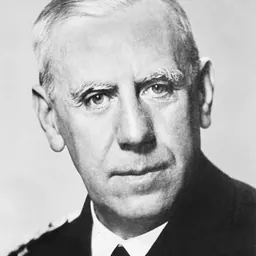
A few days earlier Mańkowska had received a visit from someone whom "Doctor Alexander" identified simply as "my boss". His uniform was faded, and his sweater was patched. Wilhelm Canaris served as head of German military intelligence between 1935 and his spectacular fall from grace early in 1944. His loyalties may already have been more conflicted than the German government appreciated. It is believed by some that there were aspects of National Socialist Germany that horrified him. He sat down beside Mańkowska and shared his thoughts: "You do not have to go. We are wondering whether to take this risk. You are prepared, but it is not clear whether the need exists to launch this mission." There was no direct answer to Mańkowska's question, "Then why have I been trained?". "But if you do go, do you have any wishes before the trip? It might end in tragedy." Mańkowska replied that she would like to see Warsaw again, and a two-day holiday to the city was duly arranged. There is speculation that Mańkowska's true mission, from the point of view of the Abwehr, was to be available in England as a backup in case of a failure by Halina Szymańska's espionage mission. Halina Szymańska was another spy of Polish provenance, who at different stages seems to have been working for more than one national intelligence agency at a time. By the time of Mańkowska's proposed mission to London, Szymańska's close connections to Wilhelm Canaris already went back several years.
That final two-day break in Warsaw provided an opportunity for Witkowski to hand over the elegant petticoat with documents secured in the thick blue ribbon round the hem. She rearranged herself to put on the petticoat while he gave her a final briefing. He reassured her that she would not be arrested when she arrived at the airport in London. Two days after her arrival three men would stop her and apparently arrest her.
On 24 March 1942 at 3.30 in the morning Mańkowska was awakened in her room at the training centre and told to get dressed. Her mission was about to begin. The instruction was not wholly unexpected and she was ready in two minutes. After half an hour her driver delivered her to the little airport where she received her final briefing from "Doctor Alexander": "If things go wrong, please don't take chances. If you feel threatened, your first priority is to look after yourself. You're flying via Nice in "Vichy". There we'll help you to get a legal British visa." Squashed between the front seats of a Ju 52 transport plane, a few hours later she landed at Nice. Somehow Witkowski had found out that the route arranged by the Abwehr to London would include a stop-over in Nice. He arranged for Mańkowska to have a breakfast meeting with Juliusz Kleeberg, who had been one of the most important Polish generals in the fight against the German/Soviet invasion in September 1939. He was one of those Polish ex-military personnel now living in precarious exile in Vichy France. Although Witkowski through his network was well informed on much that happened in countries under German occupation, his information on the situation in London seems to have been relatively sketchy. Kleeberg was able to provide Mańkowska with more up to date background. The leaders of the London-based Polish government in exile, Generals Sikorski and Sosnkowski were at the centre of a small close-knit group of insiders, determined to protect their powerbase for the future, and intolerant of dissent. Their focus was on how they would govern Poland after the war. Kleeberg's words were not encouraging: "Look and listen ... All who stand in their way are little by little eliminated. Witkowski is doing very valuable work for the allies, but Poles cannot forgive him for maintaining direct contacts with the English. Things may end badly for him".
London Mańkowska's first few weeks in London were choreographed - presumably by the British authorities - exactly as Witkowski had told her. After her "arrest", news of it was carried in a brief item on the late evening BBC news, and she was taken to what one source describes as "the Patriotic School, an enormous red brick building occupied by MI5". Her interrogator introduced himself as Captain Malcolm Scott. The interrogation lasted for four weeks. She was carefully and systematically questioned about the training she had received from German intelligence and about the tasks that she had been assigned by the Germans. At one of the sessions Captain Scott provided two pieces of surprising information of his own: the first was more welcome than the second. Her husband and sons were also in London. Her husband had made his own way to England. Her sons had appeared separately and the British authorities had no idea, at least officially, how they had managed to make the journey. Unofficially it was presumed that they had arrived, somehow, courtesy of German intelligence. It turned out that the head of German intelligence, Wilhelm Canaris, had already given Mańkowska his personal promise that if she went ahead with the mission to England, the boys would be sent to join her. The information that they were already safely in England came as a great relief but it was not, under all the circumstances, a complete surprise. The second piece of information was less welcome than the first but also, perhaps, not totally unsurprising. Scott knew that the German intelligence agencies had tried to obtain her a set of identity documents for her, but they had been unsuccessful. The British authorities had been willing to provide her with a British passport, but the move had been opposed by the London-based Polish government in exile once they found out that she had been sent by the "Muszkieterowie". Scott said that the British authorities had been trying to convince the Polish leaders in London that Mańkowska was an Abwehr (German) agent, but the Poles remained implacably hostile to her presence in England. Because of this Scott urged her to leave London as soon as possible.
After leaving the sessions at the Patriotic School had concluded Mańkowska managed to arrange a meeting with General Sosnkowski, a leading member of the Polish government in exile. He made it clear that she was very unlikely to be able to arrange a meeting with the Polish leader, General Sikorski. He added that neither the Polish Government in exile nor the intelligence division of the Armia Krajowa ("Home Army"), the main underground resistance movement inside Poland, found it unacceptable that Stefan Witkowski maintained his own direct contacts with British Intelligence. He concluded with a piece of personal advice, which was the advice she had already received from her British interrogator, "Captain Scott of MI5", although Sosnkowski chose different words: "Please leave ... in London there is something else. An accident is not so difficult. Please eat eggs: it is harder to poison them ... Naturally I'm kidding".
Edinburgh Klementyna Mańkowska remained in Britain till 1948, but she moved to Edinburgh, far from London and far from the Polish government in exile. Andrzej continued to be based in London where he made himself useful to the authorities, but he was able to visit his wife in Edinburgh at weekends. The couple's two sons attended a British boarding school. Their daughter, Maria, was born in Edinburgh on 20 June 1944. Klementyna worked in an Edinburgh hospital, undertaking translation work for Polish doctors unable to communicate in English. She would never again resume her prewar role as a lady of the manor.
Later years In 1948 the family moved to Congo. There are indications that at this stage they were still legally stateless. Andrzej obtained a well-remunerated job with one of the colonial governments in Africa. The Frankfurter Allgemeine Zeitung, in a book review, described her life story as "too fantastic for a novel". The work wasn't published in her native Poland until January 2003. There is no English version.
Andrzej and Klementyna Mańkowski died respectively in 2001 and 2003. They both died at Sermoise near Nevers in central France.
Don’t just read it —
keep it.
Full-length biographies made to live with: read them, listen on the way to work, watch them tonight.
- E-book
- Audio
- Video
Instant download · yours to keep · every purchase keeps this site free
Important facts
Family & relationships
People in Klementyna Mańkowska's life
Named in this biography and alive at the same time





Related people
Same field, nearest in time



Contemporaries
People whose lives overlapped Klementyna Mańkowska's





Frequently asked questions
Who was Klementyna Mańkowska?
member of the Polish resistance during WW II (1910–2003)
When was Klementyna Mańkowska born?
Klementyna Mańkowska was born on 1 August 1910 in Vysichka.
When did Klementyna Mańkowska die?
Klementyna Mańkowska died on 4 January 2003 in Nevers.
What was Klementyna Mańkowska's occupation?
Klementyna Mańkowska was a spy and polish resistance movement in World War II.
What nationality was Klementyna Mańkowska?
Klementyna Mańkowska was Polish.
Sources & further reading
· Wikipedia: Klementyna Mańkowska
· DBpedia: Klementyna Mańkowska
Cite this page
APA: Biography.guide. (2026). Klementyna Mańkowska. https://biography.guide/klementyna-mankowska/
MLA: "Klementyna Mańkowska." Biography.guide, https://biography.guide/klementyna-mankowska/.
Chicago: "Klementyna Mańkowska." Biography.guide. https://biography.guide/klementyna-mankowska/.
Data last updated: 2026-09-22 · Spot an error? Report a correction.
Page generated 2026-09-27 05:02 UTC