
About Klaus Schulze
Lived 1947 – 2022 (aged 74). Klaus Schulze was a German composer and musician.
Klaus Schulze (4 August 1947 – 26 April 2022) was a German electronic music pioneer, composer and musician. He also used the alias Richard Wahnfried and was a member of the Krautrock bands Tangerine Dream, Ash Ra Tempel, and the Cosmic Jokers before launching a solo career consisting of more than 60 albums released across six decades.
Early life Schulze was born in Berlin in 1947. His father was a writer, and his mother a ballet dancer. He and his wife Elfie had two sons Maximilian and Richard.
Career 1970s In 1969, Schulze was the drummer of one of the early incarnations of Tangerine Dream – one of the most famous bands that got the nickname "Krautrock" in English speaking countries (others included Kraftwerk and Popol Vuh) – for their debut album Electronic Meditation. Before 1969 he was a drummer in a band called Psy Free. He met Edgar Froese from Tangerine Dream in the Zodiac Club in what was then West Berlin. His follow-up album, Cyborg, was similar but added the EMS VCS 3 synthesizer.
Since this point, Schulze's career was the most prolific, such that he could claim more than 40 original albums to his name since Irrlicht. Highlights of these include 1975's Timewind, 1976's Moondawn (his first album to feature the Moog synthesizer), 1979's Dune, and 1995's double-album In Blue (which featured one long track called "Return to the Tempel" with electric guitar contributions from his friend Manuel Göttsching of Ash Ra Tempel). In 1976, he was drafted by Japanese percussionist and composer Stomu Yamashta to join his short-lived "supergroup" Go,
Throughout the 1970s he followed closely in the footsteps of Tangerine Dream, albeit with far lighter sequencer lines and a more reflective, dreamy sheen, not unlike the ambient music of his contemporary Brian Eno. Some of his lighter albums are appreciated by new-age music fans, despite the fact that Schulze has always denied connections to this genre. By mid-decade, with the release of Timewind and Moondawn, his style transformed from Krautrock to Berlin School.
Schulze had a more organic sound than other electronic artists of the time. Often he would throw in decidedly non-electronic sounds, such as acoustic guitar and a male operatic voice in Blackdance, or a cello in Dune (1979) and Trancefer. Schulze developed a Minimoog patch that sounds uncannily like an electric guitar. Schulze often takes German events as a starting point for his compositions, a notable example being on his 1978 album "X" (the title signifying it was his tenth album), subtitled "Six Musical Biographies", a reference to such notables as Ludwig II of Bavaria, Friedrich Nietzsche, Georg Trakl, and Wilhelm Friedemann Bach. His use of the pseudonym Richard Wahnfried is indicative of his interest in Richard Wagner, a clear influence on some albums like the aforementioned Timewind.
Schulze built a record studio in Hambühren, Germany.
This newer style can also be found in Schulze's next release Audentity. Both "Cellistica" and "Spielglocken" are composed in a similar sequencer-based style as on Trancefer, but this is certainly not the case of all of Audentitys tracks; indeed, "Sebastian im Traum" hints towards the operatic style to be found in some of Schulze's much later works. The predominance of sequencing can also be found in the follow-up live album Dziękuję Poland Live '83, although many of its tracks are re-workings of those to be found on Audentity. Schulze's next studio-based album was Angst (soundtrack to the namesake 1983 film). The cold yet haunting electronic rhythms generate an alienated atmosphere. Typical are the Fairlight synth and Linn electronic drums sounds.
Another highlight of this era was En=Trance with the dreamy cut "FM Delight". The album Miditerranean Pads marked the beginning of very complex percussion arrangements that continued through the next two decades.
In 1989, German band Alphaville released their album The Breathtaking Blue, on which Klaus Schulze was both a contributing musician and the album's producer.
1990s Starting with Beyond Recall, the first half of the 1990s was his "sample" period, when Schulze used a wide variety of prerecorded sounds such as screeching birds and sensuous female moans in his studio albums and live performances. Sampling heavily died down with his 1995 album In Blue.
2010s Big in Japan: Live in Tokyo 2010 was Schulze's fortieth album, and its release in September 2010 marked the beginning of his fifth decade as a solo musician. The Japan concerts were to be his last live performances.
His next album, Shadowlands, was released in February 2013, quickly to be followed by the release of The Schulze–Schickert Session 1975, a rare long-unreleased collaboration, in March 2013. After a hiatus of several years, he returned to the studio in 2018 for another album, Silhouettes. Much of the album was recorded in a single take. His final album, Deus Arrakis, was released on 1 July 2022.
Richard Wahnfried Richard Wahnfried, then simply Wahnfried after 1993, is the longtime and only real alias for Klaus Schulze – originally a pseudonym, later an official side project name. Seven albums were released under this name between 1979 and 1997.
The pseudonym's etymology stems from Schulze's love for Richard Wagner: Richard, evidently from Wagner's first name. Richard is also the name of Schulze's first son. Wahnfried ("Peace from delusion and/or madness", in German), from the name Wagner gave to his villa in Bayreuth (and where he was later buried). After 1993, the albums are simply credited to "Wahnfried", and namedrop Schulze ("featuring Klaus Schulze", "Produced by Klaus Schulze").
"Wahnfried" is the only known alias of Schulze (although on the 1998 Tribute to Klaus Schulze album, among 10 other artists, Schulze contributed one track barely hidden behind the "Schulzendorfer Groove Orchester" pseudonym).
Discography Albums Schulze's concert performances are original compositions recorded live and thus listed as albums. An intensive reissue program of Schulze CDs began in 2005, with most releases having bonus tracks, and sometimes additional discs. They are published by the label Revisited Records (a division of German company InsideOut Music), and distributed by SPV.
Source:
Year Title Reissued 1972 Irrlicht 2006 1973 Cyborg 2006 1974 Blackdance 2007 1975 Picture Music 2005 1975 Timewind 2006 1976 Moondawn 2005 1977 Body Love 2005 1977 Mirage 2005 1977 Body Love Vol. 2 2007 1978 X 2005 1979 Dune 2005 1980 ...Live... 2007 1980 Dig It 2005 1981 Trancefer 2006 1983 Audentity 2005 1983 Dziękuję Poland Live '83 2006 1984 Angst 2005 1985 Inter*Face 2006 1986 Dreams 2005 1988 En=Trance 2005 1990 Miditerranean Pads 2005 1990 The Dresden Performance 1991 Beyond Recall 1992 Royal Festival Hall Vol. 1 1992 Royal Festival Hall Vol. 2 1993 The Dome Event 1994 Le Moulin de Daudet 2005 1994 Goes Classic 1994 Totentag 1994 Das Wagner Desaster Live 2005 1995 In Blue 2005 1996 Are You Sequenced? 2006 1997 Dosburg Online 2006 2001 Live @ KlangArt 2008 2005 Moonlake 2007 Kontinuum 2008 Farscape 2008 Rheingold 2009 Dziękuję Bardzo 2010 Big in Japan: Live in Tokyo 2010 2013 Shadowlands 2013–14 Big in Europe 2014 Stars Are Burning 2017 Eternal: The 70th Birthday Edition 2018 Silhouettes 2019 Next of Kin 2022 Deus Arrakis 2024 101, Milky Way 2025 Bon Voyage (Live Audimax Hamburg 1981)
Singles Year Title Reissued 1985 "Macksy" The Ultimate Edition (CD38); extended version on Inter*Face reissue 1994 "Conquest of Paradise" Partially reissued on La Vie Electronique 14
(Richard) Wahnfried albums Composed by Schulze and performed with guest artists under alias Richard Wahnfried or later just Wahnfried:
Don’t just read it —
keep it.
Full-length biographies made to live with: read them, listen on the way to work, watch them tonight.
- E-book
- Audio
- Video
Instant download · yours to keep · every purchase keeps this site free
Important facts
People in Klaus Schulze's life
Named in this biography and alive at the same time




Related people
Same field, nearest in time


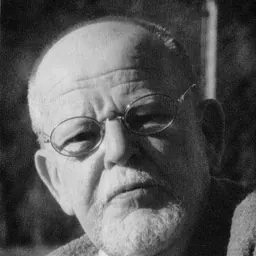
Contemporaries
People whose lives overlapped Klaus Schulze's


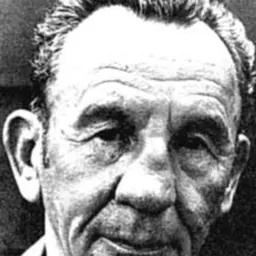

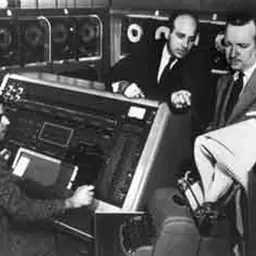
Frequently asked questions
Who was Klaus Schulze?
German composer and musician (1947–2022)
When was Klaus Schulze born?
Klaus Schulze was born on 4 August 1947 in Berlin.
When did Klaus Schulze die?
Klaus Schulze died on 26 April 2022 in Lüneburg.
What was Klaus Schulze's occupation?
Klaus Schulze was a composer and musician.
What nationality was Klaus Schulze?
Klaus Schulze was German.
Sources & further reading
Cite this page
APA: Biography.guide. (2026). Klaus Schulze. https://biography.guide/klaus-schulze/
MLA: "Klaus Schulze." Biography.guide, https://biography.guide/klaus-schulze/.
Chicago: "Klaus Schulze." Biography.guide. https://biography.guide/klaus-schulze/.
Data last updated: 2026-09-25 · Spot an error? Report a correction.
Page generated 2026-09-27 05:12 UTC