
Kira Muratova
Soviet and Ukrainian film director, screenwriter, film actress
About Kira Muratova
Lived 1934 – 2018 (aged 83). Kira Muratova was a Russian and Ukrainian film director, screenwriter, film actor, actor, film screenwriter and actress.
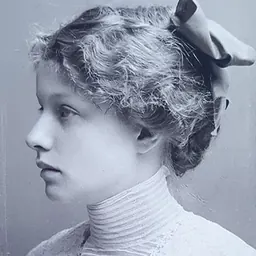
Kira Georgievna Muratova (; ; ; née Korotkova, 5 November 1934 – 6 June 2018 ) was a Ukrainian award-winning film director, screenwriter and actress, known for her unusual directorial style.
Muratova's films underwent a great deal of censorship in the Soviet Union, yet still Muratova managed to emerge as one of the leading figures in contemporary cinema of Ukraine and Russian cinema and was able to build a very successful film career from 1960s onwards. She is People's Artist of Ukraine (1989); Academician of National Academy of Arts of Ukraine (1997). Laureate of the Shevchenko National Prize (1993) (in List of laureates at 1993 - No. 12); Oleksandr Dovzhenko State Prize (2002). Muratova spent much of her artistic career in Odesa, creating most of her films at Odesa Film Studios.
Biography
Early life and career Kira Korotkova was born in 1934 in Soroca, Romania (present-day Moldova) to a Russian father and a Jewish mother. Her parents were both active communists and members of the Communist Party. Her father, , (1907–1941), participated in the anti-fascist guerilla movement in World War II, was arrested by Romanian forces and shot after interrogation. After the war, Kira lived in Bucharest with her mother, , was born Reznic, (1906–1981), a gynaecologist, who then pursued a government career in Socialist Romania.
In 1959, Kira graduated from the Gerasimov Institute of Cinematography in Moscow, specializing in directing. Upon graduation Korotkova received a director position with the Odesa Film Studio in Odesa, a port city at the Black Sea near to her native Bessarabia. She directed her first professional film in 1961 and worked with the studio until a professional conflict made her to move to Leningrad in 1978. There she made one film with Lenfilm Studio, but returned to Odesa afterwards. Muratova's films came under constant criticism of the Soviet officials due to her idiosyncratic film language that did not comply with the norms of socialist realism. Film scholar Isa Willinger has compared Muratova's cinematographic form to the Soviet Avant-garde, especially to Eisenstein's montage of attractions. Several times Muratova was banned from working as a director for a number of years each time.
Kira married her fellow Odesa studio director Oleksandr Muratov in the early 1960s and co-created several films with him. The couple had a daughter, Marianna, but soon divorced and Muratov moved to Kyiv where he started work with Dovzhenko Film Studios. Kira Muratova kept her ex-husband's surname despite her later marriage to Leningrad painter and production designer Evgeny Golubenko.
Post-Soviet period In the 1990s, an extremely productive period began for Muratova, during which she shot a feature film every two or three years, often working with the same actors and crew. Her other films released in this period include The Sentimental Policeman (1992), Passions (1994), Three Stories (1997) and a short film Letter to America (1999).
Two actresses Muratova has repeatedly cast are Renata Litvinova and Nataliya Buzko. Muratova's films were usually productions of Ukraine or co-productions between Ukraine and Russia, always in the Russian language, although Muratova could speak Ukrainian and did not object to the Ukrainianization of Ukrainian cinema. Muratova supported the Euromaidan protesters and the following 2014 Ukrainian revolution. She was an admirer of Sergei Parajanov and her focus on 'ornamentalism' has been likened to his and was also anti-realist, with 'repetition giving shape to all possibility', with her last film, Eternal Homecoming effectively about cinema itself being unfinished, it is almost as if the 'spool of cinema keeps threading and tangling, threading and tangling'.
In 1990, her film Asthenic Syndrome won the Silver Bear Jury Grand Prix at the Berlinale.
Her 2002 film Chekhov's Motifs was entered into the 24th Moscow International Film Festival. Her film The Tuner was shown at the Venice Film Festival in 2004. Her films received the Russian "Nika" prize in 1991, 1995, 2005, 2007, 2009 and 2013. In 2005, a retrospective was shown at the Lincoln Center in New York City.
In 2005, a study on the life and work of Muratova was published by I.B. Tauris in the KINOfiles Filmmakers' Companion series.
Don’t just read it —
keep it.
Full-length biographies made to live with: read them, listen on the way to work, watch them tonight.
- E-book
- Audio
- Video
Instant download · yours to keep · every purchase keeps this site free
Important facts
People in Kira Muratova's life
Named in this biography and alive at the same time


Related people
Same field, nearest in time


Contemporaries
People whose lives overlapped Kira Muratova's





Frequently asked questions
Who was Kira Muratova?
Soviet and Ukrainian film director, screenwriter, film actress (1934–2018)
When was Kira Muratova born?
Kira Muratova was born on 5 November 1934 in Soroca.
When did Kira Muratova die?
Kira Muratova died on 6 June 2018 in Odesa.
What was Kira Muratova's occupation?
Kira Muratova was a film director, screenwriter, film actor, actor, film screenwriter and actress.
What nationality was Kira Muratova?
Kira Muratova was Russian and Ukrainian.
Sources & further reading
Cite this page
APA: Biography.guide. (2026). Kira Muratova. https://biography.guide/kira-muratova/
MLA: "Kira Muratova." Biography.guide, https://biography.guide/kira-muratova/.
Chicago: "Kira Muratova." Biography.guide. https://biography.guide/kira-muratova/.
Data last updated: 2026-09-25 · Spot an error? Report a correction.
Page generated 2026-09-27 05:11 UTC