
About Kinahan Cornwallis
Lived 1883 – 1959 (aged 76). Kinahan Cornwallis was a British diplomat.
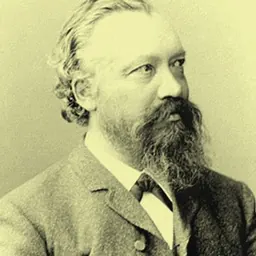
Sir Kinahan Cornwallis (19 February 1883 – 3 June 1959) was a British administrator and diplomat best known for being an advisor to King Faisal I of Iraq and for being the British Ambassador to the Kingdom of Iraq during the Anglo-Iraqi War.
Early life and education Kinahan Cornwallis was born on 19 February 1883 in the United States and was the son of British poet, writer, and world traveler Kinahan Cornwallis and his wife Elisabeth Cornwallis (née Chapman) of Hartford, Connecticut. Cornwallis was educated at Haileybury and University College, Oxford, from 1904 to 1906 he was president of the Oxford University Athletic Club. He left university and spent eight years in the Sudan Civil Service.
On 11 September 1923, Cornwallis asked the British administrative inspectors in all Iraqi provinces (liwa) to telegraph him the names of candidates who they and the Iraqi provincial governors felt would vote for the treaty.
On 8 February 1924, after considering the names, Cornwallis sent each provincial inspector and governor a list of proposed candidates for the 100-member constituent assembly. The treaty was ratified by the assembly on 24 March 1924. A quorum of only 69 out of 100 delegates participated in the meeting. Of the 69, only 37 voted for the treaty; and even these votes came only after the British High Commissioner Sir Percy Cox threatened to dissolve the assembly and issue orders to occupy the assembly building and its surroundings. Bell died in 1926. The book was censored by a mark indicating confidential information for General Headquarters from Bell bring composed of dispatches from the secretive Arab Bulletin. According to his signature, Cornwallis wrote the Introduction while in Petersfield.
Ambassador to Iraq
On 1 April 1941, pro-German Rashid Ali and a group of supporters staged a coup d'état to depose the government of the pro-British Regent of the Kingdom of Iraq, Prince Abdul Illah. From 2 April, Cornwallis was named as the British ambassador to Iraq. He had much experience in Mesopotamia having spent twenty years in the country as adviser to former King Faisal I who had died in 1933. Cornwallis, being highly regarded, was sent to Iraq on the understanding that he would be able to hold a more forceful line with the new Iraqi government than had hitherto been the case. Unfortunately the British agent Cornwallis arrived in Iraq too late to prevent the outbreak of war.
On 18 April, as part of Operation Sabine, the 20th Indian Infantry Brigade was landed at Basra without opposition. The brigade included personnel of the Royal Artillery's 3rd Field Regiment; and the headquarters of the 10th Indian Infantry Division landed at Basra; covered by infantry of the King's Own Royal Regiment. Major-General William Fraser, commanding officer of the 10th Indian Infantry Division, assumed control over the land forces based within Iraq, initially known as Sabine Force and ultimately known as Iraqforce. |group=nb were flown into RAF Habbaniya to bolster the air force there. Cornwallis referred the issue to London and received the reply that there was no interest in moving the troops out of the country. London wanted to establish the troops within Iraq. Cornwallis was also informed not to inform Rashid Ali who, as he had taken control of the country via a coup d'état, had no right to be informed about British troop movements.
On 29 April, a further three ships landed at Basra and brought ancillary troops. On the same day advised that all British women and children should leave Baghdad; 230 civilians were escorted by road to Habbaniya and during the following days were gradually air lifted to RAF Shaibah.
On 30 April, when Ali was informed that ships containing even more British forces had arrived, he refused permission for these troops to disembark. Rashid Ali also began organizing for an armed demonstration at RAF Habbaniya On 1 May, the Cornwallis received a response giving him full authority to take any steps needed to ensure the withdrawal of the Iraqi armed forces.
Were contact to break down between the Embassy in Baghdad and the besieged force at Habbaniya, the Air Officer Commanding, Air Vice-Marshal H. G. Smart, was given permission to act on his own authority.
The British air strikes were extremely successful and, by the evening of 6 May, the Iraqis abandoned the escarpment above Habbaniya. After the arrival of elements of Habforce, the British ground forces from Habbaniya pressed on to Fallujah and, after its fall, they advanced towards Baghdad. On 29 May, the government of Rashid Ali collapsed and he and his supporters fled to Persia.
On the morning of 31 May, the Mayor of Baghdad and a delegation approached British forces at the Washash Bridge outside of Baghdad. With the Mayor was Sir Kinahan Cornwallis. Terms were quickly reached, an armistice was signed, and the monarchy and a pro-British government were put back in place. On 1 June, the Regent returned to Baghdad. On 1 June an armed Iraqi mob began a two-day murder spree against Baghdad's Jews, known as "The Farhud". After two days the Mayor of Baghdad and police loyal to the Iraqi monarchy quelled the violence by imposing a curfew and shot violators on sight. An investigation conducted by the journalist Tony Rocca of the London Sunday Times criticized Cornwallis's conduct, when he refused to act against the riots even though he was urged to do so by British army and government officials.
Family life On 14 October 1911 in London, Cornwallis married Gertrude Dorothy Bowen, daughter of Sir Albert Edward Bowen, 1st Baronet, and Alice Anita Crowther. They had a daughter Elisabeth Cornwallis (1912–1999), and two sons; Richard Kinahan Cornwallis and Peter Brownell Cornwallis (who was killed in action along with his Australian flight crew while flying over the North Sea on a supplies mission to Norway in February 1945). Kinahan and Gertrude Cornwallis divorced in 1925. Cornwallis married again in 1937 to Margaret Hilda Mary Clark. He died 3 June 1959 at his home at North Warnborough, Basingstoke, aged 76.
Don’t just read it —
keep it.
Full-length biographies made to live with: read them, listen on the way to work, watch them tonight.
- E-book
- Audio
- Video
Instant download · yours to keep · every purchase keeps this site free
Important facts
People in Kinahan Cornwallis's life
Named in this biography and alive at the same time



Related people
Same field, nearest in time

Contemporaries
People whose lives overlapped Kinahan Cornwallis's



Frequently asked questions
Who was Kinahan Cornwallis?
British diplomat (1883–1959)
When was Kinahan Cornwallis born?
Kinahan Cornwallis was born on 19 February 1883.
When did Kinahan Cornwallis die?
Kinahan Cornwallis died on 3 June 1959 in North Warnborough.
What was Kinahan Cornwallis's occupation?
Kinahan Cornwallis was a diplomat.
What nationality was Kinahan Cornwallis?
Kinahan Cornwallis was British.
Sources & further reading
· Wikipedia: Kinahan Cornwallis
Cite this page
APA: Biography.guide. (2026). Kinahan Cornwallis. https://biography.guide/kinahan-cornwallis/
MLA: "Kinahan Cornwallis." Biography.guide, https://biography.guide/kinahan-cornwallis/.
Chicago: "Kinahan Cornwallis." Biography.guide. https://biography.guide/kinahan-cornwallis/.
Data last updated: 2026-09-20 · Spot an error? Report a correction.
Page generated 2026-09-27 05:10 UTC