
About Kim Byeong-ro
Lived 1887 – 1964 (aged 76). Kim Byeong-ro was a South Korean poet.
Kim Byung-ro (; Hanja: 金炳魯, 27 January 1888 – 13 January 1964) was a South Korean independence activist, lawyer, and politician, as well as the first Chief Justice of the Supreme Court of Korea. Under the period of Japanese rule over Korea, he was renowned as one of the three leading national lawyers for the independence movement, along with Ho Hon and Lee In. His clan name was Ulsan Kim, and his art name was Kain (街人).
Biography
Kim Byung-ro was born into a yangban household in Sunchang County, part of the Jeonbuk Special Self-Governing Province. His father, Kim Sang-hui, served in the government as a high-ranking official at the Judicial Office in Hanseong, and he therefore received an education in Confucianism from his grandfather. In 1904, he studied at Ilshin Academy in Damyang County, South Jeolla Province, where he received instruction in new fields of study from Western missionaries, such as arithmetic and Western history.
Following the passage of the Japan–Korea Treaty of 1905 (the Eulsa Treaty), Byung-ro joined the Jeongmi Righteous Army under Choe Ik-hyeon. The following year, he matriculated at Kim Seong-su’s Changheung School, made the decision to study abroad, and in 1910, travelled to Japan to matriculate into the faculty of law at Meiji University (where he took evening classes). In 1912, he was admitted to a three-year advanced research program, from which he graduated in 1915. In 1919, he was appointed as a judge in the of the , but he resigned and in 1920, went into practice as a lawyer and became a trustee of the Korean Lawyers Association the following year. Byung-ro then founded the Joint Research Association on Criminal Defense in Insa-dong, Seoul in 1923, primarily handling defenses for the 105-Man Incident, the June 10th Movement, the Peace Preservation Law violations of Lyuh Woon-hyung and Ahn Chang-ho, and other independence movements, such as the Heroic Corps and the Communist Party of Korea. After retiring as Chief Justice in 1957, he served as a representative of the Association of Lawyers for Freedom, the representative member of the Supreme Council for the Civil Rule Party, and a member of the Supreme Council for the People's Party. In 1962, he was awarded the Order of Cultural Merit and in 1963, the Order of Merit for National Foundation by Korean government.
Family
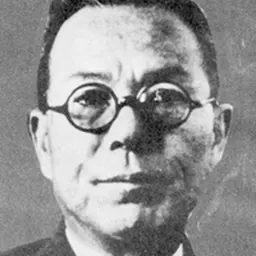
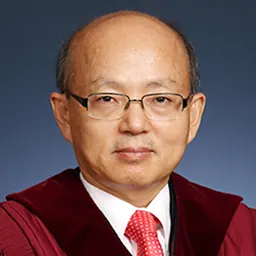
Kim Byung-ro was survived by his son-in-law, Constituent National Assembly Member Kim Moon-pyeong; his grandson, the politician Kim Chong-in; and his grandsons-in-law, former Chief Justice of the Constitutional Court Yun Yeong-chul and politician Lee Taek-don. Byung-ro himself was the 15th generation descendant of Kim In-hu and the grandson of Kim Seong-su (the 13th generation descendant of Kim In-hu).
Don’t just read it —
keep it.
Full-length biographies made to live with: read them, listen on the way to work, watch them tonight.
- E-book
- Audio
- Video
Instant download · yours to keep · every purchase keeps this site free
Important facts
People in Kim Byeong-ro's life
Named in this biography and alive at the same time


Related people
Same field, nearest in time

Contemporaries
People whose lives overlapped Kim Byeong-ro's






Frequently asked questions
Who was Kim Byeong-ro?
South Korean poet
When was Kim Byeong-ro born?
Kim Byeong-ro was born on 15 December 1887.
When did Kim Byeong-ro die?
Kim Byeong-ro died on 13 January 1964.
What was Kim Byeong-ro's occupation?
Kim Byeong-ro was a poet.
What nationality was Kim Byeong-ro?
Kim Byeong-ro was South Korean.
Sources & further reading
Cite this page
APA: Biography.guide. (2026). Kim Byeong-ro. https://biography.guide/kim-byeong-ro/
MLA: "Kim Byeong-ro." Biography.guide, https://biography.guide/kim-byeong-ro/.
Chicago: "Kim Byeong-ro." Biography.guide. https://biography.guide/kim-byeong-ro/.
Data last updated: 2026-09-20 · Spot an error? Report a correction.
Page generated 2026-09-27 05:17 UTC