
About Khwaja Abdul Hamied
Lived 1898 – 1972 (aged 73). Khwaja Abdul Hamied was an Indian businessperson, entrepreneur and merchant, known for Cipla.
Khwaja Abdul Hamied FCS, FRIC (31 October 1898 – 23 June 1972) was an Indian industrial and pharmaceutical chemist who founded Cipla, India's oldest pharmaceutical company in 1935. His son, Yusuf Hamied headed the company after him for the next 52 years.
Khwaja Abdul Hamied was active in the Indian independence movement and a champion of composite nationalism. Through his father, he was descended from the Sufi saint Khwaja Ahrar of Iran (Uzbekistan), while on his mother's side, he was descended from Shah Shuja, the last Durrani king of Afghanistan. His paternal great-uncle was the noted reformer Sayyid Ahmad Khan he was also the grandnephew of Khwaja Muhammad Yusuf and a nephew to Abdul Majeed Khwaja
Education After matriculating from Islamia High School, Etawah, distinguishing himself in mathematics, Hamied completed his Intermediate in Science from Agra College in 1917. Having decided to become a chemist, he then spent a year at a Madras trade school studying leather technology before enrolling at Muir Central College in Allahabad, from which he completed his B.Sc. in chemistry in 1920.
Career Hamied's family raised money to send him to study chemistry in England, during British rule, in 1924. Instead, he changed ships and went to Germany, then the world's leader in chemicals. On a Berlin lake, he met a Lithuanian Jewish socialist, whom he married. They fled as the Nazis rose to power in Germany.
Chemical, Industrial and Pharmaceutical Laboratories, Cipla was founded in 1935 with an initial capital of Rs. 2 lakhs. The company commenced production in 1937 making it the oldest pharmaceutical company in India.
Apart from conceiving the idea of establishing a National Chemical Laboratory and making it a reality, Dr Khwaja Hamied floated the idea and conceptualized the establishment of the Council of Scientific and Industrial Research (CSIR) as an umbrella organization to run a clutch of laboratories. He remained a Member of the Governing Body of the CSIR right from its inception till the very last
During the last four decades of his life, he played an important role in raising the pharmaceutical and chemical industry standards in India to an extraordinarily high level through founding the firm Cipla.
Dr. Hamied was an honorary professor and a member of the executive council of the Aligarh Muslim University, member of the Senate of Bombay University and a fellow of the Royal Institute of Chemistry, UK. He was also a member of the Bombay Legislative Council from 1937 to 1962, refusing the offer of becoming a Muslim Minister in the cabinet in Bombay. Hamied also served as Sheriff of Bombay.
Dr Khwaja Abdul Hamied died in 1972 after a brief illness.
Indian independence movement Khwaja Abdul Hamied was influenced by his uncle Abdul Majeed Khwaja, who "was a close associate of C. R. Das, M. A. Ansari, Mahatma Gandhi, and T. A. K. Sherwani during the freedom struggle and had served in jail for fighting the British Colonial rule in India." Backed by Zakir Husain, Khwaja Abdul Hamied was victorious in the election. Khwaja Abdul Hamied felt that Muhammad Ali Jinnah's views "represented a minority view among Indian Muslims".
Khwaja Abdul Hamied was against the idea of separate electorates based on the religious faith of an individual, declaring that they were an evil manifestation of divisive communalism. He was a major opponent of the partition of India. In fact, when the partition of India was accepted by the British, he recommended "an armed struggle against the Muslim League to keep India united":
In a meeting with Sardar Vallabhbhai Patel, Khwaja Abdul Hamied stated that the partition of India should not occur in the absence of a plebiscite, holding that "if people were told that those who vote for Pakistan had to go to that country then nobody would vote for the partition."
Don’t just read it —
keep it.
Full-length biographies made to live with: read them, listen on the way to work, watch them tonight.
- E-book
- Audio
- Video
Instant download · yours to keep · every purchase keeps this site free
Important facts
People in Khwaja Abdul Hamied's life
Named in this biography and alive at the same time




Related people
Same field, nearest in time
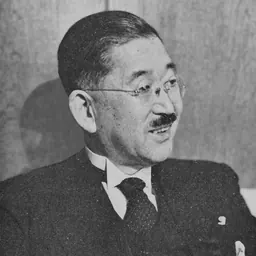
Contemporaries
People whose lives overlapped Khwaja Abdul Hamied's




Frequently asked questions
Who was Khwaja Abdul Hamied?
Indian businessman
When was Khwaja Abdul Hamied born?
Khwaja Abdul Hamied was born on 31 October 1898 in Aligarh.
When did Khwaja Abdul Hamied die?
Khwaja Abdul Hamied died on 23 June 1972 in Pahlavi Iran, Tehran.
What was Khwaja Abdul Hamied's occupation?
Khwaja Abdul Hamied was a businessperson, entrepreneur and merchant.
What was Khwaja Abdul Hamied known for?
Khwaja Abdul Hamied was known for Cipla.
What nationality was Khwaja Abdul Hamied?
Khwaja Abdul Hamied was Indian.
Sources & further reading
· Wikipedia: Khwaja Abdul Hamied
· DBpedia: Khwaja Abdul Hamied
Cite this page
APA: Biography.guide. (2026). Khwaja Abdul Hamied. https://biography.guide/khwaja-abdul-hamied/
MLA: "Khwaja Abdul Hamied." Biography.guide, https://biography.guide/khwaja-abdul-hamied/.
Chicago: "Khwaja Abdul Hamied." Biography.guide. https://biography.guide/khwaja-abdul-hamied/.
Data last updated: 2026-09-20 · Spot an error? Report a correction.
Page generated 2026-09-27 05:24 UTC