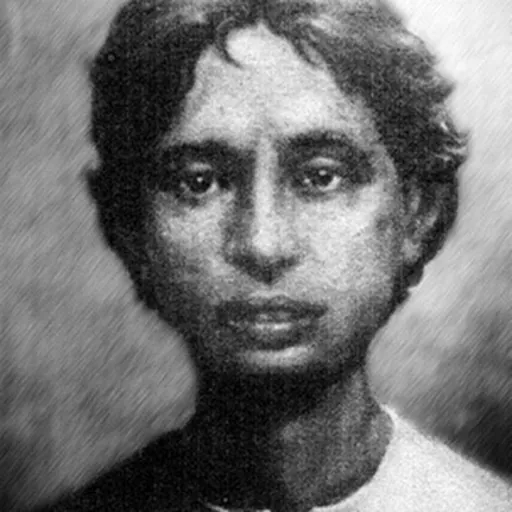
About Khudiram Bose
Lived 1889 – 1908 (aged 18). Khudiram Bose was an Indian revolutionary, freedom fighter and indian Freedom Struggle.
Khudiram Bose (3 December 1889 – 11 August 1908) was an Indian nationalist from Bengal Presidency who opposed British rule of India. For his role in the Muzaffarpur Conspiracy Case, along with Prafulla Chaki, he was sentenced to death, for the attempted assassination of a British judge, Magistrate Douglas Kingsford, by throwing bombs on the carriage they suspected the man was in. Magistrate Kingsford, however, was seated in a different carriage, and the throwing of bombs resulted in the deaths of two British women. Prafulla fatally shot himself before the arrest. Khudiram was arrested and tried for the murder of the two women, ultimately being sentenced to death. He was one of the first Indian revolutionaries in Bengal to be executed by the British.
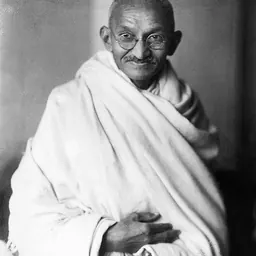
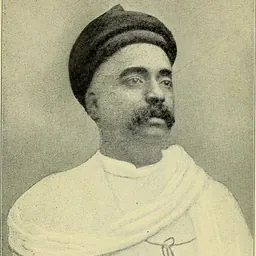
Mahatma Gandhi, however, denounced the violence, lamenting the deaths of the two innocent women. He stated "that the Indian people will not win their freedom through these methods." Bal Gangadhar Tilak, in his newspaper Kesari, defended the two young men and called for immediate swaraj. This was followed by the immediate arrest of Tilak by the British colonial government on charges of sedition.
Early life Khudiram Bose hailed from a Bengali Kayastha family of Habibpur, Midnapore, Paschim Medinipur in Bengal Presidency (now West Bengal). His father held the post of Tehsildar in Midnapore Town of West Medinipur district.
Khudiram was the fourth child in a family of three daughters. His parents, Trailokyanath Bose and Lakshmipriya Devi had two sons before the birth of Khudiram but both of them died in infancy. Following the traditional customs prevalent in the culture, the newborn child was symbolically sold to his eldest sister in exchange for three handfuls of food grains locally known as Khud, in an attempt to save him from dying at an early age. This way he acquired the name, Khudiram.
He lost his mother when he was five years old. His father died a year later. Aparupa Roy, his elder sister, brought him to her house at Hatgacha village under the Daspur Police Station. Aparupa's husband, Amritalal Roy, got him admitted to Tamluk's Hamilton High School.
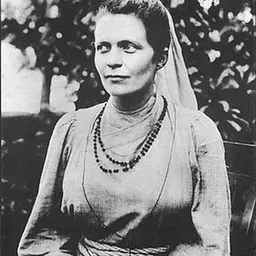
In 1902 and 1903, Sri Aurobindo and Sister Nivedita visited Medinipur. They held a series of public lectures and private sessions with the existing revolutionary groups for freedom. Khudiram, a teenager, was an active participant in the discussions about the revolution, he met the veteran revolutionary Hemchandra Kanungo, who was the chief of the Anushilan Samiti at Medinipur.
Apparently, he was recruited to the Anushilan Samiti, by Hemchandra Kanungo and came into contact with the network of Barindra Kumar Ghosh of Calcutta. He became a volunteer at the age of 15, and was arrested in Medinipur for distributing pamphlets against the British rule in India, but he was completely acquitted of the charges due to the effective pleading by Barrister Birendranath Sasmal. At the young age of 16, Khudiram took part in planting bombs near the police stations and targeted government officials.
Kingsford assassination attempts
First attempt The first attempt to kill Kingsford was in the form of a book bomb constructed by Hemchandra Kanungo, a revolutionary, who learnt bomb making techniques from Europe. An empty tin of Cadbury cocoa was packed with a pound of picric acid and three detonators. This was packed into a hollowed section of Herbert Broom's Commentaries on the Common Law and delivered wrapped in a brown paper to Kingsford's house by Paresh Mallick, a young revolutionary. Kingsford placed the unopened package in his shelf to examine later. By March 1908, fearful of the judge's safety, he was promoted to the District Judge position and transferred by the government to Muzaffarpur, Bihar. With him went his furniture, library and the book bomb.
Reconnaissance at Muzaffarpur Anushilan Samiti persisted in their attempt to kill Kingsford. In April, a two-man reconnaissance team visited Muzaffarpur, which included Prafulla Chaki. The Calcutta police became aware of the plans on Kingsford's life. Commissioner F.L. Halliday's alerts to the Superintendent of Police in Muzaffarpur were ignored. However, four men were assigned to guard the magistrate's house. In the meantime, Khudiram Bose and Prafulla Chaki adopted the name of Haren Sarkar and Dinesh Chandra Roy respectively and took up residence in a charitable inn (Dharamshala) run by Kishorimohan Bandyopadhyay. In the ensuing days, the duo monitored the activities and daily routine of their target. The two revolutionaries successfully hid their identities for over three weeks. The CID officer from Calcutta returned with a letter from the Superintendent of Muzaffarpur, Armstrong, that the duo had not arrived. As their carriage reached the eastern gate of the compound of the European Club, Khudiram and Prafulla ran towards the carriage and threw the bombs into the carriage. A loud explosion ensued and the carriage was taken to Kingsford's house. The carriage was shattered and the Kennedy ladies sustained terrible injuries. Miss Kennedy died within an hour and Mrs. Kennedy died on 2 May of sustained injuries.
Escape Khudiram and Prafulla went their own way to escape capture. By morning, Khudiram had walked 25 miles and he reached a station called Waini. As he asked for a glass of water at a tea stall, he was confronted by two armed constables, Fateh Singh, and Sheo Pershad Singh, who immediately suspected something upon seeing his dusty feet, and his exhausted and perspiring appearance. After a couple of questions, their suspicion became stronger, and they decided to detain Khudiram. Khudiram started struggling with the two men, and immediately, one of the two hidden revolvers fell out. Before Khudiram could use the other one to fire on the constables, one of them held him from behind in a bear-hug. The much younger and lightly built Khudiram had no more chance of defence or escape. On his person were found 37 rounds of ammunition, Rs. 30 in cash, a railway map and a page of the rail timetable. The fate of Khudiram was sealed forever.
Khudiram had to give a statement or declaration to the magistrate. He took full responsibility for the assassination, unknown that Prafulla was dead. Only after Khudiram finished giving his statement, the body of Prafulla reached Muzaffarpur. Khudiram realised that lying would go in vain. He identified the body of Prafulla and the British also received details from the encounter with sub-inspector Bannerjee. Instead of believing Khudiram, the British colonial authorities thought it more proper to detach Prafulla's head from his corpse and send it to Calcutta for better confirmation.
Legacy
Shahid Khudiram Station – a metro railway station near Garia in Kolkata. Shahid Khudiram Bose Hospital – a hospital on BT Road near Municipality park. Khudiram Bose Memorial Central Jail – the Muzaffarpur Jail, where the freedom fighter was incarcerated and hanged on 11 August 1908, was renamed. Sahid Khudiram Siksha Prangan – a university campus for postgraduate studies of University of Calcutta, Kolkata. It is also known as Alipore Campus. Khudiram Anushilan Kendra – located adjacent to the Netaji Subhash Chandra Bose Indoor Stadium in Kolkata. Khudiram Bose Pusa railway station
Films Over the years, Khudiram Bose and his journey have been represented in several films.
Biplabi Kshudiram (1951 film)
Main Khudiram Bose Hun (2017 film) Khudiram Bose (2022 film)
Don’t just read it —
keep it.
Full-length biographies made to live with: read them, listen on the way to work, watch them tonight.
- E-book
- Audio
- Video
Instant download · yours to keep · every purchase keeps this site free
Important facts
People in Khudiram Bose's life
Named in this biography and alive at the same time



Related people
Same field, nearest in time


Frequently asked questions
Who was Khudiram Bose?
Indian revolutionary (1889-1908)
When was Khudiram Bose born?
Khudiram Bose was born on 3 December 1889 in Tamluk.
When did Khudiram Bose die?
Khudiram Bose died on 11 August 1908 in Kolkata.
What was Khudiram Bose's occupation?
Khudiram Bose was a revolutionary, freedom fighter and indian Freedom Struggle.
What nationality was Khudiram Bose?
Khudiram Bose was Indian.
Sources & further reading
Cite this page
APA: Biography.guide. (2026). Khudiram Bose. https://biography.guide/khudiram-bose/
MLA: "Khudiram Bose." Biography.guide, https://biography.guide/khudiram-bose/.
Chicago: "Khudiram Bose." Biography.guide. https://biography.guide/khudiram-bose/.
Data last updated: 2026-09-22 · Spot an error? Report a correction.
Portrait: Wikimedia Commons · author & licence
Page generated 2026-09-27 05:02 UTC