
About Khalid Khawaja
Lived 1951 – 2010 (aged 58–59). Khalid Khawaja was a Pakistani intelligence officer and military personnel.
Squadron leader Colonel Khalid Khawaja (; 3 July 1951 – April 30, 2010) was Pakistani fighter pilot and intelligence officer-turned human rights activist, who served as the Squadron leader of Pakistan Air Force's No. 16 Squadron Panthers, and was also associated with both the Special Service Wing (SSW) and the Inter-Services Intelligence (ISI).
As Squadron Leader, he led several combat missions against the Indian Air Force during the Indo-Pakistan War of 1971, commanding Pakistan Air Force's elite No. 26 Squadron and later the No. 16 Squadron Panthers. He was also described as having close ties to Abdul Rashid Ghazi, the leader of the Lal Masjid.
He was also the co-founder and spokesperson for the Defence of Human Rights Pakistan (DHR), a human rights organization led by Abdul Rashid Ghazi.
Defense of Human Rights Pakistan Khawaja was a close friend of Lal Masjid's Abdul Rashid Ghazi and was the co-founder of the rights group "Defense of Human Rights Pakistan" (Urdu: تحافظ حقوق إنساني), Khawaja served as the organization's spokesman while Ghazi was the first chairman. The Associated Press also named Khawaja as a spokesman for a Pakistani human rights group named Defense of Human Rights.
Molly Campbell Khawaja and Ghazi both also became involved in the recovery case of alleged child abduction victim Molly Campbell, providing her shelter at the Jamia Hafsa during her parental custody trial.
The Khadr family Khawaja was also a noted friend of the Egyptian-Canadian Khadr family, Khawaja spoke in their defense saying they were being unfairly targeted by Canadian authorities because of deference to the United States and Islamophobia. He has also said that Canada is "selfish and self-centered" and deserves to be bombed by terrorists.
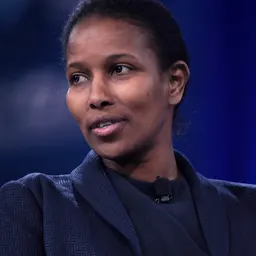
Deborah Scroggins, author of the book Wanted Women: Faith, Lies & The War on Terror: The lives of Ayaan Hirsi Ali & Aaafia Siddiqui, describes meeting Zaynab while she was a house-guest of Khawaja, in Islamabad, Pakistan, in 2004.
Asia Times comments
Michelle Shephard during an interview with Khalid Khawaja in Karachi, Pakistan. A November 9, 2005, article in the Asia Times described Khawaja as the "point man" for Mansoor Ijaz, which it describes as "...a US citizen of Pakistani origin with close ties to the Republican Party".
The Asia Times says that Ijaz is negotiating a peace with the remaining elements of the Taliban, with Khawaja's assistance.
Khawaja was arrested In February 2007 outside the Lal Masjid in Islamabad. The initial charges against him were under Section 295-A of the Pakistan Penal Code for allegedly distributing inflammatory material, accusations he publicly denied and told the court that "intelligence officials" had apprehended him outside his house, covering his face with cloth and forcing him into a vehicle.
On July 4, 2007, the day after the Pakistani military's siege of the Lal Masjid began, he was rearrested. The police, citing a First Information Report (FIR) that linked him to the event, claimed an eyewitness had seen him firing from the mosque and requested a ten-day physical remand for investigation. Khawaja denied the charges, stating he was not present at the mosque during the shootout. A judicial magistrate authorized a seven-day physical remand; however, the Supreme Court of Pakistan subsequently intervened and ordered his release from Adiala Jail.
Assassination On March 31, 2010, Khawaja was abducted from the outskirts of a city in Waziristan in the Khyber Pakhtunkhwa province of Pakistan by unidentified gunmen. He was in the region with fellow former official Colonel Imam and journalist Asad Qureshi. Days after his disappearance, a previously unknown group calling itself "Asian Tigers" claimed responsibility for his capture.
After a weeks-long captivity, on April 30, 2010, Khawaja's body was found in North Waziristan town of Mir Ali, He had been shot dead and a note was attached to it, reiterating the accusations of spying.
Khawaja was buried at the H-11 graveyard in Islamabad and Maulana Abdul Aziz, the imam of Lal Masjid, led his funeral prayers and later eulogized him in an interview as "a person who always fought for his religion."
Don’t just read it —
keep it.
Full-length biographies made to live with: read them, listen on the way to work, watch them tonight.
- E-book
- Audio
- Video
Instant download · yours to keep · every purchase keeps this site free
Important facts
People in Khalid Khawaja's life
Named in this biography and alive at the same time



Related people
Same field, nearest in time


Contemporaries
People whose lives overlapped Khalid Khawaja's

Frequently asked questions
Who was Khalid Khawaja?
Pakistani Air Force officer
When was Khalid Khawaja born?
Khalid Khawaja was born in 1951 in Jaranwala.
When did Khalid Khawaja die?
Khalid Khawaja died on 30 April 2010 in Mirali.
What was Khalid Khawaja's occupation?
Khalid Khawaja was an intelligence officer and military personnel.
What nationality was Khalid Khawaja?
Khalid Khawaja was Pakistani.
Sources & further reading
Cite this page
APA: Biography.guide. (2026). Khalid Khawaja. https://biography.guide/khalid-khawaja/
MLA: "Khalid Khawaja." Biography.guide, https://biography.guide/khalid-khawaja/.
Chicago: "Khalid Khawaja." Biography.guide. https://biography.guide/khalid-khawaja/.
Data last updated: 2026-09-20 · Spot an error? Report a correction.
Page generated 2026-09-27 05:19 UTC