
About Kevin Burke
Lived 1929 – 2018 (aged 88). Kevin Burke was a British geologist, geophysicist and university teacher, known for Plate tectonics.
Kevin C. A. Burke (Kevin Charles Anthony Burke, November 13, 1929 - March 21, 2018) was a geologist known for his contributions in the theory of plate tectonics. In the course of his life, Burke held multiple professorships, most recent of which (1983-2018) was the position of professor of geology and tectonics at the Department of Earth and Atmospheric Science, University of Houston. His studies on plate tectonics, deep mantle processes, sedimentology, erosion, soil formation and other topics extended over several decades and influenced multiple generations of geologists and geophysicists around the world. rifting and mantle processes, which was enhanced by his previous field experiences in Africa and the Caribbean.
In 1973, Burke was invited by John F. Dewey to join the faculty at the State University of New York at Albany, which had assembled a group of geoscientists interested in plate tectonics, hotspot studies, rifting, and field-based ophiolite studies. During his 10-year residence in Albany, Burke produced many seminal papers on continental rifting, hotspots, Caribbean tectonics, and the effects of continent-continent collision in Asia and other places.
In 1983, Burke joined the faculty of the University of Houston and also worked as director and associate director of the Lunar and Planetary Institute at NASA in Houston until 1988. In the 1990s and 2000s, in addition to mentoring graduate students and teaching at the University of Houston, he held many visiting professorships at NASA, JPL, UCLA, Carnegie Institute, and the University of Oslo, Norway.
From 2003 and until his death in 2018, Kevin Burke worked in close collaboration with Trond H. Torsvik, who was then the head of the Geodynamics research group at the Geological Survey of Norway and later became a professor of geology at the University of Oslo, Norway. This collaboration resulted in several seminal contributions, describing the causal links between the two large-scale structures in the lowermost part of the Earth mantle (Large Low Shear-wave Velocity Provinces, or LLSVPs), the large-scale geometry of mantle convection, mantle plumes and surface hotspot volcanism.
Burke was the first who recognized that the most prominent mantle plumes feeding active hotspots rose from the margins of LLSVPs, which he termed the "Plume Generation Zones" (PGZs). Evidence for long-term stability of LLSVPs (over time scales of hundreds of millions of years) from paleogeographic reconstructions of large igneous provinces and kimberlites, in which the geological records of hotspot volcanism are used to constrain the longitudinal positions of lithospheric plates in the originally unconstrained reconstructions based on paleomagnetism. The long-term temporal stability of LLSVPs has not yet been fully accepted by the scientific community and remains a field of on-going debate and active research.
Professional communities Over his entire scientific career, Kevin Burke was a very active member of the geological and geophysical scientific community. Burke was a member of the Geological Society of London, the Geological Society of America, the American Geophysical Union, the American Association of Petroleum Geologists, the European Geosciences Union, the Nigerian Mining Geological and Metallurgical Society, the Nigerian Association of Petroleum Explorationists, and the Houston Geological Society. Burke was survived by a brother and sister, three children and two grandchildren.
The EOS magazine of the American Geophysical Union paid a tribute to Kevin Burke by publishing an article, in which he was described as a "complete geologist of the ilk of Charles Lyell, Alexander von Humboldt, Eduard Suess, or Arthur Holmes." and the Arthur Holmes Medal and Honorary Membership, one of the most prestigious awards of the European Geosciences Union (2014).
Terms and acronyms Being a vocal advocate for the stability of LLSVPs, and is presumably a tribute to Tanya Atwater, an American marine geophysicist renowned for her research on the plate tectonic history of western North America. The term "Burkian Earth" was used by Torsvik and co-workers for a simple conceptual model of the Earth as a stable "degree-two planet." On the Burkian Earth, mantle flow is dominated by small-scale convection in the upper mantle, whereas circulation in the lower mantle is mostly restricted to sinking lithospheric slabs and mantle plumes rising from the margins of two stable and antipodal LLSVPs (hence degree two). Subduction zones concentrate along a meridian between the two LLSVPs (resembling the Pacific “ring of fire”); hence, slabs sinking all the way to the lowermost mantle also relate to long-wavelength lower-mantle structure dominated by the degree two term.
Videos (external links) Arthur Holmes Medal Lecture by Kevin Burke at the 2014 General Assembly of the European Geosciences Union, Vienna, April 29, 2014. (Session details) Kevin Burke's speech at the Award Ceremony at the 2014 General Assembly of the European Geosciences Union with introduction by Prof. Lewis Ashwal (43:45-52:10), Vienna, April 30, 2014. (Session details)
Don’t just read it —
keep it.
Full-length biographies made to live with: read them, listen on the way to work, watch them tonight.
- E-book
- Audio
- Video
Instant download · yours to keep · every purchase keeps this site free
Important facts
more
K. C. A. BurkePeople in Kevin Burke's life
Named in this biography and alive at the same time


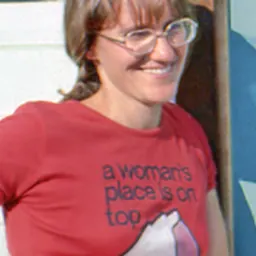
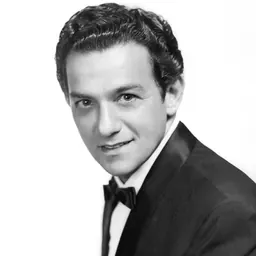
Related people
Same field, nearest in time

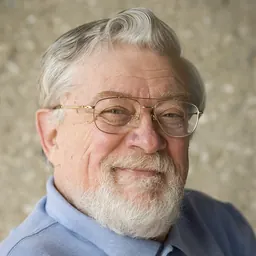
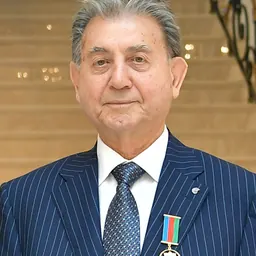


Contemporaries
People whose lives overlapped Kevin Burke's



Frequently asked questions
Who was Kevin Burke?
British geologist (1929-2018)
When was Kevin Burke born?
Kevin Burke was born on 13 November 1929 in London.
When did Kevin Burke die?
Kevin Burke died on 21 March 2018 in Gloucester.
What was Kevin Burke's occupation?
Kevin Burke was a geologist, geophysicist and university teacher.
What was Kevin Burke known for?
Kevin Burke was known for Plate tectonics.
What nationality was Kevin Burke?
Kevin Burke was British.
Sources & further reading
Cite this page
APA: Biography.guide. (2026). Kevin Burke. https://biography.guide/kevin-burke-geologist/
MLA: "Kevin Burke." Biography.guide, https://biography.guide/kevin-burke-geologist/.
Chicago: "Kevin Burke." Biography.guide. https://biography.guide/kevin-burke-geologist/.
Data last updated: 2026-09-25 · Spot an error? Report a correction.
Page generated 2026-09-27 05:06 UTC