
About Kenzo Okada
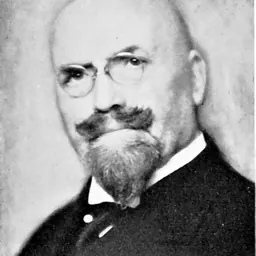
Lived 1902 – 1982 (aged 79). Kenzo Okada was an American painter and draftsperson.
Kenzo Okada (岡田 謙三, Okada Kenzō; born on September 28, 1902, died on July 25, 1982) was a Japanese-born American painter and the first Japanese-American artist working in the Abstract Expressionist style to receive international acclaim. At the 29th Venice Biennale in 1958, Okada’s work was exhibited in the Japan Pavilion and he won the Astorre Meyer Prize and UNESCO Prize.
Okada's work has been featured in retrospective exhibitions since the 1960s, including the Albright-Knox Art Gallery in 1965, the National Museum of Modern Art, Kyoto in 1966, the Seibu Museum of Art, Tokyo in 1982, the University of Iowa Museum of Art in 2000, and the Yokohama Museum of Art in 2003. Okada’s works are also held in major American museum collections including the Metropolitan Museum of Art, the Museum of Modern Art, New York, the National Gallery of Art, Washington, D.C., the Philadelphia Museum of Art, the San Francisco Museum of Modern Art, the Solomon R. Guggenheim Museum, the Whitney Museum of American Art, among others.
Biography
Early life and education (1902–1927) Okada was born September 28, 1902, in Yokohama, Japan. His father, a wealthy industrialist, did not support his son's desire to be an artist. When his father died, Okada entered the department of Western painting at Tokyo School of Fine Arts (present Tokyo National University of Fine Arts and Music). In 1924, Okada dropped out from Tokyo School of Fine Arts and left for Paris where he studied with fellow Japanese expatriate Tsuguharu Foujita, executing paintings of urban subjects. In 1927, he exhibited work in the Salon d'Automne.
Early career in Japan (1927–1950) In 1927, Okada returned to Japan and within a year he had his first one-person show at the Mitsukoshi Department Store in Tokyo. In 1929, his works were selected for the sixteenth Second Section Exhibition (Nika-ten 二科展), an annual salon organized by the modernist artist association Second Section Society (Nika-kai 二科会). Thereafter, Okada's works were displayed in the Second Section Exhibition every year. Okada became popular in the Second Section Society for his luscious portraits of women and landscapes of French cityscapes. In 1937, the Second Section Society admitted Okada's (along with Tamiji Kitagawa, Keiji Shimazaki, Kōnosuke Tamura, and among others) full membership. Okada became friends with Rothko, Newman, and many other Abstract Expressionists. The American artist Michelle Stuart wrote: "when Okada came to the United States he was already a mature painter, well considered in his native Japan. To American abstraction Okada brought civilized restraint, an elegance of device and an unusual gift for poetic transmutation of natural forms."
At the 29th Venice Biennale in 1958, Okada’s work was exhibited in the Japan Pavilion (representative: Shūzō Takiguchi; assistant commissioner: Ichirō Fukuzawa and Yoshiaki Tōno) alongside that of five other Japanese artists (Ichirō Fukuzawa, Kawabata Ryūshi, Seison Maeda, Yoshi Kinouchi, Shindō Tsuji), and Okada won Astorre Meyer Prize and UNESCO Prize. After the 29th Venice Biennale, Okada spent increasing time in Japan.
Okada's style and colours, which evoke the aesthetics of traditional Japanese art, were popularised under the name of Yugenism (ユーゲニズム; 幽玄主義), and he achieved great commercial and critical success as a Japanese-American artist in New York. During the 1970s he painted numerous works that used as a point of departure the reinterpretation of the decorative effects of traditional Japanese painting. Okada evokes the aura of landscape by using earth colors, abstract patterns hinting at rocks and flowers, and an overall haziness that makes his scenes look submerged in water. Bringing traditions of Japanese art to the New York School of abstraction, Okada distills the essence of nature into his painting, making it seem elemental and thus sublime. His sensitive and personal style of abstract expressionism, with elements inspired by Japanese art, relates directly to both color field painting and lyrical abstraction. The art historian Bert Winther-Tamaki points out that "The painting he did in Japan before 1950 was figuratibe and bore a close resemblance to styles of the École de Paris. But after the move to New York, his painting became abstract and took on what people perceived to be a Japanese appearance, owing to its stylistic 'yugenism' buttressed by an occasional Japanese title or the vestige of some motif such as a fan shape or a vertical division reminiscent of the seam of a folding screen." Furthermore, Winther-Tamaki observes that "the affirmation of national identity provided a status for Okada in an international context of art that would withstand comparison with American artists." In November, 1989, the Akita Senshu Museum of Art opened the Kenzo Okada Memorial (岡田謙三記念館), the special exhibition room that displays Okada’s oeuvre permanently.
Okada's works were featured in the 1997 landmark world-touring exhibition Asian Traditions/Modern Expressions which made ground-breaking contributions to knowledge about Asian American art history. Subsequently, his works were discussed in the multi-author volume Asian American Art: A History, 1850-1970 (2008), which was the first comprehensive study on Asian American art history. Ultimately, in 2022, the New York State Capitol held the exhibition Isamu Noguchi & Kenzo Okada to celebrate Asian American & Pacific Islander Heritage Month. The exhibition "highlight[ed] how their East Asian heritage helped shape postwar American art." 1989 Kenzo Okada (岡田謙三展), the Museum of Modern Art, Toyama, the Meguro Museum of Art, Tokyo, the Gunma Prefectural Museum of Modern Art, the Ohara Museum of Art, Kurashiki, the Mie Prefectural Art Museum, the Kure Municipal Museum of Art, and the Akita City Museum of Art Art Institute of Chicago Albright-Knox Art Gallery, Baffalo Brooklyn Museum, New York Bruce Museum, Greenwich Fukuoka Art Museum Harvard Art Museums/Fogg Museum Indianapolis Museum of Art Kitasato Institute, Tokyo Meguro Museum of Art, Tokyo Museum of Contemporary Art Tokyo Metropolitan Museum of Art, New York Museum of Fine Arts, Boston Museum of Modern Art, Kamakura & Hayama Museum of Modern Art, New York National Gallery of Art, Washington, D.C. National Museum of Art, Osaka National Museum of Modern Art, Kyoto National Museum of Modern Art, Tokyo Neuberger Museum of Art, New York Peggy Guggenheim Collection, Venice Philadelphia Museum of Art Phillips Collection, Washington, D.C. San Francisco Museum of Modern Art Santa Barbara Museum of Art Smithsonian American Art Museum, Washington, D.C. Solomon R. Guggenheim Museum, New York Sompo Museum of Art, Tokyo St. Louis Museum of Art Whitney Museum of American Art, New York Yale University Art Gallery, New Haven Yokohama Museum of Art
Don’t just read it —
keep it.
Full-length biographies made to live with: read them, listen on the way to work, watch them tonight.
- E-book
- Audio
- Video
Instant download · yours to keep · every purchase keeps this site free
Important facts
People in Kenzo Okada's life
Named in this biography and alive at the same time




Related people
Same field, nearest in time


Contemporaries
People whose lives overlapped Kenzo Okada's




Frequently asked questions
Who was Kenzo Okada?
Japanese-American artist (1902-1982)
When was Kenzo Okada born?
Kenzo Okada was born on 29 September 1902 in Yokohama.
When did Kenzo Okada die?
Kenzo Okada died on 25 July 1982 in Tokyo.
What was Kenzo Okada's occupation?
Kenzo Okada was a painter and draftsperson.
What nationality was Kenzo Okada?
Kenzo Okada was American.
Sources & further reading
Cite this page
APA: Biography.guide. (2026). Kenzo Okada. https://biography.guide/kenzo-okada/
MLA: "Kenzo Okada." Biography.guide, https://biography.guide/kenzo-okada/.
Chicago: "Kenzo Okada." Biography.guide. https://biography.guide/kenzo-okada/.
Data last updated: 2026-09-20 · Spot an error? Report a correction.
Page generated 2026-09-27 05:27 UTC