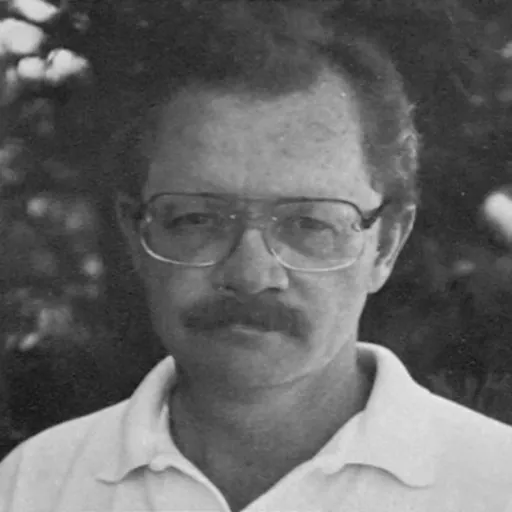
About Kent Haruf
Lived 1943 – 2014 (aged 71). Kent Haruf was an American writer, novelist and docent.
Life Alan Kent Haruf was born in Pueblo, Colorado, on February 24, 1943, one of four children of Eleanor and Louis Haruf. As a child, he had a cleft lip, and his family's community raised money for a pair of surgeries at Children's Hospital in Denver. The first operation partially addressed the issue, but the surgeon died in a plane crash before the second operation, and it never took place. As a youth, Haruf aspired to be a rancher, following in the path of both his grandfathers.
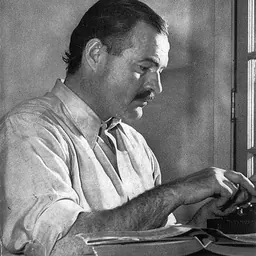
Initially, Haruf studied biology at Nebraska Wesleyan University, but he changed his plans after reading Ernest Hemingway and William Faulkner's work. He graduated in 1965 with a Bachelor of Arts in English. Virginia 'Ginger' Koon and Haruf were married in 1967, after his return to the United States. He and Koon had three children, all daughters. Undeterred, Haruf moved his family to Iowa City and began working as a janitor while submitting more stories to the program—he was eventually accepted. Haruf studied with and learned from many other writers at Iowa, including Vance Bourjaily, John Irving, Seymour Krim, and Dan Wakefield. For his thesis, Haruf produced a novel, which Harper & Row expressed interest in publishing. However, they balked at the finished work, which was also rejected by other publishers. Years later, Haruf told an interviewer that the novel had not deserved publication. Haruf was eventually hired in 1976 for a position as an assistant professor at his alma mater, Nebraska Wesleyan, and wrote during the summers. He reconnected with a high school friend, Cathy Dempsey (née Shattuck), at their 30th class reunion in 1991. Haruf and Dempsey married in 1995 and initially lived in Murphysboro, Illinois. Plainsong peaked at #10 on the New York Times Paperback Bestseller list. The novel had sold nearly a million copies by 2004 and was described by The Wall Street Journal as a "runaway bestseller". Haruf was thereafter able to write full time. Haruf did not care for it. He called it "pablum" and opined that his letter to the director saying "everything they should not do" had been comprehensively ignored. On November 30, 2014, Haruf died of his lung condition at his home in Salida at the age of 71. Our Souls at Night was published posthumously by Knopf. One literary geographer compared the rurality of Plainsong to New York City as seen in Paul Auster's The Brooklyn Follies, noting that both novels grappled with the state of America just before 9/11. Literary critic Jeffrey Folks placed Haruf within the tradition of literature rooted in conservative values, listing as evidence Haruf's approach to spirituality, his "faith in human existence as purposeful and good" and belief in "the need for responsible behavior". Academic Linda Ray Pratt noted that despite his focus on the beauty in ordinary lives, Haruf was "not sentimental about human nature". Pratt also described him as "ahistorical", criticizing his characters' incuriosity about their community's past, in contrast to those in Faulkner's Yoknapatawpha County.
Haruf was influenced by Faulkner, Hemingway and John Steinbeck. He collected Faulkner memorabilia and considered Faulkner's story "The Bear" his favorite work. He told an interviewer in 2014 that he wanted to achieve "what Chekhov did, to show the beauty and the significance of ordinary people and ordinary moments." One retrospective analysis described Haruf as having "a unique capacity to make virtuous people interesting." Fellow author Ursula K. Le Guin described Haruf as "a stunningly original writer" in her 2019 book, Words Are My Matter; she noted that "he writes about girls and women with tenderness and without idealization, as individuals."
Before starting to write each day, Haruf would read a passage from another author that he admired. Perry Glasser, reviewing the book for The New York Times, commented on the "rhythmic, evocative language" and noted its accuracy about farm life, summarizing the work as a "fine first novel". The Christian Science Monitor also reviewed the novel positively, commenting that "the voice of his narrator reverberates after the last page". In a retrospective review, Joyce Carol Oates described the book as "both touching and exasperating", adding that Haruf "shrinks from assessing, still less questioning" Edith's choices.
Haruf's second novel, Where You Once Belonged, was published in 1990. It tells the story of Jack Burdette, a former athlete and manager of Holt's grain elevator, as narrated by the editor of the fictional Holt Mercury newspaper. Writing for Library Journal, Joseph Lewandowski described it as a "brief, unhappy novel" which was nevertheless effective. Richard Eder of the Los Angeles Times praised Haruf's prose as "spare and straightforward", yet resulting in "extraordinary poetry", concluding that the novel was "stirring and remarkable". Newsday 's Dan Cryer summarized Where You Once Belonged as "a beautifully told parable—simple and stark and true." The Boston Globe 's Amanda Heller wrote that Haruf "has the keen eye of a satirist and the tragic sense of a master dramatist." Le Guin referred to Where You Once Belonged as "fairly conventional", and Oates, writing in 1999, felt it was "an adroitly written narrative" that was weakened by its portrayal of Burdette, an "illaudable subject".
Plainsong
Plainsong, published in 1999, follows the stories of several Holt residents, particularly Maggie Jones and Tom Guthrie (both schoolteachers), Victoria Roubideaux (a pregnant teenager), and the McPheron brothers (isolated ranchers). It received rave reviews from critics and became a bestseller. Michiko Kakutani, also of The New York Times, added that it was a "compelling and compassionate" novel, praising its authentic portrayal of rural life and "spareness" of language.
Kirkus Reviews wrote that the book was a "stirring meditation on the true nature and necessity of the family ... honest and precise". Chris Waddington of The Minneapolis Star Tribune felt that the "steady, hymnlike unfolding" of the story along with the "unornamented yet elegant" prose brought to mind "the underlying cadences and accumulative force of the King James Bible." Poet and academic Ann Fisher-Wirth compared Plainsong to Cather's My Ántonia, noting their sensitive treatment of "sexuality, pregnancy, and birth as natural processes". Oates, writing for The New York Review of Books, criticized the book for "unabashed sentimentality" and described it as a "fantasy to confirm our threatened sense of old-fashioned social cohesiveness", although she did concede that in some passages "the language of Plainsong truly sings". Publishers Weekly felt that the book was "as lovely and accomplished as its predecessor", calling it "an uncommonly rich novel". Booklists Donna Seaman also praised Eventide, commenting on Haruf's "faith in goodness" and lauding him as "a master of restraint and a writer of remarkable tenderness and dignity". In a more negative review, Jonathan Miles of The New York Times dubbed it overly similar to Plainsong, labeling it a "repeat performance" and arguing that the book's readers were comparable to Pottery Barn shoppers. Although Kakutani also noted commonalities with Plainsong, she assessed Eventide, with its "understated prose" and "simple, laconic" dialogue, as having "the lovely, measured grace of an old hymn."
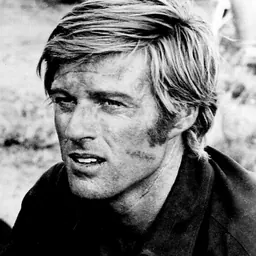
Haruf's penultimate novel, Benediction, was published in 2014. The book focuses on the final months of Holt's hardware store owner, "Dad" Lewis, who has incurable cancer. Noting its post-9/11 setting, Paul Elie of The New York Times held that Haruf used the book to dispel the idea that Holt was "outside the stream of current affairs", and felt the novel was "affecting but transitional ... genuine but incomplete". The Denver Post'''s reviewer, Tucker Shaw, wrote that "Haruf has an extraordinary grasp of quiet" in his review, which summarized the book as "a masterful look at end of life". Kirkus Reviews criticized Benediction, arguing that although Lewis' story had "dignity and gravitas", other plotlines were "contrived" and redundant. Brad Hooper of Booklist described it as a "a story elegant in its simple telling and remarkable in its authentic capture of universal human emotions." Our Souls at Night, Haruf's final novel, was published posthumously in 2015. Ann Hulbert, writing for The Atlantic, reported that Our Souls at Night "delivers a retort to critics who yawned that Haruf was stuck in his homespun ways", adding that he, "triumphantly, succeeds in having the last word". The New Yorker described the novel as a "delicate, sneakily devastating evocation of place and character." The Washington Post's Ron Charles praised Our Souls at Night, writing that it is "such a tender, carefully polished work that it seems like a blessing we had no right to expect." In translation by Fabio Cremonesi, Haruf's works, starting with Our Souls at Night, became bestsellers in Italy beginning in 2017. The novel was adapted in 2017 into a film by the same name, directed by Ritesh Batra and starring Robert Redford and Jane Fonda.
Recognition Year Book Award Category Result Ref 1984 The Tie That BindsPEN/Hemingway Award for Debut Novel — 1986 — Whiting Award Fiction 1999PlainsongBook Sense Award— National Book Award Fiction 2005 Eventide Book Sense Award — 2005 West of Last Chance a.k.a. High Plains Lange-Taylor Prize — 2006 — Dos Passos Prize — 2014 Benediction Folio Prize —
Works Novels
Short stories
Essays
Other
AdaptationsPlainsongAdapted into a movie by Hallmark in 2004. Adapted for the stage by the Denver Center Theatre Company in 2008. BenedictionAdapted for the stage by the Denver Center Theatre Company in 2015. Our Souls at Night'' Adapted into a movie by Netflix in 2017.
Don’t just read it —
keep it.
Full-length biographies made to live with: read them, listen on the way to work, watch them tonight.
- E-book
- Audio
- Video
Instant download · yours to keep · every purchase keeps this site free
Important facts
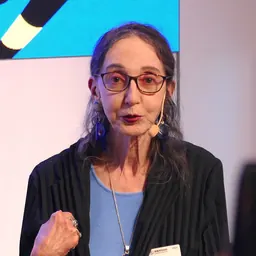
People in Kent Haruf's life
Named in this biography and alive at the same time





Related people
Same field, nearest in time

Contemporaries
People whose lives overlapped Kent Haruf's


Frequently asked questions
Who was Kent Haruf?
American novelist (1943–2014)
When was Kent Haruf born?
Kent Haruf was born on 24 February 1943 in Pueblo.
When did Kent Haruf die?
Kent Haruf died on 30 November 2014 in Salida.
What was Kent Haruf's occupation?
Kent Haruf was a writer, novelist and docent.
What nationality was Kent Haruf?
Kent Haruf was American.
Sources & further reading
Cite this page
APA: Biography.guide. (2026). Kent Haruf. https://biography.guide/kent-haruf/
MLA: "Kent Haruf." Biography.guide, https://biography.guide/kent-haruf/.
Chicago: "Kent Haruf." Biography.guide. https://biography.guide/kent-haruf/.
Data last updated: 2026-09-20 · Spot an error? Report a correction.
Portrait: Wikimedia Commons · author & licence
Page generated 2026-09-27 04:57 UTC