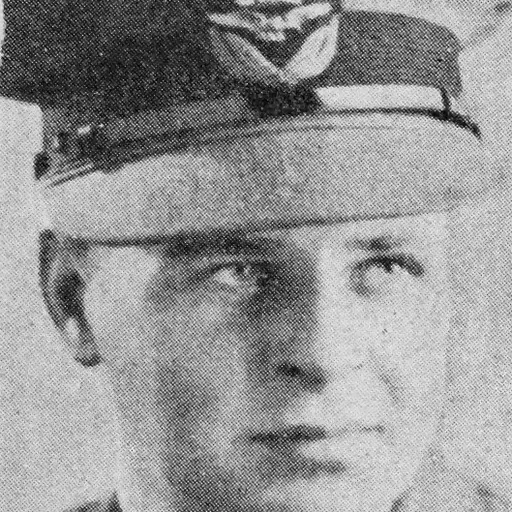
About Kenneth Tait
Lived 1918 – 1941 (aged 22). Kenneth Tait was a military personnel.
Kenneth William Tait, (19 November 1918 – 4 August 1941) was a New Zealand flying ace of the Royal Air Force (RAF) during the Second World War. He is credited with destroying five enemy aircraft, a share in another aircraft destroyed and eight damaged.
Born in Wellington, Tait joined the RAF in 1937. After completing flight training he was posted to No. 87 Squadron. Sent to France shortly after the outbreak of the Second World War, he shot down at least three enemy aircraft once the Germans invaded the Low Countries in May 1940. He destroyed another three enemy aircraft during the Battle of Britain. He was subsequently awarded the Distinguished Flying Cross and this was followed by a mention in despatches. After a period of instructing duties, in July 1941 he was posted to No. 257 Squadron and went missing in action the following month.
Early life Born on 19 November 1918 in Wellington, New Zealand, Kenneth William Tait was the son of William John and his wife Helen Tait. He was educated at Rongotai College and the Wellington College, where he played in the school's senior rugby team. After completing his schooling, he studied bookkeeping at the local technical college and was employed as a clerk. Now under the command of Squadron Leader Terrence Lovell-Gregg, a fellow New Zealander, the squadron was one of several scrambled in the afternoon of 15 August to intercept a large raid mounted on Portland by around 30 Ju 87s with a fighter escort numbering 100 aircraft. Tait destroyed a Bf 110 and damaged two others. Lovell-Gregg was killed during the engagement and Tait formed part of the burial party for the interment at Warmwell. He destroyed two German aircraft to the west of Portland on 25 August, a Bf 110 and Bf 109.
Early in December 1940, Tait was taken off operational duties and sent to No. 56 Operational Training Unit as an instructor. In February the following year, he was awarded the Distinguished Flying Cross. The next month, he was mentioned in despatches. Promoted to flight lieutenant in May 1941, Tait returned to operational flying in July. He was posted to No. 257 Squadron, which operated from Coltishall and carried out patrols and reconnaissance flights over the North Sea. On 4 August, he failed to return from a sortie attacking E-boats. Initially reported as missing in action, he was subsequently presumed to have been shot down and killed.
Tait is commemorated on the Commonwealth War Graves Commission's Air Forces Memorial near Egham in Surrey, England. He is credited with the confirmed destruction of five German aircraft, a share in another destroyed and eight damaged.
Don’t just read it —
keep it.
Full-length biographies made to live with: read them, listen on the way to work, watch them tonight.
- E-book
- Audio
- Video
Instant download · yours to keep · every purchase keeps this site free
Important facts
People in Kenneth Tait's life
Named in this biography and alive at the same time



Related people
Same field, nearest in time




Contemporaries
People whose lives overlapped Kenneth Tait's


Frequently asked questions
Who was Kenneth Tait?
New Zealand flying ace (1918–1941)
When was Kenneth Tait born?
Kenneth Tait was born on 19 November 1918.
When did Kenneth Tait die?
Kenneth Tait died on 4 August 1941.
What was Kenneth Tait's occupation?
Kenneth Tait was a military personnel.
Sources & further reading
Cite this page
APA: Biography.guide. (2026). Kenneth Tait. https://biography.guide/kenneth-tait/
MLA: "Kenneth Tait." Biography.guide, https://biography.guide/kenneth-tait/.
Chicago: "Kenneth Tait." Biography.guide. https://biography.guide/kenneth-tait/.
Data last updated: 2026-09-23 · Spot an error? Report a correction.
Portrait: Wikimedia Commons · author & licence
Page generated 2026-09-27 05:07 UTC