
About Kenneth Griffith
Lived 1921 – 2006 (aged 84). Kenneth Griffith was a British actor, philatelist, film actor, television actor and screenwriter.
Kenneth Griffith (born Kenneth Reginald Griffiths, 12 October 1921 – 25 June 2006) was a Welsh actor and documentary filmmaker. His outspoken views made him a controversial figure, especially when presenting documentaries which have been called "among the most brilliant, and controversial, ever made in Britain".
Early life He was born Kenneth Griffiths in Tenby, Pembrokeshire, Wales. His parents separated and left Tenby six months after his birth, leaving him with his paternal grandparents, Emily and Ernest, who adopted him. His grandparents were staunch Wesleyan Methodists who taught him to question everything;
Career Griffith left school and moved to Cambridge in 1937, taking a job at an ironmonger's weighing nails. This lasted only a day, and proved to be the only job he ever had outside the acting world. Also in 1937, he made his first professional acting appearance when he was cast by Peter Hoare as Cinna the Poet in a modern-dress version of Julius Caesar at the Cambridge Festival Theatre.
Griffith was conscripted into the Royal Air Force during World War II. Before training in Canada, he returned to see his grandparents in Tenby, who, at his request, gave him an English translation of Hitler's book, Mein Kampf so he could better understand the origins of the war.
His later film roles included the "mad old man" in Four Weddings and a Funeral (1994), Reverend Jones in The Englishman Who Went Up a Hill But Came Down a Mountain (1995) and the minister in Very Annie Mary (2001).
Documentaries and political activity In 1965, Huw Wheldon and the director of BBC2, David Attenborough, asked Griffith if he would like to make a film for the BBC on any subject that he chose. This resulted in a series of BBC films on subjects as diverse as the Boer War in Soldiers of the Widow (1967), Cecil Rhodes in A Touch of Churchill, a Touch of Hitler (1971), the controversial story of Thomas Paine in The Most Valuable Englishman Ever, David Ben-Gurion (The Light), Napoleon Bonaparte (The Man on the Rock), Pandit Nehru, Roger Casement (Heart of Darkness, 1992) and on one occasion a film commissioned by Thames Television on the story of the Three Wise Men of the New Testament, A Famous Journey (1979). Griffith was expelled from Iran by the country's Foreign Minister while making the documentary.
In 1973, Griffith made a documentary film about the life and death of Irish military and political leader Michael Collins titled Hang Up Your Brightest Colours (a line taken from a letter from George Bernard Shaw to one of Collins' sisters after Collins' assassination) for ATV, but the Independent Broadcasting Authority did not permit it to be screened (it was not shown until the BBC broadcast it in 1993).
In 1974, for a programme titled Curious Journey, he interviewed nine surviving IRA members from the Irish revolutionary period; they were Maire Comerford, Joseph Sweeney, Sean Kavanagh, John O'Sullivan, Brigid Lyons Thornton, Sean Harling, Martin Walton, David Neligan and Tom Barry. His sympathetic portrayal caused concern in the context of the Northern Ireland Troubles, and ATV boss Sir Lew Grade decided to withdraw the film, which was not shown publicly until 1994. In response Griffith made a documentary, The Public's Right to Know, for Thames TV. He was allowed to buy back Curious Journey, as long as he did not mention who had commissioned it (the Welsh TV company HTV).
At one point in his career, Griffith accused the anti-censorship group Index of censoring him by delaying the publication of two book reviews he had written for its magazine.
His autobiography, The Fool's Pardon, was published in 1994 by Little, Brown. BBC Wales presented a retrospective season of five of his documentaries in 1993, including the suppressed Michael Collins work, opening the season with a biographical study of Griffith called The Tenby Poisoner in which Peter O'Toole, Martin McGuinness and Jeremy Isaacs paid tribute. BBC Wales screened a film on Griffith's life in the "Welsh Greats" Series Two, shown in 2008. In 1994, Griffith was given a Cymru lifetime achievement award by BAFTA.
A Boer War historian, Griffith was sympathetic to the Afrikaners in South Africa. His documentary, Emily Hobhouse: The Englishwoman (1984), sympathised with Afrikaner women and children over their brutal treatment during the war, which was suppressed by the British media at the time. He also made a BBC2 documentary on runner Zola Budd, which purported to reveal injustices done to her by left-wing demonstrators and organisations during a tour of England in 1988.
He named his home (110 Englefield Road, Islington, London) as Michael Collins' House. In later life, Griffith said: "In my time I've been accused of being a Marxist, a fascist, a traitor and, probably worst in most people's eyes, inconsistent. I was a radical Socialist. I'm now a radical Tory. It has been a very painful journey". Joan Stock (one son) Doria Noar (one daughter, actress/theatre historian Eva Griffith ) Carole Haggar (one daughter, two sons)
Death and burial Griffith died in London on 25 June 2006, aged 84. His coffin was decorated with the flags of Wales, Israel and the Irish tricolour. Griffith was interred beside his grandparents, Emily and Ernest in the churchyard adjoining St Nicholas and St Teilo Church in Penally.
Filmography
Television
Don’t just read it —
keep it.
Full-length biographies made to live with: read them, listen on the way to work, watch them tonight.
- E-book
- Audio
- Video
Instant download · yours to keep · every purchase keeps this site free
Important facts
People in Kenneth Griffith's life
Named in this biography and alive at the same time



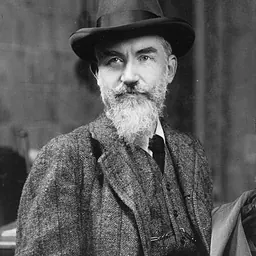
Related people
Same field, nearest in time
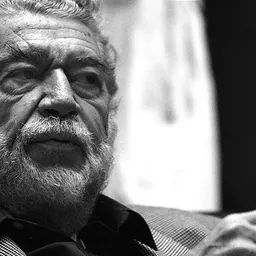
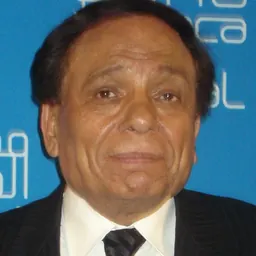
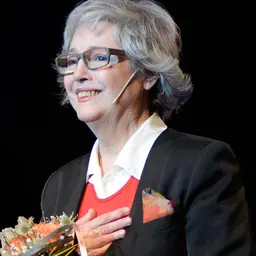
Contemporaries
People whose lives overlapped Kenneth Griffith's





Frequently asked questions
Who was Kenneth Griffith?
Welsh actor (1921-2006)
When was Kenneth Griffith born?
Kenneth Griffith was born on 12 October 1921 in Tenby.
When did Kenneth Griffith die?
Kenneth Griffith died on 25 June 2006 in Penally.
What was Kenneth Griffith's occupation?
Kenneth Griffith was an actor, philatelist, film actor, television actor and screenwriter.
What nationality was Kenneth Griffith?
Kenneth Griffith was British.
Sources & further reading
Cite this page
APA: Biography.guide. (2026). Kenneth Griffith. https://biography.guide/kenneth-griffith/
MLA: "Kenneth Griffith." Biography.guide, https://biography.guide/kenneth-griffith/.
Chicago: "Kenneth Griffith." Biography.guide. https://biography.guide/kenneth-griffith/.
Data last updated: 2026-09-20 · Spot an error? Report a correction.
Page generated 2026-09-27 05:32 UTC