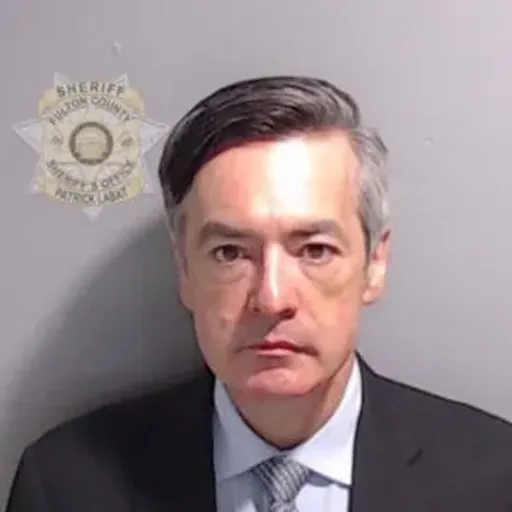
About Kenneth Chesebro
Kenneth Chesebro was an American lawyer.
Kenneth John Chesebro ( ; born June 5, 1961 ) is an American attorney known as the architect of the Trump fake electors plot that conspired to overturn the 2020 U.S. presidential election.
On August 14, 2023, Chesebro was indicted along with eighteen others in the Georgia election racketeering prosecution. On October 20, he pleaded guilty to one felony count of conspiracy to commit filing false documents. As part of his plea bargain, Chesebro accepted five years of probation, $5,000 in restitution, 100 hours of community service, and agreed to testify against Donald Trump and the remaining defendants.
In 2025, Chesebro was disbarred from legal practice in New York, Washington, DC., and Illinois.
Early life and education Kenneth Chesebro was born in 1961 and raised in Wisconsin Rapids, about 100 miles north of Madison, Wisconsin. His father, Donald Chesebro, was a U.S. Army veteran and music teacher and his mother was a speech therapist. He then attended Harvard Law School, where he served as an editor of the Harvard Law Review and was classmates with Elena Kagan and Jeffrey Toobin, earning his Juris Doctor (J.D.) in 1986. He changed his registration in Massachusetts to unaffiliated. A few years later he moved to New York where he also registered as unaffiliated. the second is dated December 6, and the third is dated December 9, 2020.
Focused on challenging the Wisconsin vote, Chesebro argued in the November 18 memo that "the Presidential election timetable affords ample time for judicial proceedings." The December 6, 2020, memo was not made public until Trump's federal indictment in the 2020 election interference case on August 1, 2023. The Times called the December 6 memo "a missing piece in the public record of how Mr. Trump's allies developed their strategy" to overturn the election.
The December 9 memo largely focused on providing a "general overview" of the legal requirements regarding the submission of electoral votes, under both federal law and the respective laws of the six states "in controversy". Chesebro additionally commented that, in spite of having no involvement from "the governor or any other state official", the Trump campaign's purported "alternate" electoral votes "might be eligible" for counting on January 6 if by then they were recognized "by a court, the state legislature, or Congress". Chesebro proposed a "chronology" of events where Pence would recuse himself from serving as the presiding officer of the United States Senate on January 6, claiming that the Electoral Count Act imposed duties on his role that go "beyond those set out in the Constitution", and that he would have a conflict of interest if he were to fill the role of senate president while being a candidate for the vice presidency. The votes would instead be opened by the president pro tempore, Chuck Grassley, or by "another senior Republican". On March 28, 2022, Judge David O. Carter, after considering Chesebro's email during a court case, ruled: "President Trump's team transformed a legal interpretation of the Electoral Count Act into a day-by-day plan of action. The draft memo pushed a strategy that knowingly violated the Electoral Count Act".
The United States House Select Committee on the January 6 Attack concluded that Chesebro had sent the December 13 memo "upon request from Trump Campaign official Boris Epshteyn." On December 30, 2020, Chesebro emailed Eastman and others, saying he planned to stay at the Trump International Hotel in Washington, DC from January 3–8. On January 6, 2021, the day of the attack on the Capitol, Chesebro was on the Capitol grounds following Alex Jones. It is not known why he was there and "there is no indication" he entered the Capitol building.
The memos ultimately inspired the scheme in seven states, though Vice President Pence did not accept the Trump–Pence electors and refused to participate in the scheme. Laurence Tribe, Chesebro's former mentor, later joined an ethics complaint filed with the New York Bar regarding the December 6 memo. In an article for Just Security, Tribe complained: "Chesebro completely misused part of the latest edition of my constitutional law treatise."
Chesebro told Talking Points Memo in a June 2022 interview that his actions for the Trump campaign were "what lawyers do." In February 2024, CNN reported that Chesebro had concealed a secret Twitter account, BadgerPundit, from Michigan prosecutors. Under the account, Chesebro promoted a far more aggressive strategy to overturn the election than he had let on in his Michigan interview.
US House investigation On March 1, 2022, Chesebro was subpoenaed by the January 6th committee. He fought the subpoena but testified on October 26.
Georgia prosecution In July 2022, he was subpoenaed by a grand jury in relation to the 2020 Georgia election investigation.
On August 14, 2023, Chesebro was indicted along with 18 other people in the prosecution related to the 2020 election in Georgia. He exercised his right to demand a speedy trial, and his trial was set for October 23, 2023. On September 1, he pleaded not guilty to seven criminal charges, including a violation of Georgia's RICO act and conspiracy to commit forgery, in the Georgia election subversion case, and he also waived his right to an arraignment hearing.
On September 21, his lawyers asked for five pieces of communication—including an email mentioned in the indictment as having been sent by Chesebro to Eastman on January 4, 2021—to be excluded from evidence. They argued that the documents were protected by attorney-client privilege. On October 10, Fulton County District Attorney Fani Willis argued that attorney-client privilege should not apply because the documents did not advise Trump on litigation but rather gave him a political strategy to use in Congress to interrupt the transfer of power to Biden. In this argument, she echoed prior rulings of U.S. District Judge David Carter.
On October 20, as jury selection began for his speedy trial, Chesebro took a last-minute plea deal, including a single felony count of conspiracy to file false documents. He was sentenced to five years of probation and to pay $5,000 in restitution.
In 2024, as a consequence of his guilty plea in Georgia, he was suspended from practicing law in the state of New York, with the possibility of permanent disbarment left open.
Wisconsin prosecution On June 4, 2024, Chesebro was indicted along with two others in the Wisconsin prosecution of fake electors. He was charged with a single count of conspiracy to utter forged official documents as legitimate.
Role in federal prosecution of 2020 election On August 1, 2023, Trump was indicted in the federal prosecution for his attempts to overturn the 2020 election. Chesebro has been identified as Co-conspirator 5.
Involvement in Arizona prosecution Chesebro was interviewed by Arizona Attorney General Kris Mayes during her investigation into the fake electors plot. Prosecutors questioned Chesebro about a meeting he had with Trump in the Oval Office in December 2020; Chesebro told them he had explained to Trump how his alternate electors could help them to win Arizona. During the Arizona prosecution of fake electors in 2024, Chesebro was referred to in the indictment as unindicted co-conspirator 4.
Career after January 6, 2021 Napoli Shkolnik, a New York–based personal injury firm, hired Chesebro in October 2022 to lead their law and motions department. He moved from New York to Puerto Rico, where other attorneys for the firm live. The day after the August 2023 indictment, the firm told reporters it had fired him. A year earlier, he had pleaded guilty to a felony in his criminal indictment in Fulton County, Georgia, over his efforts to overturn Trump's election loss in that state. The Third Department of the New York Supreme Court's Appellate Division recognized the felony as a "serious crime" that warranted barring him from practicing law in New York. He was also suspended from practicing in Florida and Illinois. On June 26, 2025, he was disbarred in New York in a per curiam decision from the Appellate Division, Third Department in Albany. The decision noted the seriousness of his criminal conduct, which indicated that he lacked the "integrity and fitness" to practice, and his "cavalier attitude regarding his actions".
Personal life In 1994, Chesebro married Emily Stevens, a physician. They divorced in 2016.
Chesebro was an early bitcoin investor, netting several million dollars from a 2014 investment. Some former colleagues suggest this newfound wealth triggered his dramatic life-style change; he began to travel extensively, bought houses, divorced, and started donating to Republicans.
Don’t just read it —
keep it.
Full-length biographies made to live with: read them, listen on the way to work, watch them tonight.
- E-book
- Audio
- Video
Instant download · yours to keep · every purchase keeps this site free
Important facts
Related people
Same field, nearest in time




Frequently asked questions
Who was Kenneth Chesebro?
American attorney
What was Kenneth Chesebro's occupation?
Kenneth Chesebro was a lawyer.
What nationality was Kenneth Chesebro?
Kenneth Chesebro was American.
Sources & further reading
Cite this page
APA: Biography.guide. (2026). Kenneth Chesebro. https://biography.guide/kenneth-chesebro/
MLA: "Kenneth Chesebro." Biography.guide, https://biography.guide/kenneth-chesebro/.
Chicago: "Kenneth Chesebro." Biography.guide. https://biography.guide/kenneth-chesebro/.
Data last updated: 2026-09-22 · Spot an error? Report a correction.
Portrait: Wikimedia Commons · author & licence
Page generated 2026-09-27 05:03 UTC