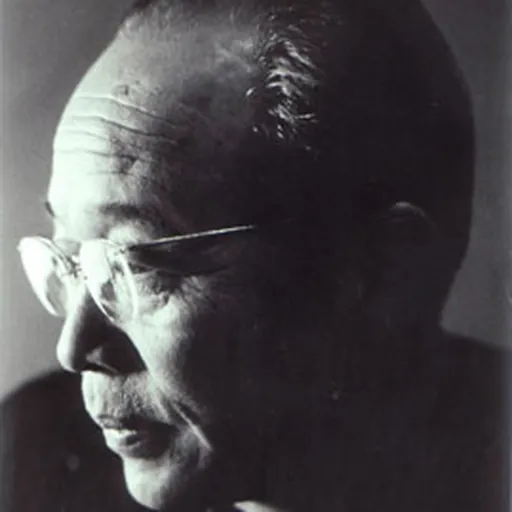
Kenji Mizoguchi
Japanese film director and screenwriter
About Kenji Mizoguchi
Lived 1898 – 1956 (aged 58). Kenji Mizoguchi was a Japanese film director, screenwriter and director.
was a Japanese filmmaker who directed roughly one hundred films during his career between 1923 and 1956. His most acclaimed works include The Story of the Last Chrysanthemums, The Life of Oharu (1952), Ugetsu (1953), and Sansho the Bailiff (1954), with the latter three all being awarded at the Venice International Film Festival. A recurring theme of his films was the oppression of women in historical and contemporary Japan. Together with Akira Kurosawa and Yasujirō Ozu, Mizoguchi is seen as a representative of the "golden age" of Japanese cinema.
Biography Early life (1898–1920) Mizoguchi was born in Hongō, Tokyo, as the second of three children, to Zentaro Miguchi, a roofing carpenter, and his wife Masa. The family's background was relatively humble until the father's failed business venture of selling raincoats to the Japanese troops during the Russo-Japanese War. His 1926 Passion of a Woman Teacher (Kyōren no onna shishō) was one of a handful of Japanese films shown in France and Germany at the time and received considerate praise, The 1936 diptych of Osaka Elegy and Sisters of the Gion, about modern young women (moga) rebelling against their surroundings, is considered to be his early masterpiece. Mizoguchi himself named these two films as the works with which he achieved artistic maturity. Osaka Elegy was also his first full sound film, and marked the beginning of his long collaboration with screenwriter Yoshikata Yoda.
1939, the year when Mizoguchi became president of the Directors Guild of Japan, Here, a young woman supports her partner's struggle to achieve artistic maturity as a kabuki actor at the price of her health.
Wartime films (1941–1945) During World War II, Mizoguchi made a series of films whose patriotic nature seemed to support the war effort. The most famous of these is a retelling of the classic samurai tale The 47 Ronin (1941–42), an epic jidaigeki (historical drama). While some historians see these as works which he had been pressured into, others believe him to have acted voluntarily. Fellow screenwriter Matsutarō Kawaguchi went as far as, in a 1964 interview for , calling Mizoguchi (whom he otherwise held in high regard) an "opportunist" in his art who followed the currents of the time, veering from the left to the right to finally become a democrat.
1941 also saw the permanent hospitalisation of his wife Chieko (m. 1927),
Post-war films (1945–1952) During the early post-war years following the country's defeat, Mizoguchi directed a series of films concerned with the oppression of women and female emancipation both in historical (mostly the Meiji era) and contemporary settings. All of these were written or co-written by Yoda, and often starred Kinuyo Tanaka, who remained his regular leading actress until 1954, when both fell out with each other over Mizoguchi's attempt to prevent her from directing her first own film. Utamaro and His Five Women (1946) was a notable exception of an Edo era jidaigeki film made during the Occupation, as this genre was seen as being inherently nationalistic or militaristic by the Allied censors. Of his works of this period, Flame of My Love (1949) has repeatedly been pointed out for its unflinching presentation of its subject. Tanaka plays a young teacher who leaves her traditionalist milieu to strive for her goal of female liberation, only to find out that her allegedly progressive partner still nourishes the accustomed attitude of male preeminence.
International recognition and death (1952–1956)
Mizoguchi returned to feudal era settings with The Life of Oharu (1952), Ugetsu (1953) and Sansho the Bailiff (1954), which won him international recognition, in particular by the Cahiers du Cinéma critics such as Jean-Luc Godard, and were awarded at the Venice Film Festival. Mizoguchi once more explored a contemporary milieu (a brothel in the Yoshiwara district) in black-and-white format with his last film, the 1956 Street of Shame.
Mizoguchi died of leukemia at the age of 58 in the Kyoto Municipal Hospital.
Filmography
Silent films All of Mizoguchi's silent films are lost, except where stated.
Year English title Japanese title Romanized title Writer Notes 1923 The Resurrection of Love Ai ni yomigaeru hi Hometown Furusato The Dream Path of Youth Seishun no yumeji City of Desire Joen no chimata Failure's Song is Sad Haisan no uta wa kanashi 813: The Adventures of Arsène Lupin 813 Foggy Harbour Kiri no minato Blood and Soul Chi to rei The Night Yoru In the Ruins Haikyo no naka 1924 The Song of the Mountain Pass Tōge no uta The Sad Idiot Kanashiki hakuchi The Queen of Modern Times Gendai no joō Women Are Strong Jose wa tsuyoshi This Dusty World Jinkyō Turkeys in a Row Shichimenchō no yukue A Chronicle of May Rain Samidare zōshi No Money, No Fight Musen fusen A Woman of Pleasure Kanraku no onna Death at Dawn Akatsuki no shi 1925 Queen of the Circus Kyokubadan no Jo Out of College Gakusō o idete The White Lily Laments Shirayuki wa nageku The Earth Smiles: Part 1 Daichi wa hohoemu: Daiichibu Shining in the Red Sunset Akai yūki ni terasarete The Song of Home Furusato no uta Extant Human Being Ningen Street Sketches Shōhin eigashū: Machi no suketchi Omnibus, Mizoguchi directed one of four parts 1926 General Nogi and Kuma-san Nogi Taisho to Kuma-san The Copper Coin King Dōkaō A Paper Doll's Whisper of Spring Kaminingyō haru no sasayaki My Fault, New Version Shinsetsu ono ga tsumi The Passion of a Woman Teacher Kyōren no onna shishō The Boy of the Sea Kaikoku danji Money Kane 1927 The Imperial Grace Kōon The Cuckoo Jihi shinchō 1928 A Man's Life Hito no isshō 1929 Bridge of Japan Nihonbashi Tokyo March Tōkyō kōshinkyoku Few minutes preserved The Morning Sun Shines Asahi wa kagayaku Co-directed with Seiichi Ina, few minutes preserved Metropolitan Symphony Tokai kōkyōgaku 1930 Hometown Furusato Extant Okichi, Mistress of a Foreigner Tōjin Okichi Few minutes preserved 1931 And Yet They Go Shikamo karera wa yuku 1932 The Man of the Moment Toki no ujigami The Dawn of Manchuria and Mongolia Manmō kenkoku no reimei 1933 The Water Magician Taki no shiraito Extant Gion Festival Gion matsuri The Jinpu Group Jimpūren 1934 The Mountain Pass of Love and Hate Aizō tōge 1935 The Downfall of Osen Orizuru Osen Extant
Sound films Year English title Japanese title Romanized title Writer Notes 1935 Oyuki the Virgin Mariya no Oyuki The Poppy Gubijinsō 1936 Osaka Elegy Naniwa erejī Sisters of the Gion Gion no kyōdai 1937 The Straits of Love and Hate Aien kyō 1938 Song of the Camp Roei no uta 1939 The Story of the Last Chrysanthemums Zangiku monogatari 1939 A Woman of Osaka Naniwa onna Lost film 1941 The Life of an Actor Geidō Ichidai Otoko Lost film The 47 Ronin Part 1 Genroku chūshingura 1942 The 47 Ronin Part 2 1944 Three Generations of Danjuro Danjurō sandai Miyamoto Musashi Miyamoto Musashi 1945 The Famous Sword Meitō Bijomaru Victory Song Hisshōka Co-direction with Masahiro Makino and Hiroshi Shimizu 1946 Victory of Women Josei no shōri Utamaro and His Five Women Utamaro o meguru gonin no onna 1947 The Love of Sumako the Actress Joyū Sumako no koi 1948 Women of the Night Yoru no onnatachi 1949 Flame of My Love Waga koi wa moenu 1950 Portrait of Madame Yuki Yuki fujin ezu 1951 Miss Oyu Oyū-sama The Lady of Musashino Musashino fujin 1952 The Life of Oharu Saikaku ichidai onna 1953 Ugetsu Ugetsu monogatari A Geisha Gion bayashi 1954 Sansho the Bailiff Sanshō dayū The Woman in the Rumor Uwasa no onna The Crucified Lovers Chikamatsu monogatari 1955 Princess Yang Kwei Fei Yōkihi Tales of the Taira Clan Shin heike monogatari 1956 Street of Shame Akasen chitai
Legacy In 1975, Kaneto Shindō, a set designer, chief assistant director and scenarist for Mizoguchi in the late 1930s and 1940s, released a documentary about his former mentor, Kenji Mizoguchi: The Life of a Film Director, Already with his autobiographical debut film Story of a Beloved Wife (1951), Shindō had paid reference to Mizoguchi in the shape of the character "Sakaguchi", a director who nurtures a young aspiring screenwriter.
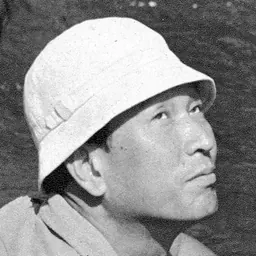
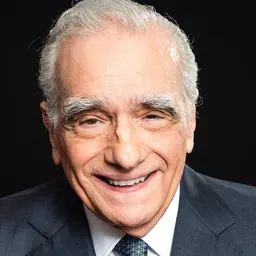
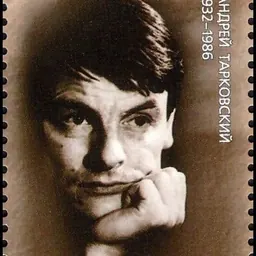
Mizoguchi's films have regularly appeared in "best film" polls, such as Sight & Sound's "The 100 Greatest Films of All Time" (Ugetsu and Sansho the Bailiff) and Kinema Junpo's "Kinema Junpo Critics' Top 200" (The Life of Oharu, Ugetsu and The Crucified Lovers). A retrospective of his 30 extant films, presented by the Museum of the Moving Image and the Japan Foundation, toured several American cities in 2014. Among the directors who have admired Mizoguchi's work are Akira Kurosawa, Orson Welles, Andrei Tarkovsky, Martin Scorsese, Werner Herzog, Theo Angelopoulos and many others. Film historian David Thomson wrote, "The use of camera to convey emotional ideas or intelligent feelings is the definition of cinema derived from Mizoguchi's films. He is supreme in the realization of internal states in external views."
International appreciation When Mizoguchi died, many film directors and film critics gave comments about Mizoguchi's skill and influence.
‘On 24 August 1956, Japan's greatest film-maker died in Kyoto. And one of the greatest filmmakers of all time. Kenji Mizoguchi was the equal of a Murnau or a Rossellini... If poetry appears at every second, in every shot that Mizoguchi makes, it is because, as with Murnau, it is the instinctive reflection of the inventive nobility of its author’. Jean-Luc Godard, Arts, 5 February 1958.
‘There is no doubt that Kenji Mizoguchi, who died three years ago, was his country's greatest filmmaker. He knew how to discipline for his own use an art born in other climes and from which his compatriots had not always made the most of. And yet there is no slavish desire on his part to copy the West. His conception of setting, acting, rhythm, composition, time and space is entirely national. But he touches us in the same way as Murnau, Ophüls or Rossellini’. Éric Rohmer, Arts, 25 September 1959.
‘Comparisons are as inevitable as they are unfashionable: Mizoguchi is the Shakespeare of cinema, its Bach or Beethoven, its Rembrandt, Titian or Picasso’, James Quandt, Mizoguchi the Master, (retrospective of Mizoguchi centenary films), Cinematheque Ontario and The Japan Foundation, 1996.
Don’t just read it —
keep it.
Full-length biographies made to live with: read them, listen on the way to work, watch them tonight.
- E-book
- Audio
- Video
Instant download · yours to keep · every purchase keeps this site free
Important facts
People in Kenji Mizoguchi's life
Named in this biography and alive at the same time

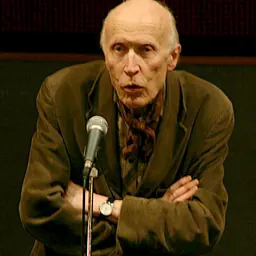
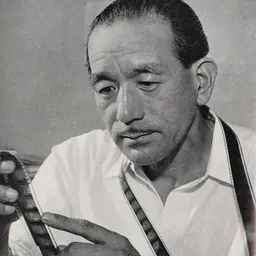

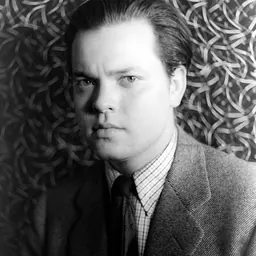
Related people
Same field, nearest in time
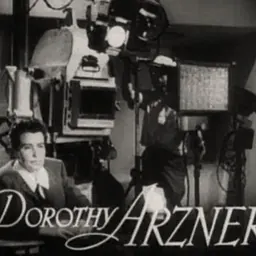


Contemporaries
People whose lives overlapped Kenji Mizoguchi's




Frequently asked questions
Who was Kenji Mizoguchi?
Japanese film director and screenwriter (1898-1956)
When was Kenji Mizoguchi born?
Kenji Mizoguchi was born on 16 May 1898 in Tokyo.
When did Kenji Mizoguchi die?
Kenji Mizoguchi died on 24 August 1956 in Kyoto.
What was Kenji Mizoguchi's occupation?
Kenji Mizoguchi was a film director, screenwriter and director.
What nationality was Kenji Mizoguchi?
Kenji Mizoguchi was Japanese.
Sources & further reading
Cite this page
APA: Biography.guide. (2026). Kenji Mizoguchi. https://biography.guide/kenji-mizoguchi/
MLA: "Kenji Mizoguchi." Biography.guide, https://biography.guide/kenji-mizoguchi/.
Chicago: "Kenji Mizoguchi." Biography.guide. https://biography.guide/kenji-mizoguchi/.
Data last updated: 2026-09-22 · Spot an error? Report a correction.
Portrait: Wikimedia Commons · author & licence
Page generated 2026-09-27 05:00 UTC