
About Ken Adam
Lived 1921 – 2016 (aged 95). Ken Adam was a British and German scenographer and production designer, known for Production design and Royal Air Force.
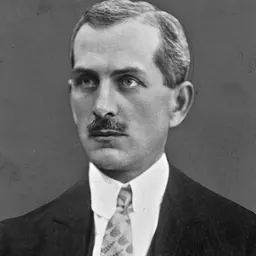
Sir Kenneth Adam (born Klaus Hugo George Fritz Adam; 5 February 1921 – 10 March 2016) was a German-British movie production designer, best known for his set designs for the James Bond films of the 1960s and 1970s, as well as for Dr. Strangelove and Salon Kitty.
Adam won two Academy Awards for Best Art Direction. Born in Berlin, he relocated to England with his Jewish family at the age of 13 soon after the Nazis came to power. Together with his younger brother, Denis Adam, he was one of only three German-born pilots to serve in the Royal Air Force during the Second World War.
Early life Adam was born in 1921 in Berlin to an upper-middle-class secular Jewish family, the third child of Lilli and Fritz Adam, a former Prussian cavalry officer who had served with the Zieten Hussars. Fritz had been awarded the Iron Cross Second Class and the Iron Cross First Class for his service in the First World War.
Fritz co-owned a well-known high-fashion clothing and sporting goods store called S. Adam (Berlin, Leipziger Straße/Friedrichstraße) together with his three brothers, George, Siegfried and Otto Adam. The company had been established in 1863 by Saul Adam. Klaus (Ken) had two older siblings, Peter, Loni and a younger brother Dieter (1 February 1924 – 17 October 2018).
The family lived an almost idyllic, privileged existence until the Nazi Party came to power. Upon arrival Klaus anglicised his name to Kenneth and eventually Ken while his brother Dieter changed his to Denis. Their oldest brother Peter was at the time studying law at the University of Clermont-Ferrand in France and decided to move to England and complete his studies there.
The rest of the family stayed in Germany, as Adam's father felt that the Nazis were only a temporary aberration and they could wait it out. Things, however, continued to deteriorate, with Jewish stores being boycotted and targeted for attacks in April 1933.
In the summer of 1933, Max Reich, a senior employee of the family business, and then Fritz Adam were arrested. Reich was a member of the SS and leader of the business's Nazi cell. Reich was eventually released, and Fritz Adam was released and put under house arrest for three days. Reluctantly coming to the conclusion that Jews had no future in Germany, Fritz, Lilli and Loni, as well as some of Ken's aunts and uncles, fled to England in the summer of 1934. The family eventually settled in the Hampstead area of London the following year.
The family were declared refugees on their arrival to England and identified as "friendly aliens", with the exception of Denis who was too young to be classified. The family arrived in England with nothing other than some gold coins Lilli had smuggled out. His mother, who had never previously worked in her life, used the little money they had to establish and run a boarding house. His father struggled with his change in status and starting over in a new country. His father started an import-export business selling gloves, but his health deteriorated and he died in 1936 when he was 56 years old. Among his tutors was a part-time teacher, who had been an assistant of famed German architect Erich Mendelsohn, from whom Adam learned valuable architectural drawing techniques. He was nicknamed "Heinie the tank-buster" by his comrades for his daring exploits.
Together with his brother Denis, Adam was one of three German-born pilots to serve in the Royal Air Force during the Second World War, the third being Peter Stevens. As such, if they had been captured by the Germans, they were liable to be executed as traitors rather than being treated as prisoners of war.
Following the end of the war, Adam was the Allied officer in charge of German labour rebuilding Wunstorf Air Base.
Film career
Adam entered the film industry as a draughtsman on This Was a Woman (1948) at Riverside Studios in Hammersmith. Steven Spielberg called it "the best set that's ever been designed". He turned down the opportunity to work on Kubrick's next project, 2001: A Space Odyssey (1968), after he found out that Kubrick had been working with NASA for a year on space exploration, and that it would put him at a disadvantage in developing his art. His last Bond film was Moonraker (1979). Writing for The Guardian in 2005, journalist Johnny Dee claimed: "His sets for the seven Bond films he worked on [...] are as iconic as the movies themselves and set the benchmark for every blockbuster".
Adam's other film credits include The Trials of Oscar Wilde (1960), the Michael Caine espionage thriller The Ipcress File (1965) and its sequel Funeral in Berlin (1966), the Peter O'Toole version of Goodbye, Mr. Chips (1969), Sleuth (1972), Salon Kitty (1976), Agnes of God (1985), Addams Family Values (1993), and The Madness of King George (1994).
Adam returned to work with Kubrick on Barry Lyndon (1975), for which he won his first Oscar. The BFI noted the film's "contrastingly mellow Technicolor beauties" in its depiction of the 18th century. During the late 1970s, he worked on storyboards and concept art for Star Trek: Planet of the Titans, then in pre-production. The film was eventually shelved by Paramount Pictures.
Adam was a jury member at the 1980 Cannes Film Festival and the 49th Berlin International Film Festival. In 1999, during the Victoria and Albert Museum exhibition "Ken Adam – Designing the Cold War", Adam spoke on his role in the design of film sets associated with the 1960s through the 1980s.
Personal life He met his wife Maria-Letizia Moauro while filming The Crimson Pirate on location on the Italian island of Ischia and they married on 16 August 1952.
The Ken Adam Building, a large lot at Pinewood Studios's Buckingham location, bears Adam's name and houses multiple theatres and businesses as well as the Kodak Film Lab and an office of the trade union Bectu.
Honours Adam was appointed an Officer of the Order of the British Empire in the 1996 New Year Honours for services to the film industry and Knight Bachelor in the 2003 Birthday Honours for services to film production design and to UK–German relations. He received the 2008 , and was appointed a Royal Designer for Industry in 2009.
Filmography
Awards
Don’t just read it —
keep it.
Full-length biographies made to live with: read them, listen on the way to work, watch them tonight.
- E-book
- Audio
- Video
Instant download · yours to keep · every purchase keeps this site free
Important facts
People in Ken Adam's life
Named in this biography and alive at the same time






Related people
Same field, nearest in time



Contemporaries
People whose lives overlapped Ken Adam's



Frequently asked questions
Who was Ken Adam?
UK motion picture production designer (1921-2016)
When was Ken Adam born?
Ken Adam was born on 5 February 1921 in Berlin.
When did Ken Adam die?
Ken Adam died on 10 March 2016 in London.
What was Ken Adam's occupation?
Ken Adam was a scenographer and production designer.
What was Ken Adam known for?
Ken Adam was known for Production design and Royal Air Force.
What nationality was Ken Adam?
Ken Adam was British and German.
Sources & further reading
Cite this page
APA: Biography.guide. (2026). Ken Adam. https://biography.guide/ken-adam/
MLA: "Ken Adam." Biography.guide, https://biography.guide/ken-adam/.
Chicago: "Ken Adam." Biography.guide. https://biography.guide/ken-adam/.
Data last updated: 2026-09-27 · Spot an error? Report a correction.
Page generated 2026-09-27 05:17 UTC