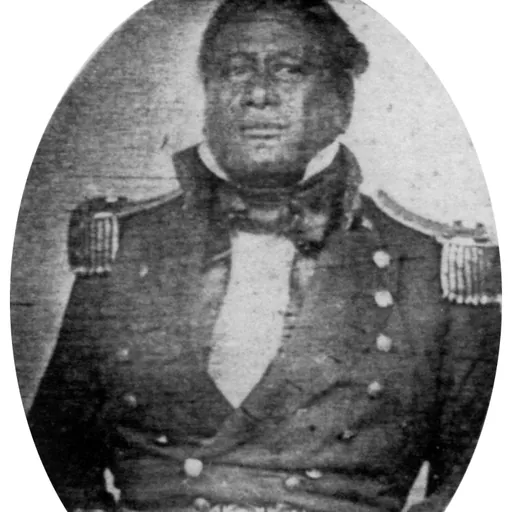
Kealiiahonui
Member of the nobility of the Kingdom of Kauaʻi and the Kingdom of Hawaiʻi
About Kealiiahonui
Lived 1800 – 1849 (aged 48).
Aaron Kealiʻiahonui (1800–1849) was member of the nobility of the Kingdom of Kauaʻi and the Kingdom of Hawaii. He is often called Keliʻiahonui, a contraction of Kealiʻiahonui. His name was given to him by his father Kaumualiʻi in honor of King Kamehameha I's peaceful takeover of Kauai and means the "king whose strength is attained through patience".
Family life Kealiʻiahonui was born on August 17, 1800. His father was Kaumualiʻi, the last ruling King of Kauaʻi and his mother was Kaʻapuwai Kapuaʻamohu. In 1810, his father agreed to become a vassal to Kamehameha I, ensuring that he would never become a ruling monarch. In 1821, his father was forced into exile, and to emphasize their submission, he married Queen Regent Kaʻahumanu.
After his father died in 1824, and following a failed rebellion led by his half-brother Humehume, Queen Kaʻahumanu forced Kealiʻiahonui into a similar relationship. Kealiʻiahonui gave up his first wife, Deborah Kapule, who symbolically married Kaʻahumanu. Following this, there were no more rebellions from Kauaʻi. However, the missionaries disliked these forced marriages, and hoped education would convert them.
Kealiʻiahonui was described as "...handsome, and naturally and usually more interesting at that period than most of the nobility".
After Kaʻahumanu died in 1832, he married for a third time, to Kekauōnohi, a granddaughter of Kamehameha I and former Queen Consort. He served in the 1842 through 1848 sessions of the legislature. In 1845 he served as royal chamberlain, and from 1845 to 1847, he was included in the Privy Council of King Kamehameha III.
Kealiʻiahonui died on June 23, 1849, in Honolulu. His niece, named Kapule after his first wife, looked after him before his death. He had a public funeral on June 30. It was a combination of Christian and ancient Hawaiian practices. His coffin was taken to a cave in an area known as Puʻuloa (near modern-day Pearl Harbor). Although Kekauʻōnohi had wanted a burial at sea, Kapule and her husband hid the coffin until they were convinced to offer it to the spirits that were thought to inhabit this area. His grandnephew was named Edward Abnel Keliʻiahonui (1869–1887) after him.
Don’t just read it —
keep it.
Full-length biographies made to live with: read them, listen on the way to work, watch them tonight.
- E-book
- Audio
- Video
Instant download · yours to keep · every purchase keeps this site free
Important facts
Family & relationships
People in Kealiiahonui's life
Named in this biography and alive at the same time

Contemporaries
People whose lives overlapped Kealiiahonui's






Frequently asked questions
Who was Kealiiahonui?
Member of the nobility of the Kingdom of Kauaʻi and the Kingdom of Hawaiʻi
When was Kealiiahonui born?
Kealiiahonui was born on 17 August 1800 in Kauaʻi.
When did Kealiiahonui die?
Kealiiahonui died on 23 June 1849 in Honolulu.
What nationality was Kealiiahonui?
Kealiiahonui's recorded nationality: Kingdom of Hawaiʻi.
Sources & further reading
Cite this page
APA: Biography.guide. (2026). Kealiiahonui. https://biography.guide/kealiiahonui/
MLA: "Kealiiahonui." Biography.guide, https://biography.guide/kealiiahonui/.
Chicago: "Kealiiahonui." Biography.guide. https://biography.guide/kealiiahonui/.
Data last updated: 2026-09-22 · Spot an error? Report a correction.
Portrait: Wikimedia Commons · author & licence
Page generated 2026-09-27 05:02 UTC