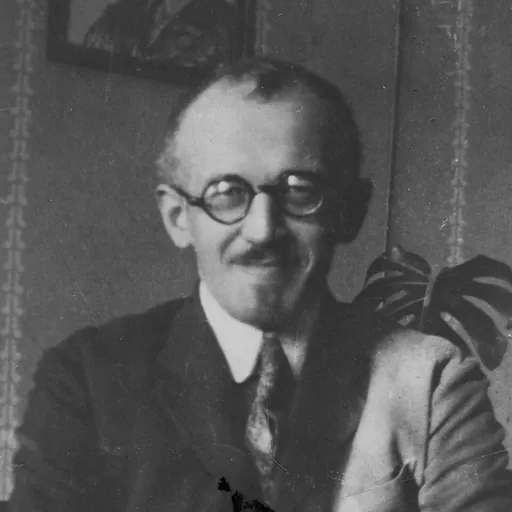
About Kazimierz Vetulani
Lived 1889 – 1941 (aged 52). Kazimierz Vetulani was a Polish and Austrian engineer.
Kazimierz Franciszek Vetulani (3 January 1889 – 4 July 1941) was a Polish civil engineer, professor at the Lviv Polytechnic, member of the Polish Mathematical Society, author of several dozen papers in the fields of technology and mathematics, as well as in the field of musical scale theory.
A participant of World War I in the rank of lieutenant of the Austro-Hungarian Army reserve, he was a sapper and a military engineer. He was promoted to the rank of captain in the Polish Army reserve and participated in the Polish–Ukrainian War. In 1935 he obtained Ph.D. at the Lviv Polytechnic. In 1938 he was appointed a deputy professor of general mechanics, and in 1940 he was appointed full professor.
Shortly after the Germans seized Lviv during World War II, on the night of 4 July 1941, he was arrested by Gestapo, the German secret police, and murdered among a group of Lviv professors.
Biography Early life and education He was born on 3 January 1889 in Sanok, then within the Kingdom of Galicia and Lodomeria; the son of Roman Vetulani, a high school professor, and Matylda née Pisz (1861–1891). His mother died on 15 December 1891, when Kazimierz Vetulani was less than three years old.
He was raised by his father and his second wife, Elżbieta née Kunachowicz. He had five younger, half-siblings: brothers Zygmunt (1894–1942), Tadeusz (1897–1952) and Adam (1901–1976), and sisters Maria (master of economics, clerk of the Agricultural Bank in Kraków, 1895–1945) and Elżbieta (1903–1921, died of tuberculosis).
The family lived in Sanok, in the house at Floriańska Street (later renamed Ignacy Daszyński Street) and in the villa of the Zaleski family at Świętego Jana Square. On the matriculation certificate of 15 June 1907, he had an excellent degree in mathematics and Polish language with a notion of a particular passion for those subjects. and then to the rank of lieutenant on 1 November 1917. Around 1916–1918 he was assigned to the Imperial-Royal railway regiment. In the 1917/1918 academic year, he studied again at the Lviv Polytechnic. In 1918 he built armoured trains in Nowy Sącz and Przemyśl and traveled to the besieged Lviv.
After completing his military service, he settled in Kraków and started work in a construction company. After the Peace of Riga of March 1921, he lectured at the Technical College of Railway Forces and at the courses of professional and reserve officers in Kraków. Then he worked as a technical advisor to a number of large companies, enterprises and central and local government institutions as well as private clients. In 1924 he was verified on the list of railway sapper officers in the rank of captain and assigned as a reserve officer to the 1st Railway Sapper Regiment. In 1934, as a reserve captain of the engineering corps and sappers, he was included in a group of militia officers. He was assigned to the District Officers' Staff No. V and was then on the records of the Poviat Supplementary Command of the City of Kraków.
Work at the Lviv Polytechnic
Throughout 1920s and 1930s, Kazimierz Vetulani published a number of scientific papers.
Kazimierz Vetulani, according to his cousin Janusz Vetulani, was “respected and liked by students of three denominations and nationalities living in Lviv at the time,” and was “in time warned by Ukrainian students to avoid the area of his apartment for a few days and not stay in it”.
Gestapo men showed great interest in the assets of those arrested. Most of the legacy and personal belongings of Kazimierz Vetulani found in his apartment, including some of his writings, were looted or destroyed during and following his arrest.
The name of Kazimierz Vetulani (written as “Wetulani Franciszek or Kazimierz”) Banach added that he learned of Kazimierz Vetulani's arrest from Vetulani's cousin. and on a memorial plaque in the high school devoted to the fallen and murdered high school graduates.
In 1962, Kazimierz Vetulani was commemorated among other people mentioned on the plaque of the Mausoleum of Victims of World War II at the Central Cemetery in Sanok.
Family
Don’t just read it —
keep it.
Full-length biographies made to live with: read them, listen on the way to work, watch them tonight.
- E-book
- Audio
- Video
Instant download · yours to keep · every purchase keeps this site free
Important facts
People in Kazimierz Vetulani's life
Named in this biography and alive at the same time

Related people
Same field, nearest in time


Contemporaries
People whose lives overlapped Kazimierz Vetulani's




Frequently asked questions
Who was Kazimierz Vetulani?
Polish engineer
When was Kazimierz Vetulani born?
Kazimierz Vetulani was born on 3 January 1889 in Sanok.
When did Kazimierz Vetulani die?
Kazimierz Vetulani died on 4 July 1941 in Lviv.
What was Kazimierz Vetulani's occupation?
Kazimierz Vetulani was an engineer.
What nationality was Kazimierz Vetulani?
Kazimierz Vetulani was Polish and Austrian.
Sources & further reading
· Wikipedia: Kazimierz Vetulani
Cite this page
APA: Biography.guide. (2026). Kazimierz Vetulani. https://biography.guide/kazimierz-vetulani/
MLA: "Kazimierz Vetulani." Biography.guide, https://biography.guide/kazimierz-vetulani/.
Chicago: "Kazimierz Vetulani." Biography.guide. https://biography.guide/kazimierz-vetulani/.
Data last updated: 2026-09-23 · Spot an error? Report a correction.
Portrait: Wikimedia Commons · author & licence
Page generated 2026-09-27 05:05 UTC