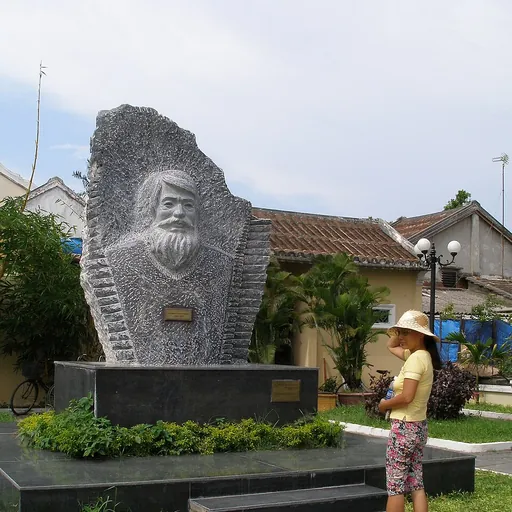
About Kazimierz Kwiatkowski
Lived 1944 – 1997 (aged 52). Kazimierz Kwiatkowski was a Polish architect.
Kazimierz Kwiatkowski (2 July 1944 – 19 March 1997) was a Polish architect and conservationist. He is well known for his efforts to preserve historical and archaeological sites in Vietnam such as the Imperial City of Huế, Hội An and Mỹ Sơn, which are currently in the World Heritage Site list of UNESCO.
Early life He was born in 1944 in the town of Pachole at Lublin Voivodeship. He was the only child of his family. His parents were farmers. His father was persecuted due to his opposition to the communist government of Poland and Kwiatkowski grew up without his father until the age of 9, when his father was amnestied in 1953, following the death of Joseph Stalin.
Kwiatkowski had a talent for drawing since childhood. At the age of 15, he entered the boarding school in Zamość and graduated in 1963. After graduation from high school, he then applied to two universities at the same time: the Academy of Arts in Kraków and Kraków Polytechnic University. His admission was confirmed in advance from the Kraków Polytechnic University. Being able to study at this faculty was an extremely rare event for someone from a peasant family like him, so he decided to study architecture at Kraków Polytechnic University.
He graduated with a master's degree in architectural engineering in 1969.
Since the early 1980s, he volunteered to go to Vietnam to survey the archaeological remains at Mỹ Sơn, which also became the place where he has been with the longest during his time in Vietnam - nearly 16 years. In 1981, Kwiatkowski started working at Hội An and immediately realized the potential of this city. He, along with Vietnamese experts, researched and prepared a program to restore medieval works of the Cham culture in central Vietnam. The mission focused first on the brick worshiping towers at the holy site complex in the former Amaravati territory of the ancient Champa kingdom.
Kwiatkowski made efforts to lobby the local government to take measures to preserve and restore the ancient town of Hội An and at the same time introduce the distinctive features of Hội An to the world. During his time in Mỹ Sơn, eight people in Kwiatkowski's archeological team died from both bombs left after the Vietnam War and illnesses. In 1991, when the financial source for the archaeological activities of the Polish team of experts was terminated, Kwiatkowski himself called for the creation of funds for his archaeological activities at Mỹ Sơn. Due to financial support that Kwiatkowski obtained from the Association of Friends of Cham Culture in Stuttgart, the Museum of Cham Sculpture opened from 26 March 1994 in Da Nang. Kwiatkowski also led a team of experts to rebuild the Củ Chi tunnels.
Despite objections from some experts, he has always persisted in pursuing the principle of archaeological restoration in which the original monument will be preserved to the maximum extent and restoration measures will be applied only to maintain the status quo. Kwiatkowski was the first to pay attention to the special heritage value of Hội An. The wooden constructions are still intact, the excellent planning of the city is preserved and the garment industry is flourishing in the city. He convinced the Vietnamese government to preserve and not to change the buildings in the direction of modernity in Hội An. He himself returned to Poland just to bring chemicals back to Vietnam to help in the restoration of Mỹ Sơn. It is thanks to his efforts that the cities of Hội An and Mỹ Sơn were later recognized as World Cultural Heritage.
From 1981 to 1988, he and a team of photometric experts worked in Vietnam, performing restoration records at the ratio: 1:20 and 1:50 for more than 30 projects. Measurements were carried out not only in Mỹ Sơn, but also in Phan Rang, Quy Nhon, Bắc Ninh, Tam Kỳ, Quang Nam and Tuy Hòa. Kwiatkowski is the author of many publications on Cham art, as well as measures to protect and restore temples in Vietnam. He left behind a lot of projects, scientific documents and records from his studies.
In early 1995, Kwiatkowski and his team began work related to the re-evaluation of the temple-palace complex on the territory of the Imperial City of Huế. In 1997, he became the person in charge of the performance of the palace re-evaluation contract under the charge of the Building Management Authority in Huế.
His funeral was held in Lublin on April 2. Kwiatkowski was buried in the Catholic cemetery next to the Church of St. Agnieszka on Kalinowszczyzna Street in Lublin.
Awards and decorations
He was also awarded numerous decorations by the Office of Monuments Restoration.
Don’t just read it —
keep it.
Full-length biographies made to live with: read them, listen on the way to work, watch them tonight.
- E-book
- Audio
- Video
Instant download · yours to keep · every purchase keeps this site free
Important facts
People in Kazimierz Kwiatkowski's life
Named in this biography and alive at the same time

Related people
Same field, nearest in time




Contemporaries
People whose lives overlapped Kazimierz Kwiatkowski's




Frequently asked questions
Who was Kazimierz Kwiatkowski?
Polish architect
When was Kazimierz Kwiatkowski born?
Kazimierz Kwiatkowski was born on 2 July 1944 in Pachole.
When did Kazimierz Kwiatkowski die?
Kazimierz Kwiatkowski died on 19 March 1997 in Huế.
What was Kazimierz Kwiatkowski's occupation?
Kazimierz Kwiatkowski was an architect.
What nationality was Kazimierz Kwiatkowski?
Kazimierz Kwiatkowski was Polish.
Sources & further reading
· Wikipedia: Kazimierz Kwiatkowski
· DBpedia: Kazimierz Kwiatkowski (architect)
Cite this page
APA: Biography.guide. (2026). Kazimierz Kwiatkowski. https://biography.guide/kazimierz-kwiatkowski/
MLA: "Kazimierz Kwiatkowski." Biography.guide, https://biography.guide/kazimierz-kwiatkowski/.
Chicago: "Kazimierz Kwiatkowski." Biography.guide. https://biography.guide/kazimierz-kwiatkowski/.
Data last updated: 2026-09-22 · Spot an error? Report a correction.
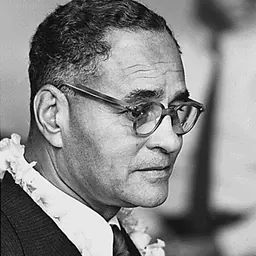
Portrait: Wikimedia Commons · author & licence
Page generated 2026-09-27 05:01 UTC