
About Kazi M Badruddoza
Lived 1927 – 2023 (aged 95–96). Kazi M Badruddoza was a Bangladeshi, Indian and Pakistani scientist.
Kazi M. Badruddoza (1 January 1927 – 30 August 2023) was a Bangladeshi agronomist who is credited with using Agricultural Genetics and Plant Pathology to increase agricultural production in Bangladesh, contributing to greater self-sufficiency in staple cereal crops. He was one of the early leaders of the global team of the green revolution for his role in development of high yielding wheat, rice and maize varieties. For his work in Agricultural genetics, Badruddoza was awarded numerous honors, including the Independence Day award, the highest civilian award of Bangladesh. Prior to creation of Bangladesh as an independent state, he was also awarded the Tamgha-e-Imtiaz, a state organized civil award, in former West Pakistan, as well as the Tamgha-e-Pakistan.
After graduating high school in Gobindaganj, near Gaibandha, Kazi Badruddoza initially enrolled in University of Calcutta in Kolkata, West Bengal, British India in 1945. However, amidst the chaos of Partition of India in 1947, he returned home to Dhaka, former East Bengal which was soon to become East Pakistan. He enrolled in Dhaka University under the faculty of Agriculture, now known as Sher-e-Bangla Agricultural University. He completed his Bachelor of Science Hons. degree in Agriculture in 1948. He was appointed as a Research Assistant in Mycology, Department of Agriculture and meanwhile, completed his Master's of Science degree in Agricultural Botany in First Class. In 1953, he was appointed by Dhaka University as an Examiner of Mycology.
In 1960, he obtained a Diploma in Genetics from Lund Institute, Sweden. Wheat and maize were unfamiliar crops to the farmers of the region. The Fiber Division carried out research on wheat and maize as well as tobacco.
Sweden
In order to advance genetic research in former East Pakistan in wheat and maize crops, Badruddoza was awarded scholarship to pursue post-doctoral research at the Lund Institute in Sweden. In 1960, he received his post-doctoral diploma in Plant Genetics and Research from the Lund Institute.
Maize Research
He then established a Maize Research Institute under the care of the private sector which was the first of its kind in Pakistan as well as the developing world. The technologies of the institute paved the way to self-sufficiency of Pakistan in corn oil production (Rafhan corn oil), starch, glucose, corn syrup and corn flakes.
Maize Research
Although grown for centuries by the ethnic minorities in the Garo Hills and Chittagong Hill Tracts, maize was not well known by Bangladesh farmers. It ranked third after wheat and rice as a cereal crop but had potential of a staple along with wheat, when rice yield was low in the war-torn nation with severe food deficit. Badruddoza furthered the growth of disease and climate resistance maize crops in the country, coordinated by Bangladesh Agriculture Research Council (BARC). By the start of the millennium, the area of maize had increased by 7 times, production by forty times and yield by six times. Kazi Guava or commonly known locally as Kazi Peyara (Psidium Guajava) was introduced in 1985 by Bangladesh Agriculture Research Institute and named after Kazi Badruddoza, for his leadership in meticulous plant breeding techniques between local and Thai varieties to introduce a large and inexpensive, crispy genetic variant, rich in Vitamin C (200 mg in 10 g edible part of Kazi Guava).
United Nations (Food and Agriculture Organization)
Vietnam
Upon his retirement in Bangladesh 1985, Badruddoza was not ready to quit agriculture research. The Food and Agriculture Organization (FAO), United Nations, appointed him Chief Plant Pathologist and Geneticist in another war-torn nation of the time, and in 1985, he set off for Hanoi, Vietnam. thumb Dr. Badruddoza receiving the Independence Day Award from PM Shaikh Hasina, 2012 In 1985, the Government of the People's Republic of Bangladesh conferred on him the title of "National Emeritus Scientist" thus formally honoring him with continual role of science and research advisor to BARC, BARI, and the Government.
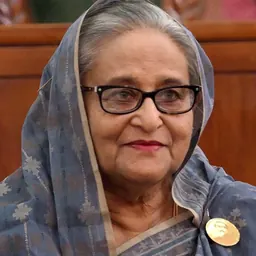
Upon his death, Prime Minister Sheikh Hasina said, "The death of this renowned agricultural scientist and successful organizer has caused an irreparable loss to the country in the field of agriculture."
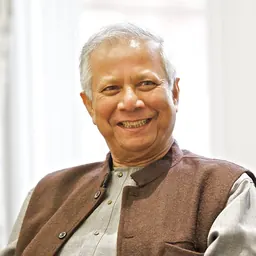
Noble Laureate Professor Muhammad Yunus said, "He was a thorough gentleman and a dedicated scientist. Sorry to see him go."
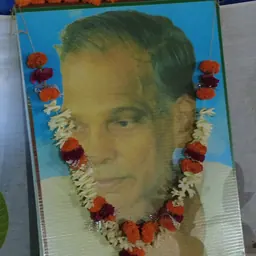
Minister of Agriculture Dr Abdur Razzaque stated, 'Dr Badruddoza was the one who arranged for me to attend Purdue University for my Ph.D. He always believed in furthering education."
Following his wish to return to his roots, Badruddoza was laid to rest in family cemetery in his ancestral town of Gobindganj, where he had last lived as a high school student. Highest Civilian Award, Bangladesh Government, Prime Minister Sheikh Hasina. DeshBandhu Chittaranjan Das Research Council award (2013) Dr. M.O Gani Memorial Gold Medal by Bangladesh Academy Sciences and Research Development Foundation (2015) Standard Chartered Bank Agro lifetime achievement award (2020), for agriculture research and development.
Eponyms A variety of guava, Kazipeyara. The fungal genus Kaziboletus. "Kbd. Dr. Kazi M. Badruddoza Outreach Center" at Bangabandhu Sheikh Mujibur Rahman Agricultural University.
Don’t just read it —
keep it.
Full-length biographies made to live with: read them, listen on the way to work, watch them tonight.
- E-book
- Audio
- Video
Instant download · yours to keep · every purchase keeps this site free
Important facts
People in Kazi M Badruddoza's life
Named in this biography and alive at the same time



Related people
Same field, nearest in time


Contemporaries
People whose lives overlapped Kazi M Badruddoza's

Frequently asked questions
Who was Kazi M Badruddoza?
Independence Day Award recipient
When was Kazi M Badruddoza born?
Kazi M Badruddoza was born in 1927 in Bogura District.
When did Kazi M Badruddoza die?
Kazi M Badruddoza died on 30 August 2023 in Dhaka.
What was Kazi M Badruddoza's occupation?
Kazi M Badruddoza was a scientist.
What nationality was Kazi M Badruddoza?
Kazi M Badruddoza was Bangladeshi, Indian and Pakistani.
Sources & further reading
· Wikipedia: Kazi M Badruddoza
Cite this page
APA: Biography.guide. (2026). Kazi M Badruddoza. https://biography.guide/kazi-m-badruddoza/
MLA: "Kazi M Badruddoza." Biography.guide, https://biography.guide/kazi-m-badruddoza/.
Chicago: "Kazi M Badruddoza." Biography.guide. https://biography.guide/kazi-m-badruddoza/.
Data last updated: 2026-09-20 · Spot an error? Report a correction.
Page generated 2026-09-27 05:27 UTC