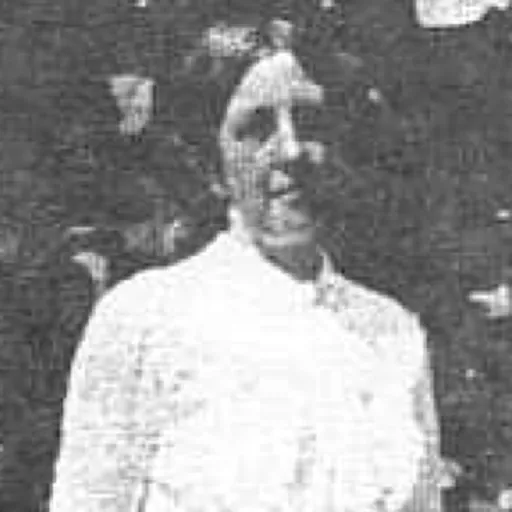
Katherine Sleeper Walden
American environmental activist
About Katherine Sleeper Walden
Lived 1862 – 1949 (aged 86). Katherine Sleeper Walden was an American innkeeper, community organizer, environmentalist and journalist.
Katherine Sleeper Walden (November 27, 1862 – March 3, 1949) was an American environmental conservationist and community activist in Wonalancet, New Hampshire. Before moving to New Hampshire in 1890, Katherine was an active community member and among the first female journalists in Massachusetts.
Following her arrival in New Hampshire, Katherine founded Wonalancet Farm and the Wonalancet Out Door Club and married famed explorer and dog breeder Arthur Treadwell Walden in 1902. Her conservation efforts and fight against New England's "Timber Barons" succeeded in protecting thousands of acres of old-growth forest in the White Mountains.
As a result of financial troubles resulting from the Great Depression and Katherine's declining health, Katherine and Arthur were forced to sell Wonalancet Farm and move to nearby Brook Walden. There, a fire broke out and trapped Katherine inside. While rescuing her and attempting to extinguish the fire, Arthur was killed. Katherine was unable to recover from the emotional and physical trauma; she died two years later.
The Sleepers, a pair of mountains in the White Mountains, and nearby Mount Katherine are named after Katherine. The Kate Sleeper Trail, which traverses both peaks of The Sleepers, is also named for her.
Early life Katherine Sleeper Walden, born Katherine Sleeper, was born on November 27, 1862, in the Greater Boston area and was the daughter of Zilpha Loring Thomas and Charles Frederick Sleeper. The Sleepers were a well-respected and wealthy family in the Boston area. Katherine's grandfather, John Sherburne Sleeper, was a sailor, shipmaster, children's book author, journalist, newspaper editor, and politician. He held public office as mayor of Roxbury and as a Massachusetts state senator.
In 1872, when Katherine was ten years old, her mother died. This caused Katherine and her father to move into the home of Katherine's grandfather in Roxbury. In Roxbury, Katherine completed her education, participated in the community, attended the Berlitz School for French, learned music, and avidly participated in a local women's athletic club. She frequented the Chocorua area of Tamworth to visit family and came to love the White Mountains of rural New Hampshire through these trips.
At the beginning of her adult life, Katherine began working in her father's newspaper and became a journalist.
Arrival at Wonalancet
In 1890, Katherine was faced with serious health complications and so, following a doctor's recommendation that she leave the city, took an extended trip to Tamworth, New Hampshire. While at a local boarding house, Katherine decided to open an inn in the area. During her time in Tamworth she grew close to her friend and cousin by marriage, Arthur Treadwell Walden.
Katherine was 28 at the time but often claimed that she was much younger. Her claims of youth are generally attributed to her wishing to appear closer in age to her friend, Arthur, who was 10 years her younger.
Arthur and Katherine went to the small settlement of Birch Intervale, and Katherine decided to purchase Theophilous Brown's farm on the south side of Sandwich Ridge, which included of cleared fields, of woodland, and a farmhouse built in 1814 that Katherine believed was ideal for being transitioned into an inn. Once in sight of the property, Katherine famously announced, "This is where I'm going to live!"
Conservationism, activism, and volunteerism
Revitalizing and organizing Wonalancet During the winter of 1890–91, Katherine made major renovations on the farmhouse and quickly became a respected member of the community. That August, Appalachian Mountain Club (AMC) President Charles E. Fay and Councilor William Ladd stayed at the inn during a visit to the area. Katherine believed that the town of Birch Intervale, which was nicknamed "Poverty Flats", could be revitalized by accommodating a tourism industry that had yet to exist in the White Mountains, and thus invited the visiting AMC officers to meet with local landowners at Wonalancet Farm. In order to avoid confusion with the nearby town of Intervale, Birch Intervale was renamed Wonalancet.
In 1898, to further encourage tourism and improve the area, Katherine successfully formed the Wonalancet Out Door Club (WODC), saying "Its purpose shall be the building and maintenance of paths, to improve the place and develop its natural beauties for the attraction of summer guests." The pair hosted and sponsored winter sports and activities, such as Arthur's pastime of dog sledding, long before other destinations in the northeast. Wonalancet quickly grew to be the foremost year-round tourist hub in the White Mountains, earning widespread fame. The sustained fame of Wonalancet through to the modern day is in part a result of Arthur's renown and the notable impact he had on sled dog racing in New England.
Conservation of the White Mountains By the 1880s, rural residents of New Hampshire were becoming increasingly alarmed by the widespread clearcutting and wildfires caused by unsustainable logging by New England's "Timber Barons" and the expansion of railroads through the state. A cycle began in which a large area of dense forest would be clearcut and the logging companies would leave downed logs, dried brush, and slashings littered on the ground. Hot coals and sparks from neighboring railways, which were laid to transport the newly cut lumber, would then ignite the readily supplied kindling.
Nevertheless, the couple experienced financial distress and left Wonalancet Farm in favor of Brook Walden. During this time, Katherine's health continued to deteriorate and she became largely incapable of walking. Arthur decided to retire from dog breeding and exploration to live a quiet life with and care for the infirm Katherine. She also owned a tract of land on which the WODC created the trails of Gordon Path and Ainsworth Trail. This land was later sold and is now owned and maintained by the Lakes Region Conservation Trust and links Chinook Trail to the trails of the White Mountains National Forest.
On March 26, 1947, an oil burner inside Brook Walden caused a fire that quickly spread. Katherine was unable to walk due to her health and was thus unable to escape the house. Arthur, hearing Katherine's calls for help, rushed into the kitchen where she sat and carried her to safety. He then attempted to extinguish the fire but died in the attempt. Katherine is quoted as having said that Arthur "went as he would have liked to go, in a glory of flame." She never fully recovered from the mental trauma and physical injuries she sustained as a result of the fire and died two years later on March 3, 1949.
Legacy Often considered Katherine's most important and lasting achievement was her fight against the New England "Timber Barons". This effort led to conservationist groups securing thousands of acres for the White Mountain National Forest and her successful protection of the Bowl. The Bowl, now officially called the Bowl Research Natural Area, is one of the last untouched old-growth forests in the American Northeast and is thus regarded as an important site for research. She is also remembered through her foundation of the Wonalancet Out Door Club and the revitalization of Wonalancet, New Hampshire. "Wonalancet is not a geographical expression, it is a spirit, and it owes its existence to a young woman who came here twenty years ago – Miss Katherine Sleeper"In 1958, Majory Gane Harkness, about the significance of Katherine's arrival, wrote:"[...] she was practically the first outsider of either sex when she settled in this pocket of the hills in 1890, as well as the first inhabitant with a talent for organizing, and further, that she was a woman of exceptional charm and originality no matter in what society she might be placed."Three individual mountains (North Sleeper, South Sleeper and Mount Katherine), a mountain range (The Sleepers), and numerous area trails are named after her and her community contributions have led to multiple novels, articles, and biographical pieces on her life and the influence she had in shaping the history of the White Mountains. Wonalancet Union Chapel's steeple and bell, which were built as part of Katherine's revitalization campaign, are dedicated to her.
Don’t just read it —
keep it.
Full-length biographies made to live with: read them, listen on the way to work, watch them tonight.
- E-book
- Audio
- Video
Instant download · yours to keep · every purchase keeps this site free
Important facts
People in Katherine Sleeper Walden's life
Named in this biography and alive at the same time



Related people
Same field, nearest in time



Contemporaries
People whose lives overlapped Katherine Sleeper Walden's



Frequently asked questions
Who was Katherine Sleeper Walden?
American environmental activist (1862–1949)
When was Katherine Sleeper Walden born?
Katherine Sleeper Walden was born on 27 November 1862 in Roxbury.
When did Katherine Sleeper Walden die?
Katherine Sleeper Walden died on 3 March 1949 in Wonalancet.
What was Katherine Sleeper Walden's occupation?
Katherine Sleeper Walden was an innkeeper, community organizer, environmentalist and journalist.
What nationality was Katherine Sleeper Walden?
Katherine Sleeper Walden was American.
Sources & further reading
· Wikipedia: Katherine Sleeper Walden
· DBpedia: Katherine Sleeper Walden
Cite this page
APA: Biography.guide. (2026). Katherine Sleeper Walden. https://biography.guide/katherine-sleeper-walden/
MLA: "Katherine Sleeper Walden." Biography.guide, https://biography.guide/katherine-sleeper-walden/.
Chicago: "Katherine Sleeper Walden." Biography.guide. https://biography.guide/katherine-sleeper-walden/.
Data last updated: 2026-09-23 · Spot an error? Report a correction.
Portrait: Wikimedia Commons · author & licence
Page generated 2026-09-27 05:07 UTC