
About Katherine Mayo
Lived 1867 – 1940 (aged 73). Katherine Mayo was an American historian, writer, journalist, anti-Catholic activist and white supremacist, known for Mother India (book).
Katherine Mayo (January 27, 1867 – October 9, 1940) was an American historian and nativist. Mayo entered the public sphere as a political writer advocating American nativism, opposition to non-white and Catholic immigration to the United States, along with promoting racist stereotypes of African Americans. She became known for denouncing the Philippine Declaration of Independence on racialist and religious grounds. She published and promoted her best-known work, Mother India, a deeply critical book on Indian society, religion, and culture. Written in opposition to the Indian independence movement, the book received a sharply divided reception upon its publication and was accused by several authors of being Indophobic, including Mahatma Gandhi.
Life and career
Mayo was born in Ridgway, Pennsylvania, to James Henry and Harriet Elizabeth (Ingraham) Mayo, and was educated privately. Shortly after graduation, she started work as a researcher and historian by helping Oswald Garrison Villard of the New York Evening Post, whose father owned the newspaper, prepare his book John Brown 1800–1859: A Biography Fifty Years After, a biography of the abolitionist John Brown, published in 1910.
Villard was a founder of the American Anti-Imperialist League and an officer of the National Association for the Advancement of Colored People. He influenced Mayo to become active in several social reformist circles. Mayo also became a member of the Mayflower Society and maintained links with the Daughters of the American Revolution, which at the time largely shared her hostility towards non-white and Catholic immigration to the United States.
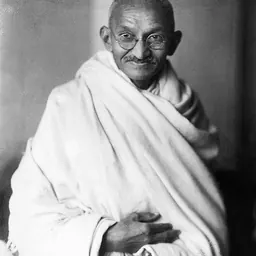
Several of Mayo's early writings promoted anti-Catholicism and racist views towards people of color. Mayo combined anti-Catholicism and anti-Filipino sentiment in her writings that opposed the Philippine Declaration of Independence. Mayo's early journalistic works promoted an "Anglo-Saxon" version of American nationalism and contained xenophobic remarks towards Irish immigrants, as well as racist views of African Americans. Written in opposition to the movement for Indian independence, Mayo criticized India's treatment of women, the Dalits, its animals, and the character of its nationalistic politicians. Mayo singled out what she perceived to be the "rampant" and fatally weakening sexuality of Indian males, which she claimed to be at the core of all problems in India as developmental trends which lead to masturbation, rape, homosexuality, prostitution, venereal diseases, early sexual intercourse, and premature maternity. Mayo's claims were supported by the colonial government as a countermeasure to growing sympathies for the Indian independence movement among outside observers. The book was also propagated among Americans who connected the movement for Indian independence with the American Revolution. as well as the production of an eponymous film, presenting an epic drama which constituted a rebuttal to the claims made in the book. It was criticized by Indian independence activist Mohandas Karamchand Gandhi, who wrote in response:
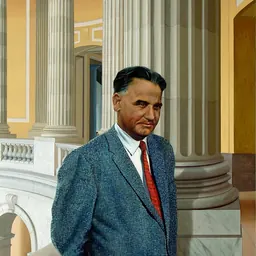
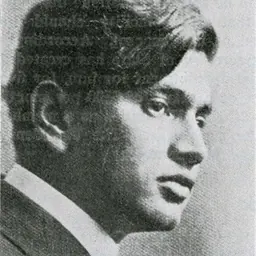
After its publication Dalip Singh Saund, who later became a U.S. congressman, wrote My Mother India to counter Mayo's assertions. Another response to Mayo's book was Dhan Gopal Mukerji's A Son of Mother India Answers. The title of the 1957 Hindi epic film Mother India was a deliberate rebuke to Mayo's book.
Works Justice to All: History of the Pennsylvania State Police (1917) The Standard Bearers: True Stories of Heroes of Law and Order (1918) That Damn Y (1920) Mounted Justice: True Stories of the Pennsylvania State Police (1922) The Isles of Fear: The Truth about the Philippines (1925) Mother India (1927) Slaves of the Gods (1929) Volume II (1931) Soldiers What Next! (1934) The Face of Mother India (1935) General Washington's Dilemma (1938) Selections from Mother India (1998, Mrinalini Sinha, editor)
Don’t just read it —
keep it.
Full-length biographies made to live with: read them, listen on the way to work, watch them tonight.
- E-book
- Audio
- Video
Instant download · yours to keep · every purchase keeps this site free
Important facts
People in Katherine Mayo's life
Named in this biography and alive at the same time



Related people
Same field, nearest in time

Contemporaries
People whose lives overlapped Katherine Mayo's



Frequently asked questions
Who was Katherine Mayo?
American historian (1867–1940)
When was Katherine Mayo born?
Katherine Mayo was born on 27 January 1867 in Ridgway.
When did Katherine Mayo die?
Katherine Mayo died on 9 October 1940 in New York.
What was Katherine Mayo's occupation?
Katherine Mayo was a historian, writer, journalist, anti-Catholic activist and white supremacist.
What was Katherine Mayo known for?
Katherine Mayo was known for Mother India (book).
What nationality was Katherine Mayo?
Katherine Mayo was American.
Sources & further reading
Cite this page
APA: Biography.guide. (2026). Katherine Mayo. https://biography.guide/katherine-mayo/
MLA: "Katherine Mayo." Biography.guide, https://biography.guide/katherine-mayo/.
Chicago: "Katherine Mayo." Biography.guide. https://biography.guide/katherine-mayo/.
Data last updated: 2026-09-22 · Spot an error? Report a correction.
Page generated 2026-09-27 05:32 UTC