
About Katharine Burr Blodgett
Lived 1898 – 1979 (aged 81). Katharine Burr Blodgett was an American physicist, inventor and chemist, known for Anti-reflective coating, Langmuir–Blodgett film and Langmuir–Blodgett trough.
Katharine Burr Blodgett (January 10, 1898 – October 12, 1979) was an American physicist and chemist known for her work on surface chemistry, in particular her invention of "invisible" or non-reflective glass while working at General Electric. She was the first woman to be awarded a PhD in physics from the University of Cambridge, in 1926.
Early life Blodgett was born on January 10, 1898, in Schenectady, New York. She was the second child of Katharine Buchanan (Burr) and George Reddington Blodgett. Her father was a patent attorney at General Electric where he headed that department. He was shot on December 3, 1897 in his home by a burglar; the same day, GE offered a $5,000 reward for the arrest and conviction of the killer.
Katharine's mother was financially secure after her husband's death, and she moved to New York City with daughter Katharine and son George Jr. shortly after Katharine's birth.
In 1901, Katharine's mother moved the family to France so that the children would be bilingual. They lived there for several years, returning to New York for a year, during which time Katharine attended school in Saranac Lake, then spent time traveling through Germany. In 1912, Blodgett returned to New York City with her family and attended New York City's Rayson School.
Education Blodgett's early childhood was split between New York and Europe, and she wasn't enrolled in school until she was eight years old. After attending Rayson School in New York City, she entered Bryn Mawr College on a scholarship, where she was inspired by two professors in particular: mathematician Charlotte Angas Scott and physicist James Barnes. After six years at the company, Blodgett decided to pursue a doctoral degree with hopes of advancing further within GE. Langmuir arranged for her to study physics at the Cavendish Laboratory of Cambridge University, persuading somewhat reluctant administrators to offer one of their few positions to a woman. She studied with Sir Ernest Rutherford and in 1926 became the first woman to receive a PhD in physics from Cambridge University.
In 1935, Blodgett extended Langmuir's work by devising a method to spread multiple layers of a monomolecular coating, one layer at a time, onto glass or metal. By repeatedly dipping a metal plate into water covered by a layer of a long-chain fatty acid, she was able to stack layers onto the plate with molecular precision. The apparatus which she used and refined is known as the Langmuir–Blodgett trough.
Blodgett used barium stearate to cover glass with 44 monomolecular layers, making the glass more than 99% transmissive and thus creating "invisible" glass. The visible light reflected by the layers of film canceled the reflections created by the glass. Other types of films employing harder anti-reflective coatings or etched surfaces proved more useful for applications such as camera lenses.
Blodgett also invented a color gauge, a method to measure the thickness of molecular coatings on glass to the nearest one millionth of an inch. The gauge employed the concept that different thicknesses of coatings are different colors. While examining the layering of stearic acid on a glass plate, she realized that the addition of each layer, about 2/10,000,000 inch thick, reliably changed the color of the plate. Before her invention, the best measurement instruments were only accurate to a few thousandths of an inch. Her glass "ruler" much more precisely showed the progression of colors and their corresponding thicknesses. Measuring thickness became as simple as matching colors. General Electric marketed the color gauge for a time.
Blodgett and Langmuir also worked on improvements to the light bulb. Their studies on electrical discharges in gases helped lay the foundations for plasma physics.
Blodgett was issued eight U.S. patents during her career. She was the sole inventor on all but two of the patents, working with Vincent J. Schaefer as co-inventor. Blodgett published over 30 technical papers in various scientific journals. Her research also included the investigation, during World War II, of methods for deicing aircraft wings and improving smokescreens. She was an actress in her town's theater group and volunteered for civic and charitable organizations. She had a sharp wit and was known for writing an occasional funny poem.
Blodgett spent time during the summer at a camp at Lake George in upstate New York, where other General Electric scientists also owned property, and she pursued her love of gardening. Even after retiring in 1963, Blodgett continued her horticultural experiments, demonstrating her lifelong commitment to exploration and discovery. She died in her home on October 12, 1979, leaving behind a legacy of innovation, resilience, and breaking barriers for women in science and engineering.
Blodgett's niece and namesake was astrophysicist and civil servant Katharine Blodgett Gebbie. In an interview, Gebbie recalled that on family visits her Aunt Katie:
"always arrived with suitcases full of 'apparatus', with which she showed us such wonders as how to make colors by dipping glass rods into thin films of oil floating on water."
Gebbie often spoke in later life of her aunt's influence by personal example on her choice of a career in science.
Awards Blodgett received numerous awards during her lifetime. including honorary doctorates from Elmira College (1939), Western College (1942), Brown University (1942), and Russell Sage College (1944). In 1945, the American Association of University Women honored her with its Annual Achievement Award. In 2008, an elementary school in Schenectady bearing her name was opened.
These accolades are a testament to Blodgett's groundbreaking work as a scientist and her role as a trailblazer for women in the field.
Patents
issued November 5, 1940: "Film Structure and Method of Preparation" issued November 5, 1940: "Reduction of Surface Reflection" issued November 5, 1940: "Low-Reflectance Glass" issued January 10, 1950: "Electrical Indicator of Mechanical Expansion" (with Vincent J. Schaefer) issued February 26, 1952: "Step Gauge for Measuring Thickness of Thin Films" issued March 18, 1952: "Electrical Indicator of Mechanical Expansion" (with Vincent J. Schaefer) issued May 20, 1952: "Electrically Conducting Layer" issued April 28, 1953: "Method of Forming Semiconducting Layers on Glass and Article Formed Thereby"
Don’t just read it —
keep it.
Full-length biographies made to live with: read them, listen on the way to work, watch them tonight.
- E-book
- Audio
- Video
Instant download · yours to keep · every purchase keeps this site free
Important facts
People in Katharine Burr Blodgett's life
Named in this biography and alive at the same time



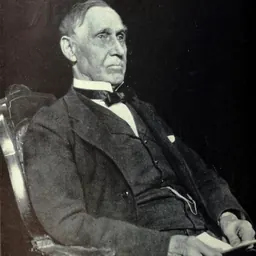
Related people
Same field, nearest in time


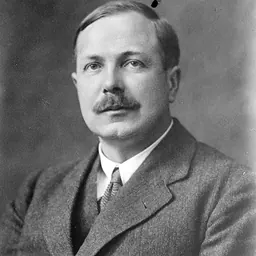
Contemporaries
People whose lives overlapped Katharine Burr Blodgett's



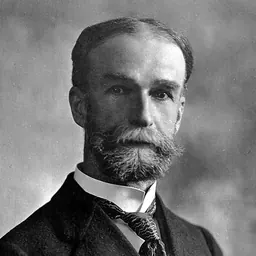
Frequently asked questions
Who was Katharine Burr Blodgett?
American physicist (1898-1979)
When was Katharine Burr Blodgett born?
Katharine Burr Blodgett was born on 10 January 1898 in Schenectady.
When did Katharine Burr Blodgett die?
Katharine Burr Blodgett died on 12 October 1979 in Schenectady.
What was Katharine Burr Blodgett's occupation?
Katharine Burr Blodgett was a physicist, inventor and chemist.
What was Katharine Burr Blodgett known for?
Katharine Burr Blodgett was known for Anti-reflective coating, Langmuir–Blodgett film, Langmuir–Blodgett trough and Surface chemistry.
What nationality was Katharine Burr Blodgett?
Katharine Burr Blodgett was American.
Sources & further reading
· Wikipedia: Katharine Burr Blodgett
· DBpedia: Katharine Burr Blodgett
Cite this page
APA: Biography.guide. (2026). Katharine Burr Blodgett. https://biography.guide/katharine-burr-blodgett/
MLA: "Katharine Burr Blodgett." Biography.guide, https://biography.guide/katharine-burr-blodgett/.
Chicago: "Katharine Burr Blodgett." Biography.guide. https://biography.guide/katharine-burr-blodgett/.
Data last updated: 2026-09-22 · Spot an error? Report a correction.
Page generated 2026-09-27 05:18 UTC