
About Karol Sikora
Born 1948. Karol Sikora is a British oncologist, university teacher and researcher, known for Oncology.
Karol Sikora (born 17 June 1948) is a British physician specialising in oncology, who has been described as a leading authority on cancer. He was a founder and medical director of Rutherford Health, a company that provided proton therapy services, and is Director of Medical Oncology at the Bahamas Cancer Centre.
He is currently Professor of Medicine at the University of Buckingham, and a partner in and dean of Buckingham's medical school.
Early life Karol Sikora was born in 1948. His father was a captain in the Polish Army who arrived in Great Britain during World War II and his mother was a Scottish schoolteacher. His childhood was spent in Edinburgh, Stafford and London.
He attended Dulwich College on a London County Council scholarship before going to Corpus Christi College, Cambridge where he became a Foundation Scholar and obtained a double first. He received his PhD at Stanford University, where he also served a clinical fellowship.
Career After leaving Stanford University, Sikora returned to Cambridge to direct the Ludwig Institute for Cancer Research. From 1985 to 1997, he served as the clinical director for cancer services at Hammersmith Hospital in London, where he established a cancer research laboratory, and was Professor of International Cancer Medicine at the Royal Postgraduate Medical School, later the Imperial College School of Medicine. During the 1990s Sikora was also deputy director of clinical research at charity the Imperial Cancer Research Fund, the predecessor to Cancer Research UK.
In 1997 he became the Chief of the Cancer Program of the World Health Organization He served as the Vice-President of Global Clinical Research in Oncology at the Pharmacia Corporation from 1999 to 2002.
In 2022, Rutherford Health, a company he founded in 2015 and was Medical Director of, was liquidated. He is dean of the University of Buckingham's medical school, the only private medical school in the UK. He is also a member of the Oncology Scientific Advisory Board at biopharmaceutical company Cyclacel Limited, and serves as an oncology consultant for AstraZeneca. Sikora also served as the Interim Director of Radiation Oncology for the newly constructed Cancer Centre Eastern Caribbean in Antigua.
He is an unpaid member of the Meat Advisory Panel, a group of scientists that provide information and advice about meat as part of a balanced diet, and is patron of several cancer and other charities, including Medical Detection Dogs, which trains dogs to detect the odour of human disease to assist in diagnosis.
Sikora has published over 300 papers and written or edited 20 books, the Observer, the New Statesman, and other publications on the subject. He has been critical of the quality of cancer care available on the NHS and has argued for its restructuring,
Along with Maurice Slevin, he argued that the NHS should offer faster cancer treatment timelines.
In a 2017 Newsnight opinion piece, he described the NHS as "the last bastion of communism – it is a monolithic, unmanageable and inefficient system [...] the staff are great but the system is not". He proposed instead regarding it as a tax-based insurance scheme covering "basic costs", and allowing private providers to enter the market. Sikora later told The Guardian that he did not know his interview would be used in the ad campaign, and that he agreed with Obama that the main problems with the American system were "the high cost of medical treatment" and the large number of uninsured people. On 29 January 2009, Sikora was said to have introduced himself to a Commons health select committee as "...professor of oncology at Imperial College for 22 years." having been the founding chair of cancer medicine at its predecessor, the Royal Postgraduate Medical School.
In the context of the National Institute for Health and Care Excellence (NICE) considering whether to apply age criteria when prescribing expensive drugs, he suggested that "within limited budgets" younger patients might be given priority over the frail elderly.
Views on alternative medicine Sikora has in the past suggested that alternative or "complementary" medicine might have some utility in providing psychological care to cancer patients; he has commented "I personally don't think that complementary medicine is itself a cure [...] but I do believe it [...] allows you to get on top of the fact that you have cancer and live with it in a way that doesn't disturb you psychologically too much". He has stated that after being invited in the 1980s to work with the Bristol Cancer Help Centre, which employed complementary therapists alongside conventional medicine, he came to believe that complementary therapies such as counselling or acupuncture could "help patients to complete their course of orthodox treatment" and "improve quality of life".
Sikora was a Foundation Fellow of Prince Charles' now-defunct alternative medicine lobby group The Prince's Foundation for Integrated Health. He is also a "professional member" of the College of Medicine, a patient-oriented healthcare lobby group also linked to the Prince of Wales that appeared shortly after the collapse of the FIH. Correspondents to the British Medical Journal have criticised the College for its promotion of alternative medicine, claims which it has contested. Sikora is on the advisory panel of complementary cancer care charity Penny Brohn Cancer Care (formerly the Bristol Cancer Help Centre) of which Prince Charles is a patron, and is a patron of the Iain Rennie Hospice at Home.
The pharmacologist David Colquhoun noted that the School of Medicine at Buckingham University, of which Sikora is Dean, had briefly offered a diploma in "integrated medicine" (a euphemism for alternative medicine) run by the "Faculty of Integrated Medicine", adding that Sikora's own views on the subject were a "mystery wrapped in an enigma".
Sikora has however, elsewhere been critical of alternative medicine; after Parliament member Lord Maurice Saatchi proposed a bill allowing doctors to use unproven experimental therapies, he noted that this could give false hope to terminally ill patients. He has contrasted therapies having "a profound psychological base", such as counselling, with others "founded on completely spurious pseudoscientific logic".
Release of Abdelbaset al-Megrahi In September 2009, the man convicted of the Pan Am Flight 103 bombing, Abdelbaset al-Megrahi, was released from a Scottish prison on compassionate grounds. The Daily Telegraph reported that Sikora, along with Professors Jonathan Waxman and Ibrahim Sharif, was one of three doctors hired by the Libyan government to assess Megrahi's condition prior to the release.
Sikora's report concluded that Megrahi would "likely" die within three months due to terminal prostate cancer; Sharif agreed and Waxman conceded Megrahi did not have long to live. Megrahi outlived the prognosis and died on 20 May 2012, two years and nine months after his release. Sikora later denied that he had been pressured by Libya to agree Megrahi had under three months to live: "on the balance of probability, you could justify that [claim], but you couldn't say he was definitely going to be dead in three months".
Sikora has since complained about the way journalists have reported his views and stated that he was not paid to make claims, and there was probably a less than one percent chance of Megrahi living 10 years.
Commentary on UK response to COVID-19
Sikora has commented in the UK media on the UK's public health response to COVID-19, expressing concerns that policies of lockdown could impact treatment of other conditions, particularly cancer. On 21 September 2020, Sikora alongside Carl Heneghan, Sunetra Gupta and 28 other signatories, wrote an open letter to top UK government officials asking for a rethink to the Covid strategy. It called for a targeted approach to lockdowns advising that only over-65s and the vulnerable should be shielded.
Works
Interferon and cancer, 1983 Clinical Physiology (with Campbell, Dickinson, Slater and Edwards), 1984 Endocrine Problems in Cancer (with Roland T. Jung), 1984 Monoclonal Antibodies (with Howard Smedley), 1984 Molecular Biology and Human Disease (with Sandy McCleod), 1984 Cancer – what it is and how it's treated (with Rob Stepney and Howard Smedley), 1985 Cancer – a study guide (with Howard Smedley), 1985 Cancer (with Howard Smedley), 1988 The Molecular Biology of Cancer (with Jonathan Waxman), 1989 Fight Cancer (with Hilary Thomas), 1989 Treatment of Cancer (with Keith Halnan and Pat Price), 1990, 1995, 2002, 2008 Genes and Cancer (editor), 1990 The cancer cell (with Gerard Evan and James Watson), 1991 Human genetic therapy (with Jonathan Harris), 1994 Cancer: a positive approach (with Hilary Thomas), 1995 Handbook of oncology (with Victor Barley and Jeff Tobias), 1998, 2004 The Realities of Rationing (with John Spiers et al.), 1999 The cancer survival kit (with Rosy Daniel), 2004 Cancer 2025: The future of cancer care (editor), 2005 Economics of Cancer Care (with Nick Bosanquet), 2006
Don’t just read it —
keep it.
Full-length biographies made to live with: read them, listen on the way to work, watch them tonight.
- E-book
- Audio
- Video
Instant download · yours to keep · every purchase keeps this site free
Important facts
People in Karol Sikora's life
Named in this biography and alive at the same time





Related people
Same field, nearest in time



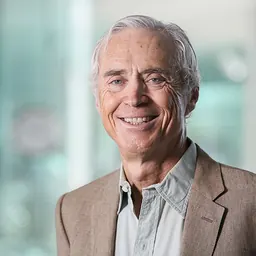
Contemporaries
People whose lives overlapped Karol Sikora's
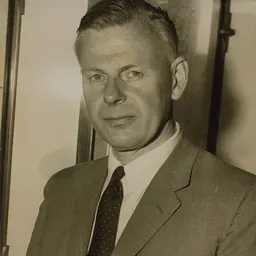
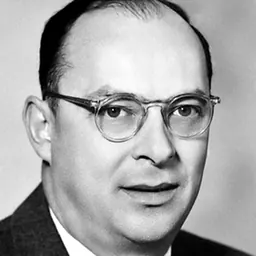
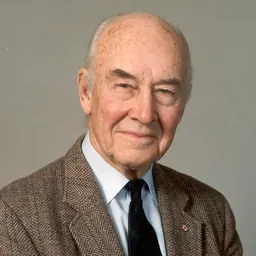
Frequently asked questions
Who is Karol Sikora?
British oncologist
When was Karol Sikora born?
Karol Sikora was born on 17 June 1948 in United Kingdom.
What is Karol Sikora's occupation?
Karol Sikora is an oncologist, university teacher and researcher.
What is Karol Sikora known for?
Karol Sikora is known for Oncology.
What nationality is Karol Sikora?
Karol Sikora is British.
Sources & further reading
Cite this page
APA: Biography.guide. (2026). Karol Sikora. https://biography.guide/karol-sikora/
MLA: "Karol Sikora." Biography.guide, https://biography.guide/karol-sikora/.
Chicago: "Karol Sikora." Biography.guide. https://biography.guide/karol-sikora/.
Data last updated: 2026-09-20 · Spot an error? Report a correction.
Page generated 2026-09-27 04:59 UTC