
About Karol Hubert Rostworowski
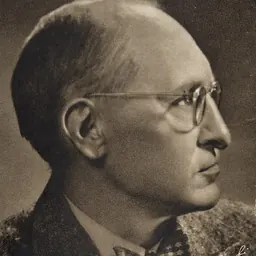
Lived 1877 – 1938 (aged 60). Karol Hubert Rostworowski was a Polish poet, journalist, musician, writer and dramaturge.
Karol Hubert Rostworowski (3 November 1877 – 4 February 1938) was a Polish playwright, poet and musician, born to a family of local gentry. He is remembered for his opposition to totalitarianism and for fatalistic works inspired by Catholic morality. He died in Kraków.
Artistic career Rostworowski had his first published work, a collection of decadent poems called Tandeta, released in 1901 (or 1911, sources vary). In 1907–1909 he published a four-volume series: Pre memoria, Maya, Ante lucis ortum, and Saeculum solutum. He published his first dramas between 1908 and 1911, including Żeglarze (Sailors, 1908), Pod górę (Uphill, 1910), and Echo (1911). He became famous locally for his play Judasz z Kariothu (Judas of Kerioth, 1913), based on the New Testament and staged with the actor Ludwik Solski in the title role. His next widely discussed historical play, about the nature of tyranny, was Kajus Cezar Kaligula (1917), also with Solski. In 1920 he published Miłosierdzie (Mercy), and in 1922 the drama Straszne dzieci (Hollow Children), followed by Zmartwychwstanie (Resurrection, 1923) and Antychryst (1925), but these were not as highly regarded as his first plays. He spoke out against totalitarianism in Czerwony marsz (Red March, 1930), a morality play on guillotines and rolling heads based on the French Revolution and the Terror.
Niespodzianka Rostworowski received rave reviews for his tragedy Niespodzianka (Surprise, 1928–1929), about parents murdering for money their own son, who had emigrated to America and returned to visit them. The work was staged at the Juliusz Słowacki Theatre in 1929, and in 1932 won the national book prize. Niespodzianka was regarded as Rostworowski's most notable achievement by the Polish Nobel laureate Czesław Miłosz. The novel tells an old story, first recorded around the 17th century. A peasant family in financial despair is visited by a well-dressed man asking for lodgings. They kill him in his sleep to steal his belongings, but subsequently discover that he was their own son. Both parents suffer psychologically, and the money is given to their younger son to pay for his education.
Rostworowski died in 1938 in Kraków, and was buried at the Salwator estate cemetery.
Don’t just read it —
keep it.
Full-length biographies made to live with: read them, listen on the way to work, watch them tonight.
- E-book
- Audio
- Video
Instant download · yours to keep · every purchase keeps this site free
Important facts
People in Karol Hubert Rostworowski's life
Named in this biography and alive at the same time
Related people
Same field, nearest in time

Contemporaries
People whose lives overlapped Karol Hubert Rostworowski's




Frequently asked questions
Who was Karol Hubert Rostworowski?
Polish writer and musician (1877-1938)
When was Karol Hubert Rostworowski born?
Karol Hubert Rostworowski was born on 3 November 1877 in Rybna, Lesser Poland Voivodeship.
When did Karol Hubert Rostworowski die?
Karol Hubert Rostworowski died on 4 February 1938 in Kraków.
What was Karol Hubert Rostworowski's occupation?
Karol Hubert Rostworowski was a poet, journalist, musician, writer and dramaturge.
What nationality was Karol Hubert Rostworowski?
Karol Hubert Rostworowski was Polish.
Sources & further reading
· Wikipedia: Karol Hubert Rostworowski
· DBpedia: Karol Hubert Rostworowski
Cite this page
APA: Biography.guide. (2026). Karol Hubert Rostworowski. https://biography.guide/karol-hubert-rostworowski/
MLA: "Karol Hubert Rostworowski." Biography.guide, https://biography.guide/karol-hubert-rostworowski/.
Chicago: "Karol Hubert Rostworowski." Biography.guide. https://biography.guide/karol-hubert-rostworowski/.
Data last updated: 2026-09-20 · Spot an error? Report a correction.
Page generated 2026-09-27 05:18 UTC