
About Karl Wilhelm Fricke
Born 1929. Karl Wilhelm Fricke is a German historian of Modern Age, journalist, writer and historian.
Karl Wilhelm Fricke (born 3 September 1929) is a German political journalist and author. He has produced several of the standard works on resistance and state repression in the German Democratic Republic (1949–1990). In 1955, he became one of several hundred kidnap victims
From 1970 till 1994, he worked for (West) Germany's national radio station where he was influential as a political commentator and as the broadcaster's editor for "East-West affairs".
Life
Karl Oskar Fricke His father was Karl Oskar Fricke. When the son was aged 16 his father was denounced by someone and arrested. The family lived at that time in what had recently become the Soviet occupation zone of what had formerly been Germany. Karl Oskar Fricke had worked as a teacher, journalist and photographer. During the Nazi years he had worked in the little town of Hoym as the head of a press office and a "deputy propaganda chief" of the local Party Group. He had also involved himself with the (Nazi) Teachers' Association and written for the Teachers' Association journal. Karl Oskar Fricke was taken into investigative custody in June 1946. After four years in the Buchenwald internment camp he faced a mass trial in the Waldheim mega-jail
Two new Germanys Karl Wilhelm Fricke was permanently affected by his father's fate.
In 1949 the occupation zones that had been under US, British and French control had been merged to form the German Federal Republic (West Germany), formally founded in May, nearly half a year before the launch of the German Democratic Republic to the east. Fricke's first months in West Germany were spent in a succession of refugee camps, originally established to accommodate Germans made homeless by frontier changes mandated at the Potsdam Conference, and now increasingly filled also by refugees escaping the former Soviet occupation zone. After about five months in the refugee camp at Hannover-Kirchrode, thanks to the intervention of an academic called Fritz Voigt, he was offered a stipendium and the chance to study at the Academy for Work, Politics and Economics which had been set up on the north-west German coast at Wilhelmshaven in May 1949, and where Voigt had a professorship.
Before completing his time at Wilhelmshaven Fricke had already begun his relocation to West Berlin, then the brittle front-line between intellectually incompatible competing power blocs. In Berlin there was a rich stream of material for a free-lance political journalist: Fricke's career in print continued to progress, now complemented by excursions into radio-journalism. and he also reported on the UFS, a West Berlin-based human rights advocacy group widely believed to be funded and controlled by the CIA. These organisations were primarily devoted to tracking the persecution of government opponents through use of the "justice system" in the German Democratic Republic. In the German Democratic Republic itself Fricke's reports attracted far more interest than he would appreciate till much later. Officers of the recently established East Germany Ministry for State Security considered that his published articles, which they studied in close detail, were deeply damaging to the German Democratic Republic. Five days later State Security officials arrested his mother, Edith.
Interrogation, verdict and sentence Imprisonment authorisation for Karl Wilhelm Fricke, dated 13 April 1955 (12 days after the abduction) and signed by Stasi chief, Erich Mielke. The document relates to "pre-trial" detention, so no term is specified, but the grounds for imprisonment are given as "Actions against the GDR". A succession of interrogation sessions over the next fifteen months ensued at the "Investigation Jail" at Berlin-Hohenschönhausen. The sentence was quite soon reduced to four years, which Fricke spent in solitary confinement at Brandenburg-Görden and Bautzen II. However, print journalism was progressively losing out to the broadcast media at this time, and West Germany's broadcasting industry was even more heavily concentrated on Cologne then than now. It was to Cologne that Fricke moved in 1970. From East Germany the Ministry for State Security continued to observe him. A Stasi internal paper from 1985 notes: Fricke operates at Deutschlandfunk as head of the "East-west editorial" section. In his contributions and commentaries he slanders and distorts the political relationships in the German Democratic Republic (Party and state leadership, justice and sentencing). His books about the Stasi are intended to discredit the socialist security service internationally. Publications The list of published articles and books from Karl Wilhelm Fricke is a long one. This is a selection . Geschichtsrevisionismus aus MfS-Perspektive (PDF; 132 kB) Die nationale Dimension des 17. Juni 1953. Bonn 2003. with Roger Engelmann: Der "Tag X" und die Staatssicherheit: 17. Juni 1953. Reaktionen und Konsequenzen im DDR-Machtapparat. Bremen 2003. with Peter Steinbach, Johannes Tuchel: Opposition und Widerstand in der DDR. München 2002. with Silke Klewin: Bautzen II. Leipzig 2001. with Ilko-Sascha Kowalczuk: Der Wahrheit verpflichtet – Texte aus fünf Jahrzehnten zur Geschichte der DDR. Berlin 2000. with Roger Engelmann: Konzentrierte Schläge. Berlin 1998. Akten-Einsicht. Rekonstruktion einer politischen Verfolgung. Berlin 1996. Die DDR-Staatssicherheit. Entwicklung, Strukturen, Aktionsfelder. Köln 1989. Opposition und Widerstand in der DDR. Ein politischer Report. Köln 1984. with Gerhard Finn: Politischer Strafvollzug. Köln 1981. Politik und Justiz in der DDR. Zur Geschichte der politischen Verfolgung 1945–1968. Köln 1979. Warten auf Gerechtigkeit. Kommunistische Säuberungen und Rehabilitierungen. Köln 1971.
Later years At the time when status of the German Democratic Republic as a stand-alone state collapsed, Karl Wilhelm was still based in Cologne and working for Deutschlandfunk (West Germany's / Germany's national radio station). He continued with them till 1994, the year of his 65th birthday. During the 1990s he also acted as an expert witness for two Bundestag formally constituted study commissions. One of these worked on the history and consequences of the one- party GDR dictatorship: the other looked at how to overcome the consequences of that one- party dictatorship in the ongoing unification process of which the "de jure" reunification of October 1990 was only one of many elements. In 2008 the senior East Germany scholar , himself a colleague of Fricke's at Deutschlandfunk (and previously a pupil of ) called Fricke the [de facto] pope for resistance, opposition and oppression. When it comes to the subject of repression in [former] East Germany, Fricke has in effect covered the entire field single handedly. Whatever there was that needed saying [on the subject], Fricke has already published it.
Awards and honours In 1996 the Free University of Berlin awarded Fricke an honorary doctorate for his work on political opposition in the former German Democratic Republic. In 2001 he was awarded the Order of Merit of the Federal Republic of Germany (First class). In 2010 the Berlin-Hohenschönhausen Memorial Supporters' Association honoured him with the Hohenschönhausen Prize.
Don’t just read it —
keep it.
Full-length biographies made to live with: read them, listen on the way to work, watch them tonight.
- E-book
- Audio
- Video
Instant download · yours to keep · every purchase keeps this site free
Important facts
People in Karl Wilhelm Fricke's life
Named in this biography and alive at the same time

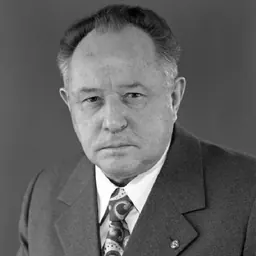


Related people
Same field, nearest in time




Contemporaries
People whose lives overlapped Karl Wilhelm Fricke's
Frequently asked questions
Who is Karl Wilhelm Fricke?
German journalist
When was Karl Wilhelm Fricke born?
Karl Wilhelm Fricke was born on 3 September 1929 in Hoym.
What is Karl Wilhelm Fricke's occupation?
Karl Wilhelm Fricke is a historian of Modern Age, journalist, writer and historian.
What nationality is Karl Wilhelm Fricke?
Karl Wilhelm Fricke is German.
Sources & further reading
· Wikipedia: Karl Wilhelm Fricke
· DBpedia: Karl Wilhelm Fricke
Cite this page
APA: Biography.guide. (2026). Karl Wilhelm Fricke. https://biography.guide/karl-wilhelm-fricke/
MLA: "Karl Wilhelm Fricke." Biography.guide, https://biography.guide/karl-wilhelm-fricke/.
Chicago: "Karl Wilhelm Fricke." Biography.guide. https://biography.guide/karl-wilhelm-fricke/.
Data last updated: 2026-09-22 · Spot an error? Report a correction.
Page generated 2026-09-27 05:18 UTC