
About Karl von Lilienthal
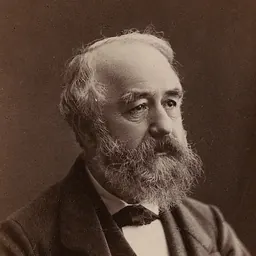
Lived 1853 – 1927 (aged 74). Karl von Lilienthal was a German jurist, university teacher and author.
Karl von Lilienthal (31 August 1853 - 8 November 1927) was a German scholar of Jurisprudence who became a university professor of criminal law. After working briefly as an Assessor (legal assistant) at the Wuppertal District Court he taught successively at the universities of Halle, Zürich, Marburg and then, between 1896 and 1924, Heidelberg, where he also served several terms as Dean of the Law Faculty and, for some years between 1902 and 1919, engaged in a parallel part time career in town as an assistant district judge.
Beyond the academic world, in 1902 von Lilienthal was one of eight eminent jurists who accepted invitations to join the government's new "Criminal Justice Committee" ("Strafrechtskomitee"), which went on to recommend a series of important reforms to the criminal law. For the rest of his life he was an influential commentator on the selective implementation. over several decades of the commission recommendations. An eye catching intervention came, towards the end of his life, in 1925 when he submitted a criticism of the newly drafted penal code in which he called for the paragraphs purporting to restrict abortion rights to be removed and for the criminalisation of homosexual acts to be ended.
Life and works
Provenance and early years Karl Ludwig Julius von Lilienthal was born into a Protestant family at Elberfeld, a small a small commercial and manufacturing town near Wuppertal, into which it has subsequently been subsumed. Further back, on his father's side the family traced their roots back to Copenhagen where his grandfather, Johannes von Lilienthal, had been a senior court and government official.
Student and apprentice years In 1868 he enrolled at the University of Berlin to study Jurisprudence. He also took advantage of the opportunities offered to attend classes in Philosophy, History and Psychiatry. After completing his "Referendariat" (apprenticeship he continued to work, now as an Assessor (legal assistant) at the office of the local public prosecutor at the district court in Elberfeld till 9 July 1877. On 30 August he was released from the government justice service at his own request. At Dochow's instigation he now went on to contribute numerous articles to von Holtzendorff's "Law Lexikon" which had been launched in 1870 and continued to expand every time there was a new edition. Lilienthal received and accepted the invitation to return to the university that had awarded him his doctorate in law "with great joy": his lengthy incumbency at Heidelberg marked the highpoint of his career.
Karl von Lilienthal retired from his professorship on 1 October 1919 and was appointed by the university to an honorary ordinary professorship, from which he finally retired in 1924. Gustav Radbruch
Karl von Lilienthal died "after a short illness" at Heidelberg on 8 November 1927. His ashes were buried a few days later at the Bergfriedhof ("hills cemetery") on the eastern edge of the city.
Legacy Karl von Lilienthal has been described as "a leading representative of the modernising scholars of criminal law whose ideas incorporated the [rapidly evolving] sociological precepts of the late nineteenth century". Professorial friends and colleagues held him in very high regard. It is true that he never published any great ground breaking volumes, but his many articles in specialist journals, monographs, and other contributions to compendia and lexicons were respected and, in many cases, influential. Lilienthal was a consistent proponent for the opening up of criminal law studies to other disciplines, including not just Criminology, but also Psychology and Sociology. It is hard to single out from his legacy any particular research focus. He commented thoughtfully on a wide range of policy issues arising across the palette of criminal law and criminal process. He produced commentaries on individual judgements, scholarly contributions and critiques of new legislation during a period charactered by a large amount of necessary consolidation and increased legal consistency which had emerged as critical "unfinished business" following unification. Nearly a century later there is a curiously contemporary resonance in his critical response in 1925 to a recent heavily revised draft legal code for Germany. He demanded that paragraphs seeking to restrict women's abortion rights should be removed and the criminalisation of homosexual acts ended. Both through his writings and, less directly, through the subsequent contributions of his students, Karl von Lilienthal made a decisive contribution to the design and implementation reforms in Criminal Procedure and the German penal code.
Don’t just read it —
keep it.
Full-length biographies made to live with: read them, listen on the way to work, watch them tonight.
- E-book
- Audio
- Video
Instant download · yours to keep · every purchase keeps this site free
Important facts
People in Karl von Lilienthal's life
Named in this biography and alive at the same time


Related people
Same field, nearest in time


Contemporaries
People whose lives overlapped Karl von Lilienthal's





Frequently asked questions
Who was Karl von Lilienthal?
German jurist (1853-1927)
When was Karl von Lilienthal born?
Karl von Lilienthal was born on 31 August 1853 in Elberfeld.
When did Karl von Lilienthal die?
Karl von Lilienthal died on 8 November 1927 in Heidelberg.
What was Karl von Lilienthal's occupation?
Karl von Lilienthal was a jurist, university teacher and author.
What nationality was Karl von Lilienthal?
Karl von Lilienthal was German.
Sources & further reading
· Wikipedia: Karl von Lilienthal
· DBpedia: Karl von Lilienthal
Cite this page
APA: Biography.guide. (2026). Karl von Lilienthal. https://biography.guide/karl-von-lilienthal/
MLA: "Karl von Lilienthal." Biography.guide, https://biography.guide/karl-von-lilienthal/.
Chicago: "Karl von Lilienthal." Biography.guide. https://biography.guide/karl-von-lilienthal/.
Data last updated: 2026-09-22 · Spot an error? Report a correction.
Page generated 2026-09-27 05:18 UTC