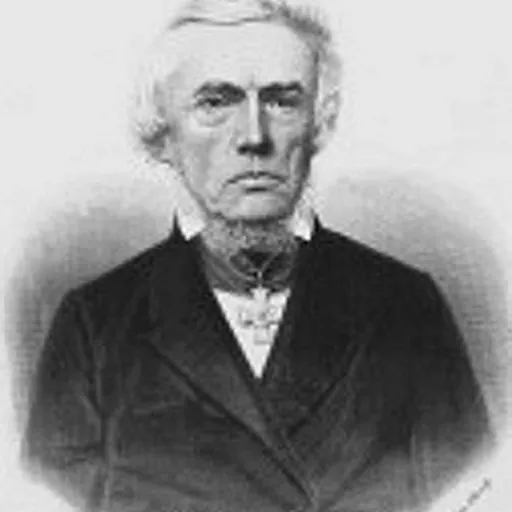
About Karl Rosenkranz
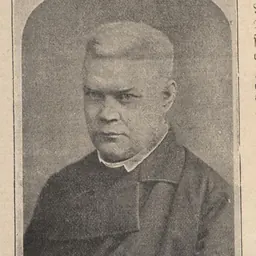
Lived 1805 – 1879 (aged 74). Karl Rosenkranz was a German philosopher, literary historian, university teacher, writer and protestant theologian.
Johann Karl Friedrich Rosenkranz (; April 23, 1805 – July 14, 1879) was a German philosopher and pedagogue.
Life Born in Magdeburg, he read philosophy at Berlin, Halle and Heidelberg, devoting himself mainly to the doctrines of Hegel and Schleiermacher. After holding the chair of philosophy at Halle for two years, he became, in 1833, a professor at the University of Königsberg. In his last years, he was blind.
He died in Königsberg.
Philosophy Throughout his long professorial career, and in all his numerous publications he remained, in spite of occasional deviations on particular points, loyal to the Hegelian tradition as a whole. In the great division of the Hegelian school, he, in company with Michelet and others, formed the "centre," midway between Erdmann and Gabler on the one hand, and the "extreme left" represented by Strauss, Feuerbach and Bruno Bauer.
Karl Rosenkranz was the editor-in-chief of Hegel's Collected Works, vols. 1–12 (1832–44). He published Hegel's Life (1844) as a supplement to these Works. He personally met Hegel and talked with him about philosophy. Rosenkranz had access to Hegel's manuscripts, letters, and the recollections of students, family members, and acquaintances.
Selected works Kritik der Schleiermacherschen Glaubenslehre (1836) Psychologie oder Wissenschaft vom subjektiven Geist (1837; 3rd edition, 1863) Kritische Erläuterungen des Hegelschen Systems (1840) Vorlesungen über Schelling (1842) Hegels Leben (1844). English: The Life of Georg Wilhelm Friedrich Hegel by Karl Rosenkranz (Scholarly Translations, 2026) System der Wissenschaft (1850) Meine Reform der Hegelschen Philosophie (1852) Ästhetik des Häßlichen (Königsberg 1853). English: Aesthetics of Ugliness: A Critical Edition. Bloomsbury 2015. Wissenschaft der logischen Idee (1858–59), with a supplement (Epilegomena, 1862) Diderot's Leben und Werke (1866) Hegels Naturphilosophie und die Bearbeitung derselben durch Vera (1868) Hegel als deutscher Nationalphilosoph (1870) Erläuterungen zu Hegels Encyklopädie der philosophischen Wissenschaften (1871).
Between 1838 and 1840, Rosenkranz published an edition of the works of Kant in conjunction with F. W. Schubert, to which he appended a history of the Kantian doctrine.
Don’t just read it —
keep it.
Full-length biographies made to live with: read them, listen on the way to work, watch them tonight.
- E-book
- Audio
- Video
Instant download · yours to keep · every purchase keeps this site free
Important facts
People in Karl Rosenkranz's life
Named in this biography and alive at the same time
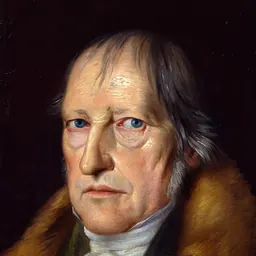
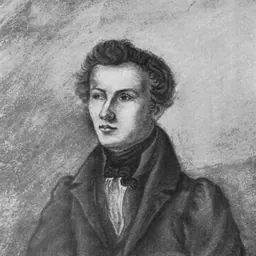
Related people
Same field, nearest in time
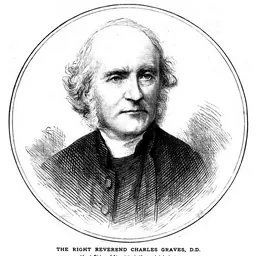




Contemporaries
People whose lives overlapped Karl Rosenkranz's






Frequently asked questions
Who was Karl Rosenkranz?
German philosopher (1805–1879)
When was Karl Rosenkranz born?
Karl Rosenkranz was born on 23 April 1805 in Magdeburg.
When did Karl Rosenkranz die?
Karl Rosenkranz died on 14 June 1879 in Königsberg.
What was Karl Rosenkranz's occupation?
Karl Rosenkranz was a philosopher, literary historian, university teacher, writer and protestant theologian.
What nationality was Karl Rosenkranz?
Karl Rosenkranz was German.
Sources & further reading
Cite this page
APA: Biography.guide. (2026). Karl Rosenkranz. https://biography.guide/karl-rosenkranz/
MLA: "Karl Rosenkranz." Biography.guide, https://biography.guide/karl-rosenkranz/.
Chicago: "Karl Rosenkranz." Biography.guide. https://biography.guide/karl-rosenkranz/.
Data last updated: 2026-09-20 · Spot an error? Report a correction.
Page generated 2026-09-27 05:09 UTC