
About Karl Ritter
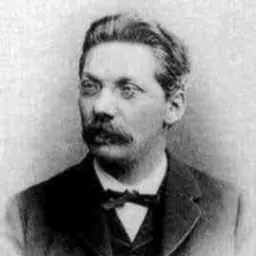
Lived 1888 – 1977 (aged 88). Karl Ritter was a German film director, screenwriter, film producer, illustrator, exlibrist and manufacturer.
Karl Ritter (7 November 1888 – 7 April 1977) was a German film producer and director responsible for many Nazi propaganda films. He had previously been one of the first German military pilots. He spent most of his later life in Argentina.
Early life Ritter was born in Würzburg. His father was a professor at the conservatoire; his mother was an opera singer. He was a career officer in the German military, built his own aeroplane and earned a pilot's licence in 1911 {#121}, and in World War I became one of the country's first military pilots. He was a lieutenant in the 1st Bavarian Pioneer Battalion.
After the war, he studied architecture, worked as a graphic artist and entered the film industry in 1926 as a public relations manager at Südfilm, where he edited a book of Walt Disney cartoons. In 1932, he directed a short film featuring Karl Valentin, a comedian. After the Nazis had come to power, he moved from head of production at Reichsliga-Film in Munich to become a company director and chief of production at Universum Film AG (UFA). and Pour le Mérite (1938)—and Zeitfilme (contemporary films) made after the start of World War II such as Stukas (1942). The latter type he largely invented, as a Nazi counter to the Russian revolutionary film, and can be seen as beginning with Verräter (1936), which for the first time brought the German spy film home to Germany.
Ritter himself clearly outlined his purpose as a film maker in terms of Nazi ideology: "The path of German films will lead without any compromise to the conclusion that every movie must stay in the service of our community, of nation and our Führer." "My movies deal with the unimportance of the individual—all that is personal must be given up for our cause". He called his propaganda films "pictorial armored car" which formed a "first line of the propaganda front" while "the rest" (entertainment films) he relegated to behind the lines. When officers in the military queried the wisdom of the strategy depicted in Unternehmen Michael in which an entire infantry column chooses a heroic death to take the enemy with them in a hail of artillery fire, he responded, "I want to show the German youth that senseless, sacrificial death has its moral value". The Propaganda Ministry dismissed the radio play with which the military attempted to rebut Ritter's film. His work includes some of the most important Nazi propaganda films. Verräter had its première at the 1936 Party Rally; in 1938 Das Schwarze Korps hailed Pour le Mérite as "the best thing we [have] ever seen"; and his series of World War II films constitute the "apogee" of the Nazi war film. and three either had to be abandoned or could not be released: Legion Condor when the war began, Besatzung Dora when the promise of land in the East for German settlers became hollow (and when the German forces had to withdraw from North Africa, a major setting of the film In 1943, he was ordered to cease directing films.
Ritter became one of the most important directors of propaganda films. He was rewarded by Joseph Goebbels with membership in the governing body of the Reichsfilmkammer, the chamber governing the film industry; a position as a cultural senator; and, in honour of Hitler's 50th birthday in 1939, a professorship. He was on Hermann Göring's list of party members exempt from the military call-up but returned to the Luftwaffe. Taken prisoner by the Soviets, he escaped to Bavaria. In 1947, he emigrated to Argentina via Portugal; there, thanks to Winifred Wagner, he was able to make El Paraiso. He prepared them in detail using storyboards. but also noted his heavy touch, writing of Bal paré (1940): "Ritter is not suited to subtle psychological portrayal. He is more for hearty things". As a result, he is not highly regarded today. David Stewart Hull, in his 1969 overview of Nazi films, characterised Ritter's work as "heavy-handed and extremely talky" and described Pour le Mérite as "a crushing bore" and Stukas as "ha[ving] all his worst vices: blatant propaganda, slapdash production values, crude editing, and a terrible script" but paid GPU a compliment: "The technical work is less slap-dash than usual and the acting considerably above Ritter's usual low level". (In contrast, David Welch, in his 1983 study of German film propaganda, states that in GPU, "Ritter portrayed the enemy in such a transparent and unreal way that even German cinema audiences failed to be convinced.... he actors' wildly exaggerated gestures are totally unconvincing". He regards the portrayal of the torturers as so ridden with "simplistic [clichés] that the propaganda loses all credibility". ) Karsten Witte summed him up in his overview, which was first published in 1993, as someone who "directed bad action films on a conveyor belt". Rainer Rother wrote in his 2003 study of Stukas of "pure inability" and "lack of artistic sensibility". John Altmann estimated that 6 million young boys had seen and been influenced by his films between 1936 and 1939. His Zeitfilme such as Stukas have been provocatively seen as forerunners of modern military thrillers such as Roland Emmerich's 1996 Independence Day.
Filmography 1928: When the Guard Marches (scriptwriter) 1929: Come Back, All Is Forgiven (scriptwriter) 1930: Fräulein Lausbub (scriptwriter) 1931: Der Zinker (producer) 1932: Must We Get Divorced? (producer) 1932: Melodie der Liebe (producer) 1932: Im Photoatelier (director) 1932: Die verkaufte Braut (producer) 1933: Rivalen der Luft. Ein Segelfliegerfilm (line producer) 1933: Love Must Be Understood (producer, line producer) 1933: Hitlerjunge Quex (line producer) 1934: Decoy (line producer) 1934: Love, Death and the Devil (producer, line producer) 1934: Enjoy Yourselves (line producer) 1935: The Foolish Virgin (line producer) 1935: The Island (line producer) 1935: The Royal Waltz (line producer) 1935: Marriage Strike (line producer) 1936: The Last Four on Santa Cruz (line producer) 1936: Women's Regiment (director, line producer) 1936: Verräter (director, producer, line producer) 1937: Urlaub auf Ehrenwort (director, producer, line producer) 1937: Unternehmen Michael (scriptwriter, director, line producer) 1937: Patrioten (concept, co-scripter, director, producer, line producer) 1938: Pour le Mérite (scriptwriter, director, line producer)) 1938: Capriccio (director, line producer) 1939: The Wedding Trip (scriptwriter, director, line producer) 1939: Im Kampf gegen den Weltfeind (director, line producer) 1939: Legion Condor (scriptwriter, director, line producer) 1939: Cadets (scriptwriter, director, line producer) 1940: Bal paré (scriptwriter, director, line producer) 1941: Stukas (scriptwriter, director, line producer) 1941: ...Über alles in der Welt (scriptwriter, director, producer, line producer) 1942: The Red Terror (scriptwriter, director, line producer) 1943: Besatzung Dora (scriptwriter, director, line producer) 1944: Love Letters (line producer) 1944: Summer Nights (director, line producer) 1945: Kamerad Hedwig (line producer) 1945: (line producer) 1945: Das Leben geht weiter (line producer) (unfinished film) 1948: El Paraiso (producer, director) 1950: Who Drove the Grey Ford? (producer) 1953: Paradise 1954: Prosecutor Corda (scriptwriter, director) 1954: Ball of Nations (scriptwriter, director)
Don’t just read it —
keep it.
Full-length biographies made to live with: read them, listen on the way to work, watch them tonight.
- E-book
- Audio
- Video
Instant download · yours to keep · every purchase keeps this site free
Important facts
People in Karl Ritter's life
Named in this biography and alive at the same time
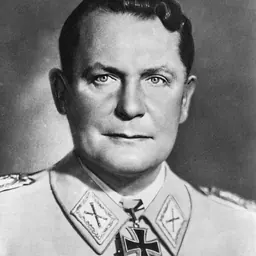


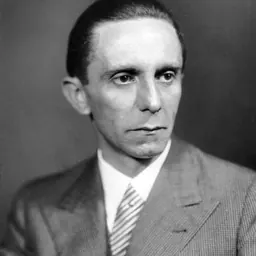

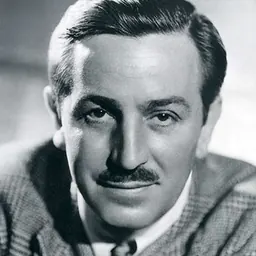
Related people
Same field, nearest in time


Contemporaries
People whose lives overlapped Karl Ritter's



Frequently asked questions
Who was Karl Ritter?
German film producer and director (1888-1977)
When was Karl Ritter born?
Karl Ritter was born on 7 November 1888 in Würzburg.
When did Karl Ritter die?
Karl Ritter died on 7 April 1977 in Buenos Aires.
What was Karl Ritter's occupation?
Karl Ritter was a film director, screenwriter, film producer, illustrator, exlibrist and manufacturer.
What nationality was Karl Ritter?
Karl Ritter was German.
Sources & further reading
· DBpedia: Karl Ritter (director)
Cite this page
APA: Biography.guide. (2026). Karl Ritter. https://biography.guide/karl-ritter/
MLA: "Karl Ritter." Biography.guide, https://biography.guide/karl-ritter/.
Chicago: "Karl Ritter." Biography.guide. https://biography.guide/karl-ritter/.
Data last updated: 2026-09-20 · Spot an error? Report a correction.
Page generated 2026-09-27 05:32 UTC